
Navigating Welding Torch Sourcing & Factory Selection in Greater Seattle
From Puget Sound marine shipyards to Renton aerospace corridors, industrial buyers in Washington state demand extreme arc stability, thermal efficiency, and rigorous safety compliance.
The Seattle Manufacturing Paradigm Shift
The Pacific Northwest (PNW) metal fabrication ecosystem is experiencing a major transition. Traditional tungsten inert gas (TIG) and metal inert gas (MIG) welding setups are rapidly being augmented or replaced by high-precision handheld fiber laser welding torches and multi-functional 4-in-1 laser systems. Sourcing managers across Seattle, Tacoma, Bellevue, and Everett require factory direct clarity on thermal duty cycles, optics durability, consumable lifespans, and direct OEM procurement benefits.
As a global leader with over 60 years of welding engineering heritage, our production facilities engineer heavy-duty welding equipment equipped with Class F/H insulated copper windings, thermostatic protection, and state-of-the-art handheld laser torch guns optimized for high humidity, coastal saltwater exposures, and demanding industrial shifts.
Key Sourcing Highlights for PNW Engineers
- 4-in-1 Multi-Process Efficiency: Combine welding, seam cleaning, surface rust removal, and cutting in one handheld torch.
- Zero Post-Grinding Output: Heat-Affected Zones (HAZ) reduced by up to 80% compared to legacy arc welding.
- Air-Cooled vs Water-Cooled Options: Lightweight portable setups engineered for job site mobility across Washington.
- 100% Pre-Shipment Load Testing: Every unit undergoes continuous max-current thermal stress checks before export dispatch.
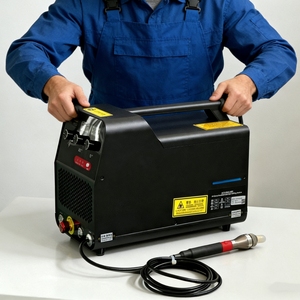
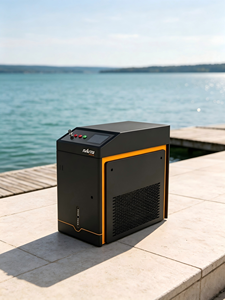
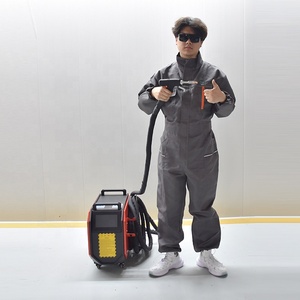
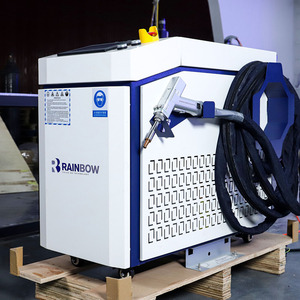
Top-Rated Handheld Laser Welding Machines & Torches
Direct factory supply catalog for Seattle manufacturing operations, job shops, and custom fabricators.
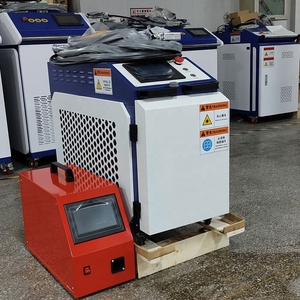
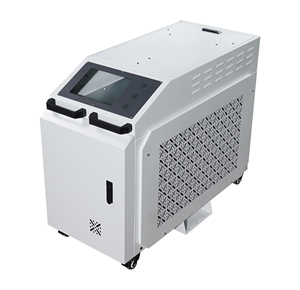
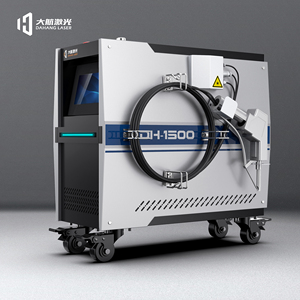
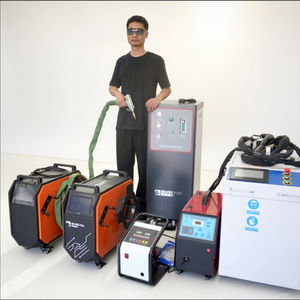
Localized Welding Applications Across Seattle & Puget Sound
Analyzing the specific operational challenges and material requirements of Pacific Northwest industrial sectors.
Marine & Shipyard Repairs (Puget Sound)
Naval architecture in Harbor Island, Ballard, and Tacoma requires watertight integrity on 5083/6061 aluminum superstructures and 316L stainless steel piping. Handheld laser torches offer low heat input, preventing panel warping on thin marine hulls while providing rapid weld seam cleaning for salt crust removal.
Aerospace Sub-Assemblies (Renton & Everett)
Serving tier-1 aerospace suppliers, precision handheld laser torches joined thin-gauge titanium, aluminum alloys, and high-strength steels. Controlled beam focus ensures narrow weld beads with high tensile strength that meet stringent radiographic quality expectations.
Architectural & Clean Tech Fabrication
Seattle’s commercial building codes demand pristine aesthetic welds on architectural stainless steel handrails, HVAC ducting, and clean-energy infrastructure. 4-in-1 laser torch heads allow operators to weld and perform laser cosmetic polishing without toxic acid pickling.
Process Benchmark: Handheld Fiber Laser vs. Traditional TIG / MIG
A technical engineering comparison for Seattle plant operations managers evaluating machinery upgrades.
| Evaluation Parameter | Handheld Fiber Laser Torch | TIG (GTAW) Welding | MIG (GMAW) Welding |
|---|---|---|---|
| Welding Speed | Ultra-Fast (4x - 10x TIG) | Slow (Requires precise hand feeding) | Moderate to Fast |
| Heat-Affected Zone (HAZ) | Extremely Low (< 0.5 mm) | High (Risk of plate warping) | Moderate to High |
| Operator Skill Required | Low (Learnable in 2 Hours) | Very High (Years of artisan experience) | Moderate |
| Post-Weld Processing | Zero Grinding / Acid Etch | Labor-Intensive Polishing Required | Spatter Removal & Grinding Needed |
| Multi-Function Versatility | 4-in-1 (Weld, Cut, Clean, Prep) | Welding Only | Welding Only |
| Thin Metal Performance (<1.5mm) | Flawless (No Burn-Through) | Prone to Distortion | High Risk of Burn-Through |
Key Sourcing & Technology Trends in Washington State (2026+ Perspective)
The Seattle industrial region is leading North America in adopting environmentally sustainable manufacturing practices and energy-efficient capital equipment. Sourcing directors prioritizing long-term factory resilience are tracking three primary technology trends:
1. Air-Cooled Laser Adoption
Transitioning from heavy water-chiller units to compact air-cooled fiber engines minimizes job site power draw and eliminates glycol maintenance during wet Pacific Northwest winters.
2. Labor Shortage Mitigation
With experienced certified welders retiring across King County, easy-to-operate wobble laser guns allow entry-level technicians to produce high-strength certified seams instantly.
3. Green Fabrication Standards
Eliminating chemical post-weld pickling pastes by utilizing laser cleaning heads directly satisfies strict Washington State Department of Ecology environmental guidelines.
Why Seattle Sourcing Executives Partner with Our Production Factory
Combining six decades of heavy engineering experience with direct factory-to-workshop support.
100% Load-Tested Reliability
Every single welding unit and laser torch power source undergoes rigorous full-load thermal continuous burn-in before export packaging. We link serial numbers to test records for complete quality control.
Class F/H Copper Winding Focus
Unlike budget suppliers using aluminum wiring, our heavy-duty transformer units utilize 100% pure copper windings. This guarantees heat resistance up to 180°C and maintains arc stability during voltage dips.
Direct OEM Customization
Configured for global power standards (220V 1-phase, 380V-440V 3-phase, 50/60Hz). Custom cable lead lengths, custom torch nozzles, water-cooled torch packages, and mobile cart solutions available.
Frequently Asked Questions: Sourcing Welding Torches in Seattle
Addressing technical compliance, electrical configurations, and international shipping logistics for local procurement teams.
Q1. Are these handheld laser welding torches compatible with Seattle area 3-phase electrical supplies?
Yes. Our factory builds machines compliant with US industrial electrical grids, supporting 220V/240V single-phase for light shops, as well as 380V/460V/480V three-phase 60Hz input configurations for continuous plant production in Washington state.
Q2. How do laser welding torches handle high-humidity marine conditions near Puget Sound?
Our optic systems and internal laser sources feature sealed dust-proof optics and IP54-rated cabinet enclosures with built-in moisture traps and internal thermal regulation to prevent condensation on optical lenses during humid coastal operation.
Q3. What is the difference between air-cooled and water-cooled handheld laser torches?
Water-cooled torches use integrated chillers for continuous 24/7 high-power (2000W-3000W) heavy metal welding. Air-cooled systems (up to 1500W-2000W) eliminate water weight, making them ultra-portable for field repair and structural site jobs.
Q4. Can these systems weld structural aluminum according to local AWS standards?
Yes. When operated with argon shielding gas and auto-wire feeders, our wobble laser torches meet tensile and penetration standards under AWS D1.2 (Structural Welding Code - Aluminum), producing consistent non-porous welds.
Q5. What spare parts and torch consumables should we order with our initial factory shipment?
We recommend requesting an initial OEM spares bundle including protective optical lenses (focus & collimation), copper wobble tips/nozzles for various joint designs, and wire feed tubes to ensure uninterrupted shop uptime.
Q6. How does your factory support technical commissioning and remote operator training?
Every shipment includes step-by-step parameter sheets, wiring schematics, and video commissioning guides. Our technical support team assists your welding engineers via live technical video calls to optimize wire speed and pulse settings for your specific alloys.
Request Factory Direct Specifications & Seattle Wholesale Pricing
Consult with our senior welding engineers today to match your material thickness, alloy specifications, and production volume to the ideal laser torch or arc welder setup.