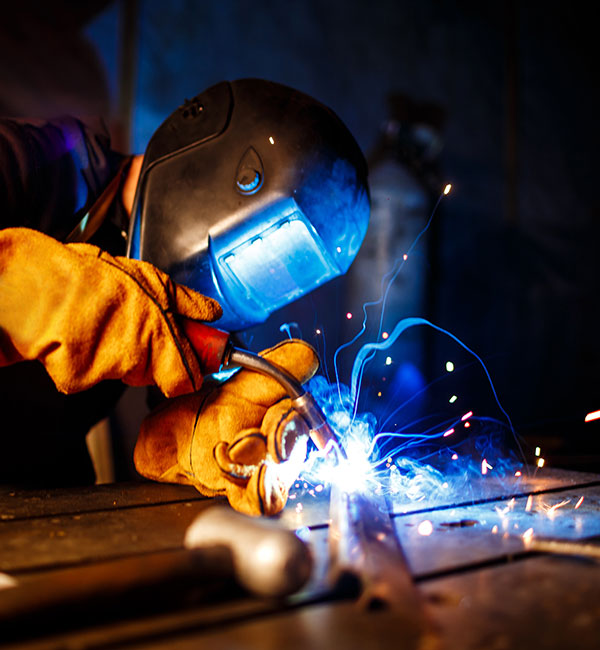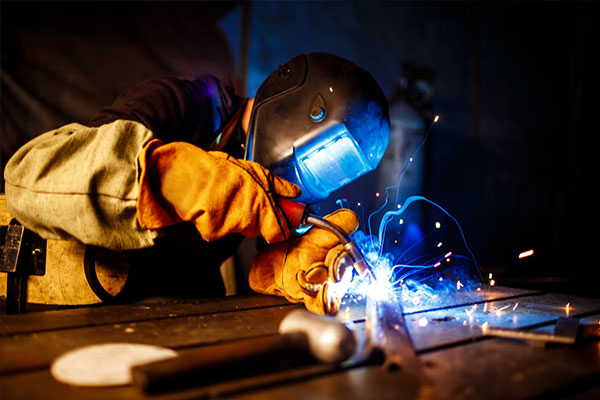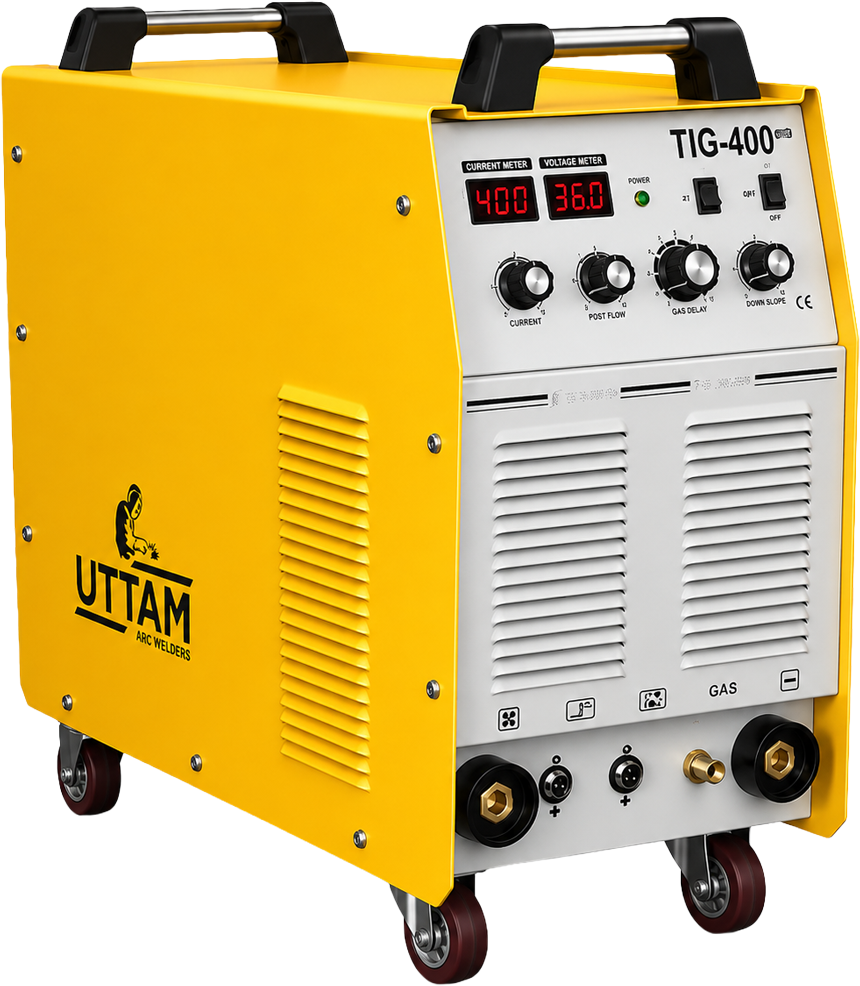
Double Holder Welding Machine
Two independent welding circuits from one transformer core — ideal when two operators must work simultaneously on the same structure without doubling floor space or power infrastructure.
MIG, TIG, ARC, stud, plasma cutting and laser welding systems engineered in India, trusted by fabricators on six continents.
Uttam Industries designs, assembles and tests welding and metal cutting machines from our facilities in Mandi Dabwali, Haryana and Delhi, India. Six decades of hands-on work with fabricators, shipyards, railway workshops and automotive tier suppliers shapes every design decision we make — from transformer winding class to torch ergonomics.
Nine engineered families covering manual repair work, continuous production welding and automated plate processing. Each specification below reflects the standard build; voltage, duty cycle and cable length are configurable for export orders.
Two independent welding circuits from one transformer core — ideal when two operators must work simultaneously on the same structure without doubling floor space or power infrastructure.
A rugged, low-maintenance workhorse for general purpose stick welding. Step-controlled current selection gives stable arc striking even where mains voltage fluctuates.
Continuous wire feed with synergic voltage control for high deposition, low-spatter production welding on mild steel, stainless and aluminium alloys.
High-frequency start, adjustable post-flow and pulse control for precise, low-distortion welds where cosmetic finish and radiographic quality are non-negotiable.
Heavy-duty rectifier and inverter arc welders with excellent arc force characteristics for thick-section, all-position welding on site and in heavy engineering bays.
Fast, single-side fixing of studs, pins and insulation fasteners with repeatable weld time control — no back-side access or drilling required.
Repeat order data from fabrication, cutting and precision welding customers — with the practical reason each machine keeps coming back onto purchase orders.
Chosen where arc stability under long cable runs matters. Strong open-circuit voltage and arc force control let operators hold a consistent bead on rusted, painted or thick-section material typical of construction and heavy repair work.
High-speed severance of conductive metals with a narrow heat-affected zone. Fabricators report lower consumable cost per metre versus oxy-fuel on plate up to 40 mm, plus cleaner edges that reduce downstream grinding time.
Fiber laser welding delivers deep, narrow seams at high travel speed with minimal filler and almost no post-finishing — the preferred route for automotive components, electronics enclosures and medical device assemblies.
Programmable gantry cutting for nested plate production. Repeatable positioning removes operator variance, improves material yield and keeps batch-to-batch part accuracy within fabrication tolerance.
A quick engineering reference our sales team uses with buyers before quoting. Use it to shortlist a process, then confirm the exact model against your material, thickness and production volume.
| Process / Machine | Typical Thickness | Deposition Speed | Finish Quality | Common Application |
|---|---|---|---|---|
| ARC (SMAW) | 3 – 40 mm | Moderate | Requires slag removal | Structural steel, site & repair welding |
| MIG (GMAW/MAG) | 0.8 – 20 mm | High | Clean, low spatter | Automotive, sheet metal, production lines |
| TIG (GTAW) | 0.5 – 8 mm | Low | Highest cosmetic quality | Stainless piping, pharma, food-grade vessels |
| Stud Welding | Fastener M3 – M16 | Very high (per stud) | Single-side, no marking | Cladding, panels, insulation pins |
| Plasma Cutting | 1 – 40 mm (cut) | Very high | Narrow HAZ, minimal dross | Plate profiling, fabrication shops |
| Laser Welding | 0.3 – 6 mm | Very high | Near-finished seam | Precision, electronics, medical devices |
Our commitments are measurable — test protocol, lead time, service documentation and total cost of ownership.

Units are built with class F/H insulated copper windings, thermostatic protection and calibrated current taps. Each machine is run at rated output, checked for voltage drop, insulation resistance and thermal behaviour, and the results are recorded against its serial number.

Our team has commissioned equipment inside foundries, railway workshops, shipyards and press-shop lines. That experience means we advise on the right process and duty class first — and we will tell you when a smaller machine is the correct answer.

Direct manufacturing keeps acquisition cost competitive, while serviceable construction keeps running cost low. Standard, widely available consumables and modular sub-assemblies mean a fault is a part replacement — not a machine write-off.

Standard models are produced against forecast so common ratings ship quickly; customised builds are scheduled with a confirmed date. Export consignments are crated for sea freight with moisture protection and clearly marked documentation.
Duty cycle, arc characteristics and fixture requirements differ by industry. These are the sectors we build for most often.


Answers to the technical and commercial questions overseas purchasers ask us most often.
Our production programme covers double holder and single holder welding machines, MIG/MAG inverter welders, AC/DC TIG welders, ARC (SMAW) welding rectifiers, stud welding machines, air plasma cutting machines, fiber laser welding systems and CNC profile cutting machines from 130 A to 1250 A output classes.
MIG (GMAW) machines feed a continuous consumable wire and deliver high deposition rates with low spatter, which suits production fabrication and sheet metal lines. TIG (GTAW) machines use a non-consumable tungsten electrode with precise current control, producing clean, low-distortion welds on stainless steel, aluminium and thin-wall tubing where cosmetic and radiographic quality matter.
Yes. Heavy-duty models are rated at 60%–100% duty cycle at maximum current, use class F/H insulated copper windings, thermostatic overload protection and forced-air cooling, so they hold output during multi-shift fabrication, shipyard and structural steel work.
Yes. Units are configured for 220V single-phase or 380V–440V three-phase, 50/60 Hz supply, with CE-style wiring practice, plug options and multilingual operating manuals available on request for export shipments.
Yes. We build application-specific variants — extended cable lengths, trolley mounting, water-cooled torch packages, remote current control, special jigs for spot and stud welding, and CNC cutting tables sized to your plate formats.
Every shipment includes wiring diagrams, spare-parts lists and commissioning guidance. Our engineers support remote fault diagnosis, supply a recommended spares kit with the first order, and train operators on welding parameter selection for your base materials.
Share your material, thickness, position and production volume — our engineering team will map it to the correct process, output class and duty cycle before you commit to a purchase order.