
Industrial Fiber Laser & Automated Welding Series
Direct Factory OEM Solutions Tailored for German Manufacturing Excellence & System Integration
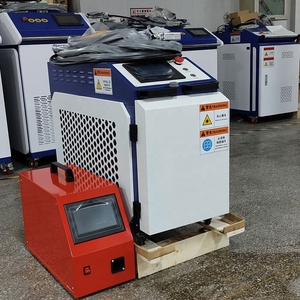
Laser Welders 4 Functions 1500W 2000W 3000W 4 in 1 Handheld Laser Machine
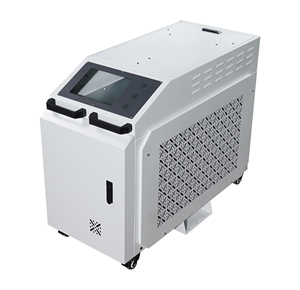
All-in-one Design Handheld Laser Welder Chiller SY-1500 For 1.5kW Laser Welding
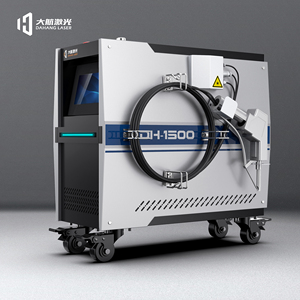
4 in 1 Air-cooled Laser Steel Aluminum Metal 1500W 2000W Fiber Laser Machines
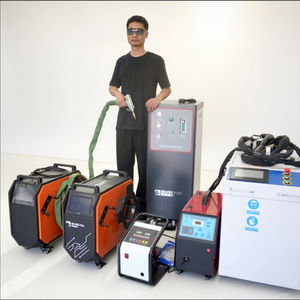
Professional High-Efficiency PANGOLIN Handheld Fiber Laser Machine 1000W-3000W
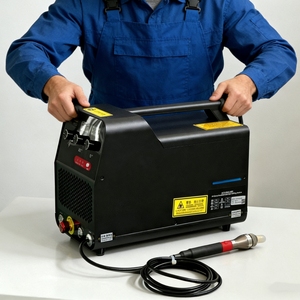
Portable Laser Welding Machine 600W Mini Spot Welder for Thin Metal Fabrication
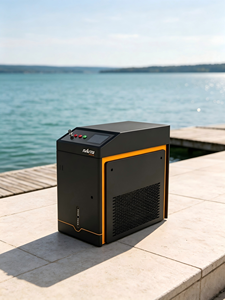
Economical Industrial 1500W 2000W 3000W Fiber Laser Welder for Stainless Steel & Aluminum
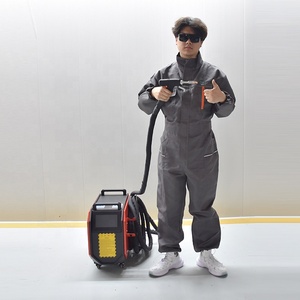
4in1 Outdoor Small Portable Stainless Steel Aluminum Source Factory Laser Welder
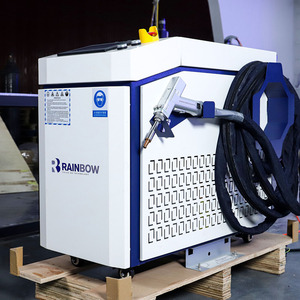
Compact 4 In 1 1500W Fiber Laser Iron Aluminum Welding Machine with Wobble Gun
1. Engineering OEM Robotic Welding Solutions for Germany’s Industrial Ecosystem
Germany’s manufacturing backbone—spanning Maschinenbau (mechanical engineering), automotive Tier-1 assembly in Baden-Württemberg and Bavaria, and specialized structural steel fabrication across North Rhine-Westphalia—demands an uncompromising baseline of mechanical precision, electrical safety, and process repeatability. As a direct OEM manufacturer and global exporter, our engineering facility designs custom robotic welding cells and handheld fiber laser workbenches that integrate directly into European industrial smart-factory environments.
Navigating the transition from traditional manual TIG/MIG welding to automated robotic and fiber laser systems requires solving specific technical bottlenecks: minimizing thermal distortion on thin-gauge metals, achieving zero-defect welds verifiable under non-destructive testing (NDT), and complying strictly with CE Machinery Directive 2006/42/EC and DIN EN ISO 3834-2 comprehensive quality requirements.
Information Gain Insight: Modern German production lines require seamless fieldbus integration. Our custom OEM robotic welder workstations feature factory-configured PROFINET, EtherCAT, and OPC UA communication interfaces, allowing direct plug-and-play handshakes with Siemens S7-1500 PLCs and KUKA or FANUC industrial robot controllers without expensive third-party signal converters.
Our custom OEM production program supplies tailored robotic end-effectors, multi-axis servo positioners, linear gantry tracks, and high-efficiency fiber laser sources ranging from 1000W to 3000W. By utilizing real-time laser seam tracking (Laser-Nahtverfolgung) and vision sensors, our robotic welding cells dynamically compensate for component fit-up tolerances, ensuring structural integrity and cosmetic perfection on stainless steel, aluminum alloys, galvanized metals, and carbon steel profiles.
Multi-Axis Kinematics Integration
Full synchronization between 6-axis articulated robots and 2-axis tilt-turn positioners, eliminating out-of-position welds and reducing cycle times by up to 65%.
High-Efficiency Fiber Lasers
Equipped with premium laser optics and air/water cooling systems delivering wall-plug efficiency >30% with operational lifespan exceeding 100,000 hours.
TÜV & CE Conformity Guarantee
Built-in dual-channel safety circuits, laser safety interlocks (EN 60825-1), and electromagnetic compatibility (EMC) tuned specifically for European electrical grids (400V 50Hz).
2. Localized Application Scenarios Across German Industrial Hubs
Industrial manufacturing in Germany is regionally specialized, each cluster presenting unique joinery challenges that demand customized OEM welding hardware configurations:
A. Automotive & Electric Vehicle (EV) Components (Stuttgart, Munich, Wolfsburg):
In automotive tier-1 supply chains, laser welding of aluminum battery housings, motor enclosures, and stainless exhaust modules demands minimal heat-affected zones (HAZ) to prevent component distortion. Our OEM robotic laser cells utilize high-frequency wobble welding heads (oscillation width 0–5mm) to bridge variable gap sizes while delivering gas-tight seams certified for pressure containment.
B. Heavy Machinery & Agricultural Equipment (North Rhine-Westphalia & Lower Saxony):
Fabricating heavy structural beams, excavator booms, and chassis frames requires high-current ARC, MIG, and hybrid laser-arc welding. Our multi-pass robotic cells, coupled with heavy-duty positioners handling payloads up to 3,000 kg, execute deep-penetration welds compliant with DIN EN ISO 5817 Quality Level B.
C. Precision Sheet Metal & Switchgear Cabinets (Hesse & Saxony):
Enclosure manufacturers require flawless aesthetic jointing without post-weld grinding. Our 4-in-1 handheld fiber laser units (welding, cutting, cleaning, wire-feeding) enable operators to produce mirror-smooth fillet welds on thin stainless steel (0.8mm–3.0mm) at travel speeds five times faster than traditional TIG welding.
Technical Specification Matrix: Manual vs. OEM Robotic Laser Welder
| Performance Parameters | Traditional Manual TIG / MIG Welding | Standard Automated Arc Cell | Custom OEM Robotic Fiber Laser Cell |
|---|---|---|---|
| Welding Speed (m/min) | 0.1 - 0.3 m/min | 0.4 - 0.8 m/min | 1.2 - 5.0 m/min |
| Heat-Affected Zone (HAZ) | Extensive (High thermal distortion) | Moderate | Minimal (<0.5mm, zero warping) |
| Post-Weld Processing | Mandatory grinding/polishing | Slag cleaning required | None required (Cosmetic finish) |
| Industrie 4.0 Protocol Integration | Not Supported | Basic I/O Triggering | Full PROFINET / OPC UA / Siemens S7 |
| Consumable & Energy Cost | High gas & filler metal consumption | Moderate wire usage | up to 70% Energy Reduction (Air-Cooled options) |
| Compliance Alignment | Operator-dependent consistency | ISO 3834-3 | DIN EN ISO 3834-2 / EN 60974-1 Ready |
3. German Market Trends & Sourcing Risk Mitigation for Procurement Managers
Procurement teams across Germany face dual pressures: overcoming skilled welder shortages (Fachkräftemangel) while simultaneously reducing operational carbon footprints to meet EU Scope 1 and Scope 2 emission targets. Automated robotic laser welding addresses both challenges directly by lowering kilowatt-hour energy consumption per welded meter and allowing single operators to oversee multiple automated cells.
When purchasing capital machinery from overseas direct OEMs, German buyers prioritize reliability, technical documentation, and post-installation support. Our export framework eliminates procurement friction through:
- Complete Technical Documentation: Operating manuals provided in native German (Bedienungsanleitung), circuit schematics aligned with DIN EN 60204-1 standards, and full spare-parts cataloguing.
- Pre-Shipment Factory Acceptance Test (FAT): Virtual live video audits and sample test coupons evaluated under optical microscopy and tensile testing before dispatch.
- Voltage Alignment: Internal electrical systems native-configured for European 3-phase 400V (±10%) at 50Hz, featuring Schneider Electric and Siemens switchgear components.
- Rapid Spare Parts Supply: Standardized torch consumables, protective lenses, nozzles, and wire-feed rollers maintained in stock for expedited 48-hour delivery across Central Europe.
Frequently Asked Questions by German Procurement Managers
Direct Answers to Technical, Legal, and Operational Procurement Inquiries
How do your custom OEM robotic welders comply with CE and German VDE safety standards?
Every customized robotic welder and fiber laser system shipped to Germany is manufactured in accordance with EU Machinery Directive 2006/42/EC, Low Voltage Directive 2014/35/EU, and Laser Safety Standard EN 60825-1. Systems incorporate PILZ safety relays, dual-channel E-stop circuits, safety light curtains, and enclosed Class 1 laser protection housing options compatible with TÜV safety inspections.
Can your welding cells interface directly with our existing Siemens S7 PLCs and KUKA robots?
Yes. Our OEM control cabinets are engineered for seamless fieldbus communication. We provide hardware interfaces and software GSDML files for PROFINET, PROFIBUS, and EtherCAT. This enables your local system integrators to configure remote parameter adjustment, real-time current logging, and error diagnostic feedback directly on your main SCADA or HMI panel.
What customization options are available for specialized aluminum or thin-sheet welding?
We provide extensive OEM customization: including dual-wire feeding units for gap bridging, high-frequency wobble laser optics (up to 300 Hz oscillation), specialized form-gas (N2/Ar) trailing shields for titanium and stainless steel, and custom pneumatic clamping fixtures engineered around your specific CAD geometries (STEP/IGES files).
What is the typical shipping lead time and import procedure for deliveries to Germany?
Standard handheld air-cooled/water-cooled fiber laser welders ship within 7–10 business days. Fully customized robotic welding cells (including fixture design and robot integration) carry a 30–45 day build cycle. Equipment is securely packed in sea/air-worthy export wooden cases with vapor-corrosion-inhibitor (VCI) lining. We support DDP (Delivered Duty Paid) or CIF Hamburg/Rotterdam terms through our established logistics partners.
How do you handle warranty support, operator training, and technical service in Europe?
We provide a standard 24-month warranty on fiber laser sources and core machine electronics. Remote technical support is available via direct video hotline and AR guidance tools with English and German speaking automation engineers. Every machine delivery includes comprehensive operator video tutorials and parameter lookup matrices for common material grades (1.4301 stainless, S235 structural steel, AlMg3 aluminum).
What is the payback period (ROI) when switching from TIG to a 4-in-1 OEM fiber laser welder?
For a typical mid-sized German metal fabrication shop operating single shifts, the payback period averages 4 to 8 months. Payback is driven by a 400% increase in welding speed, zero post-weld wire brushing or chemical pickling requirements, and reduced dependence on high-cost specialized manual welding labor.
Request a Customized OEM Welding Solution & CAD Analysis
Send us your part drawings (STEP/DXF), material specifications, and target output rates. Our senior engineering team will provide a comprehensive process evaluation, welding sample test report, and transparent direct-factory quote tailored for your facility in Germany.