
Executive Technical Report: Navigating China Wholesale Industrial Welder Sourcing in Kuala Lumpur
The manufacturing and structural fabrication landscape across Kuala Lumpur and the broader Klang Valley region—including key industrial corridors such as Shah Alam, Puchong, Balakong, Port Klang, and Subang Jaya—is undergoing a rapid technological transformation. Driven by Malaysia’s National Industry 4.0 policy (Industry4WRD) and the relentless expansion of mega-infrastructure projects, local metal fabricators, automotive OEM tier-1 suppliers, shipyard maintenance bays, and structural steel engineering firms are transitioning from traditional manual Shielded Metal Arc Welding (SMAW) toward high-efficiency Fiber Laser Welding systems, automated 6-axis robotic welding cells, and synergic pulse MIG machinery.
For Malaysian industrial procurement managers, engineering consultants, and factory owners seeking wholesale industrial welders directly from Chinese manufacturing hubs, strategic sourcing involves far more than simply comparing nominal FOB pricing. Achieving a sustainable low Total Cost of Ownership (TCO) while guaranteeing operational uptime requires deep technical evaluation of electrical grid compatibility (Malaysian Tenaga Nasional Berhad 415V 3-phase 50Hz standards), duty cycle ratings under humid tropical ambient temperatures (up to 45°C), import tariff compliance under the ASEAN-China Free Trade Area (ACFTA Form E), and post-installation technical engineering backup.
Key Strategic Procurement Insight: Sourcing industrial welding machinery from tier-1 Chinese factories with over six decades of transformer and power electronics manufacturing heritage ensures that internal components—such as Class F/H insulated copper windings, IGBT inverter modules, and fiber optics—are structurally rated to endure continuous 100% duty cycles without thermal degradation in Malaysia's tropical climate.
Core Industrial Welder Categories & Technological Convergence
To establish an optimized procurement roadmap, industrial buyers must evaluate equipment based on specific metallurgic requirements, production volumes, and joint geometry requirements. Below is a granular technical breakdown of the dominant welding machine architectures currently imported from China into Kuala Lumpur industrial zones.
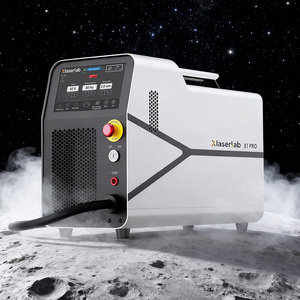
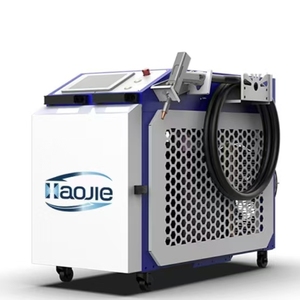
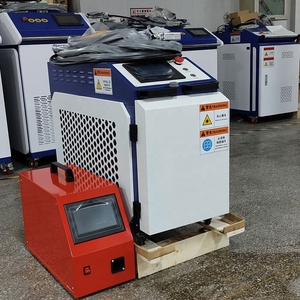
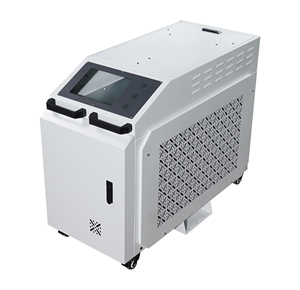
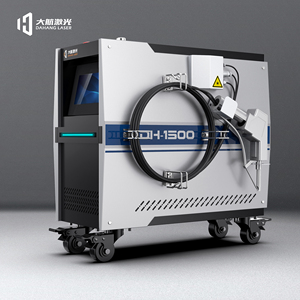
Handheld Fiber Laser Welders
Utilizing high-brightness continuous wave (CW) fiber laser sources (1500W to 3000W), handheld laser welders deliver power densities exceeding 10 MW/cm². This enables narrow, deep keyhole welding on stainless steel, aluminum, and brass (0.5mm to 4.0mm) at speeds up to 4 to 10 times faster than conventional GTAW (TIG) welding, with virtually zero thermal distortion or heat-affected zone (HAZ) discoloration.
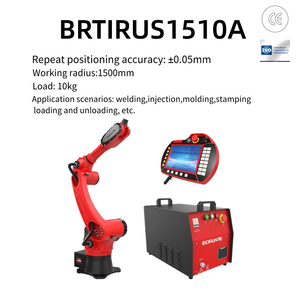
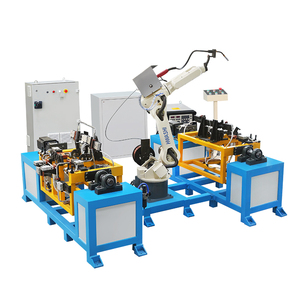
6-Axis Robotic Welding Cells
Integrating articulated 6-degree-of-freedom robotic arms with digital synergic pulse MIG/MAG power sources or fiber laser heads. Programmable teach pendants and offline CAD/CAM simulation software allow automated seam tracking, high repeatability (±0.03mm), and non-stop multi-pass welding for complex metal furniture, chair chassis, automotive exhausts, and structural trusses.
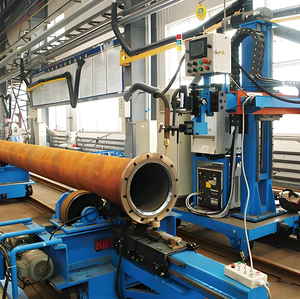
Heavy-Duty Transformer Rectifiers
Engineered with double-holder and single-holder copper transformer windings, these robust SMAW/MIG rectifiers handle massive current loads ranging from 300A to 1250A. Designed for severe-duty site work, heavy machinery maintenance, shipyard plate joinery, and structural steel erection in Port Klang where line voltage fluctuation is frequent.
Equipment Selection Matrix: Process Capability Comparison
Selecting the right equipment architecture involves balancing metallurgical precision, production speed, skilled labor dependency, and capital expenditures. The following matrix provides objective engineering guidance for industrial buyers across Klang Valley.
| Welding Process | Typical Thickness Range | Deposition Speed / Travel Speed | Heat-Affected Zone (HAZ) | Labor Skill Required | Primary Malaysian Industry Application |
|---|---|---|---|---|---|
| Handheld Fiber Laser (1.5kW - 3kW) | 0.5 mm – 4.0 mm | Ultra-High (Up to 120 mm/s) | Extremely Narrow (< 0.5 mm) | Low (1-Day Basic Operator Training) | Kitchenware, Stainless Enclosures, Architectural Sheet Metal |
| 6-Axis Automated Robotic MIG/Laser | 1.0 mm – 12.0 mm | High (Continuous Automated) | Controlled / Repeatable | Medium (Robot Programmer / Cell Operator) | Automotive Tier-1 Parts, Steel Furniture, Office Chassis |
| Synergic Pulse MIG/MAG (250A - 500A) | 0.8 mm – 20.0 mm | High (Continuous Wire Feed) | Moderate | Medium to High (Certified Welder) | Structural Framing, Pressure Vessels, Trailer Chassis |
| Industrial TIG / GTAW (AC/DC Pulse) | 0.5 mm – 8.0 mm | Low to Moderate | Wide (Significant Heat Input) | Very High (Expert Manual Craftsman) | Food & Beverage Piping, Pharmaceutical Vessels, Aerospace |
| Heavy Rectifier ARC / SMAW (300A - 1250A) | 3.0 mm – 50.0+ mm | Moderate (Stick Electrode) | Substantial | Moderate to High | Shipyards, Port Klang Marine Repair, Structural Beams |
Localized Applications & Regional Industrial Scenarios in Kuala Lumpur & Selangor
Understanding regional industrial clusters within Selangor and Kuala Lumpur allows for precise equipment configuration tailored to local raw material supplies and operating environments:
1. Shah Alam & Subang Jaya: Precision Stainless Steel & Process Equipment
Factories in the Shah Alam and Subang industrial sectors specialize in food processing equipment, pharmaceutical-grade sanitary piping, and commercial kitchen fixtures. Fiber laser welders (1500W–2000W) and AC/DC pulse TIG systems are heavily utilized here. The capability of fiber laser welders to execute smooth, non-porous seams on 304 and 316 grade stainless steel without requiring acid pickling or post-weld buffing significantly reduces labor hours and meets strict SIRIM and MOH sanitary guidelines.
2. Port Klang & Northport: Heavy Marine Engineering & Structural Steelwork
Port Klang represents the epicenter of Malaysia's marine repair, container chassis fabrication, and heavy structural engineering. Work sites in this maritime zone demand extreme ruggedness. Double-holder heavy-duty ARC welders and 500A multi-process MIG rectifiers featuring 100% duty cycles and heavy Class H insulated copper windings are essential to withstand salt-spray exposure, high humidity, and uninterrupted multi-shift heavy plate fabrication.
3. Balakong, Puchong & Serendah: Automotive Components & Furniture Manufacturing
The manufacturing corridors of Balakong and Puchong house hundreds of SMEs dedicated to sheet metal stamping, metal rack storage systems, and steel furniture. The deployment of 6-axis robotic arm welding machines integrated with pneumatic rotary positioners has allowed local factories to overcome local skilled labor shortages, reducing unit cycle times by over 65% while delivering uniform weld bead aesthetics required for export-grade furniture.
Regulatory Compliance & Import Logistics (ACFTA Form E): When importing industrial welding machinery from China into Port Klang (Northport/Westport) or KLIA Cargo Hub, Malaysian buyers can leverage the ASEAN-China Free Trade Area preferential tariff structure. By submitting a valid Form E Certificate of Origin issued by Chinese customs authorities, the standard import duty (often 5% to 10%) is reduced to 0%, leaving importers responsible only for standard local SST taxes and handling charges.
Enterprise Heritage & Factory Engineering Rigor (Since 1965)
When purchasing capital equipment directly from Chinese manufacturers, local buyers require rock-solid evidence of manufacturing capability, engineering authority, and strict quality control. Our manufacturing framework incorporates six decades of power electronics engineering heritage, dating back to 1965, guaranteeing that every machine shipped to Kuala Lumpur meets rigorous international standards:
- 100% Full-Load Pre-Dispatch Testing: Every individual welding power source undergoes multi-hour continuous load testing at maximum current capacity inside dedicated burn-in chambers to verify thermal dissipation, insulation resistance, and voltage stability prior to export packaging.
- Custom Voltage & Grid Adaptation: Machinery exported to Malaysia is custom-wound and calibrated for TNB 415V 3-phase 50Hz or 240V single-phase electrical mains, incorporating over-voltage and under-voltage surge protection circuits designed for tropical power grids.
- Class F/H Copper Winding Superiority: Unlike budget manufacturers that utilize lightweight aluminum windings, our heavy-duty transformer rectifiers utilize high-purity, Class F and Class H insulated copper wire, preventing short circuits under prolonged multi-shift operations.
- Consumables Traceability & Spares Kits: Each machine shipment to Kuala Lumpur includes a comprehensive maintenance pack—including extra laser protective lenses, nozzles, ceramic rings, wire feed rollers, contact tips, and detailed schematic diagrams—ensuring local factory technicians can maintain equipment independently.