
Featured Industrial Welding Power Machines
Precision-engineered welding power sources, inverter systems, laser units, and engine-driven generators manufactured for heavy-duty global fabrication performance.
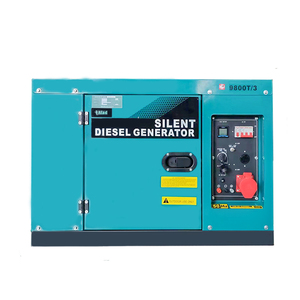
Portable Diesel Welder 2kw-5kw Power Auto Start Silent Type Welding Generator
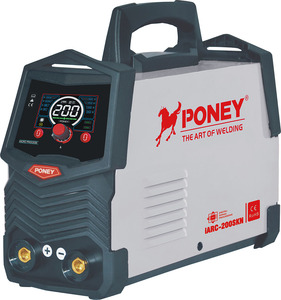
High Productivity 160amp DC Motor Inverter MMA Welding Machine IGBT Module
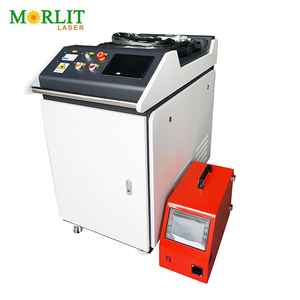
1000W 1500W 2000W 3000W Handheld Steel Aluminum Metal Fiber Laser Welder
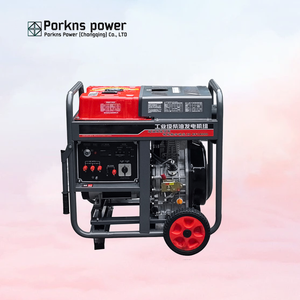
Porkns Power 5kw 7kva 8kva Gasoline Diesel Engine Driven Welder Generator
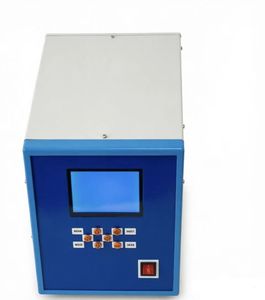
Parameter Self Inspection Transistor Welding Power Supply for Automation Plant
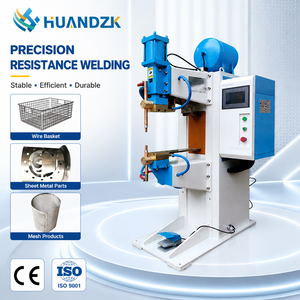
Car Body Welding System MFDC Power Supply Pulse Transformer Resistance Welder
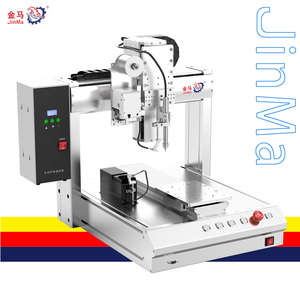
New Jinma Industrial 1000W 3-Axis Spot Soldering Welding Machine 0.02-0.05mm
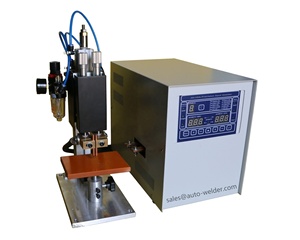
JM-05A Small Power Spot Welding Machine Battery Spot Welding Power Supply
Executive Whitepaper: Modern Engineering & Procurement Architecture of Industrial Welding Power Supplies
In high-stakes industrial manufacturing—spanning automotive body-in-white (BIW) lines, shipbuilding, structural steel erection, precision electronics, and EV battery cell tab assembly—the selection of the welding power source represents a critical operational vector. Far beyond being simple energy converters, contemporary welding power supplies function as high-frequency, microprocessor-controlled pulse shaping centers that directly govern weld bead metallurgy, joint fatigue resistance, heat-affected zone (HAZ) dimensions, and overall facility electrical efficiency.
This technical whitepaper examines the core engineering paradigms, technological shifts, and strategic procurement considerations driving the global welding power supply market. Developed from six decades of direct manufacturing and field deployment experience, this guide equips procurement directors, system integrators, and plant engineers with the metrics required to evaluate original equipment manufacturers (OEMs) and optimize total cost of ownership (TCO).
Technical Insight: Information Gain in Welding Power Evaluation
Traditional procurement often focuses solely on nominal amperage (e.g., 200A vs 400A). However, modern high-productivity lines require evaluation of dynamic arc response times (<1 millisecond), Power Factor Correction (PFC) efficiency ratios (>0.95), thermal duty cycle ratings under elevated ambient conditions (40°C ISO standards), and Total Harmonic Distortion (THD) generated on facility power grids.
1. Core Topologies of Advanced Welding Power Systems
Industrial power sources have evolved through distinct technological generations. Modern factory floors deploy four primary circuit architectures, each optimized for specific metallurgical and throughput criteria:
- IGBT Inverter Topology (Insulated Gate Bipolar Transistor): Operating at switching frequencies from 20 kHz to over 100 kHz, IGBT-based power sources reduce transformer core volume while delivering ultra-fast current correction. This architecture allows precise pulse shaping in MIG/MAG (GMAW) and TIG (GTAW) processes, minimizing spatter and dramatically reducing post-weld grinding labor.
- MFDC Power Supplies (Medium Frequency Direct Current - 1000Hz): Essential for resistance spot welding and automated automotive lines, MFDC systems convert 3-phase AC into a high-frequency 1000Hz signal before rectification. The resulting ripple-free DC current eliminates inductive losses in heavy welding tongs, yields longer electrode tip life, and reduces energy consumption by up to 30% compared to traditional 50/60Hz AC welders.
- Transistorized Linear & Fast-Response Power Sources: In ultra-precision applications such as micro-spot welding for medical devices, jewelry (0.02-0.05mm), and aerospace instrumentation, transistor-driven power supplies deliver instantaneous, closed-loop current regulation. These units feature integrated self-inspection algorithms that dynamically adjust output within microseconds of detecting joint resistance shifts.
- Engine-Driven Inverter Generators: Combining heavy-duty diesel or gasoline combustion engines with integrated inverter generator modules, these hybrid units deliver clean, stable sine-wave power to site welders. Designed for remote pipeline construction and rail maintenance, they isolate the arc circuit from engine RPM fluctuations, guaranteeing constant current (CC) or constant voltage (CV) dynamics.
2. Technical Specification & Process Selection Matrix
To assist engineering teams in matching process requirements with power source topologies, the following reference table outlines operational boundaries across key industrial applications:
| Power Architecture | Primary Welding Process | Current / Power Range | Target Substrates | Core Application Sector |
|---|---|---|---|---|
| IGBT Module Inverter | MMA / GMAW / GTAW | 130A - 600A | Carbon Steel, Stainless, Al | Heavy Fabrication, Shipyards |
| MFDC Pulse Inverter | Resistance Spot / Fastener | 10kA - 60kA (Secondary) | AHSS, UHSS, Galvanized Steel | Automotive BIW, Sheet Metal |
| Transistor Linear Unit | Micro Spot / Battery Tab | 0A - 250A / 1000W | Gold, Silver, Nickel, Copper | EV Battery, Micro Electronics |
| Fiber Laser Generator | Non-Contact Fiber Laser | 1000W - 3000W Optical | Alloy Steels, Thin Aluminum | Precision Enclosures, Medical |
| Silent Engine Diesel | SMAW / Field GMAW | 2kW - 8kW / 0A-350A | Structural Steels, Pipe Alloys | Pipeline, Cross-Country Infra |
Manufacturing Rigor & Enterprise Capability
Combining 60 years of foundational transformer engineering with state-of-the-art inverter research, our manufacturing facilities adhere to strict global quality standards.
Class F/H Copper Winding Rigor
We utilize double-insulated, Class H (180°C thermal rating) pure copper windings across all magnetic components. This prevents insulation breakdown during continuous 100% duty cycle operations in multi-shift fabrication plants.
100% Full-Load Burn-In Testing
Every single power supply undergoes automated full-load thermal chamber burn-in and dielectric withstand testing before dispatch. Serialized test logs are permanently archived for full buyer traceability.
Global Grid Compatibility
Designed to tolerate wide line-voltage fluctuations (±15%), our power sources feature wide-range primary input transformers and active power factor correction (PFC), ensuring seamless operation on weak grid infrastructure.
Closed-Loop Parameter Inspection
Integrated microprocessors execute parameter self-inspection cycles every 50 microseconds. Voltage drift, secondary current spikes, and cooling flow reductions trigger automated warnings to prevent weld defects.
Export-Grade Sea-Worthy Packaging
Equipped with vacuum-sealed vapor corrosion inhibitor (VCI) bags, desiccant packs, and reinforced plywood crates, equipment arrives at destination ports clean, moisture-free, and immediate for plug-and-play installation.
Complete Lifecycle Spares Availability
We maintain an extensive inventory of standardized IGBT modules, firing boards, pulse transformers, and torch assemblies. Spares kits are available with first-order shipments to minimize downtime overseas.
Future Trends in Welding Power Architecture & Procurement Strategy
As global manufacturing pivots toward Industry 4.0 integration, decarbonization, and light-weighting of structural assemblies, procurement leaders must look beyond immediate machine capital expenditures (CAPEX) to evaluate long-term technological adaptability. Key trends reshaping the industrial welding power sector include:
A. Transition to Smart Inverters with OPC UA & IoT Diagnostics
Modern welding power sources are no longer isolated machinery; they are networked data nodes. Industry 4.0 compliant power supplies natively support OPC UA communication protocols and Ethernet/IP interfaces. This enables factory management software (MES) to monitor real-time energy consumption, arc-on time, wire feed speeds, and individual weld bead energy signatures. Automated anomaly detection alerts operators to potential cold-lap or porosity conditions before components move to downstream assembly.
B. Hybrid Fiber Laser Power Integration
The convergence of handheld fiber laser systems with traditional MIG arc wire feed processes—known as Laser-Arc Hybrid Welding (LAHW)—is rapidly expanding in shipbuilding and railcar production. Power source manufacturers are responding by developing synchronized power supplies that trigger laser pulses and arc waveforms in microsecond unison. This yields weld penetration depths exceeding 10mm in a single pass while reducing overall thermal distortion by over 60%.
C. High-Frequency Micro-Resistance Welding for EV Battery Infrastructure
The rapid scale-up of electric vehicle (EV) battery manufacturing requires joining dissimilar light metals (such as copper-to-aluminum tabs) without damaging sensitive separator membranes. Traditional AC spot welders are inadequate due to high thermal inertia. The market is shifting decisively toward transistorized micro-power supplies and 1000Hz - 4000Hz MFDC systems capable of delivering localized energy bursts in under 5 milliseconds.
D. Total Cost of Ownership (TCO) & Energy Efficiency Mandates
Energy tariffs across industrial zones worldwide have made electrical efficiency a primary evaluation metric. Modern IGBT inverter power supplies achieve power factors of 0.93 to 0.98, compared to legacy transformer-rectifiers operating at 0.60 to 0.75. For a facility operating 50 welding bays on a multi-shift pattern, upgrading to high-efficiency inverter power sources typically yields a complete payback on equipment CAPEX within 14 to 22 months through utility bill savings alone.
Frequently Asked Questions (Procurement & Engineering FAQ)
Technical and commercial answers addressing high-intent queries from global industrial equipment buyers, plant managers, and procurement officers.
Duty cycle defines the percentage of a 10-minute period a welding power supply can operate at its rated current without thermal trip protection triggering (e.g., 60% duty cycle at 400A = 6 minutes continuous welding, 4 minutes cooling). Crucially, international standards (IEC 60974-1 / EN 60974-1) require rating at 40°C ambient temperature. Lower-tier manufacturers often quote duty cycles at 25°C, which causes premature thermal shutting down in real-world hot shop environments. Always verify 40°C ISO compliance.
IGBT Inverter power supplies use high-power electronic switches to manipulate main line power for high-output arc processes (MMA, MIG, TIG, Heavy Spot Welding) with superior energy efficiency. Transistor power supplies (often linear or analog controlled) operate at ultra-high switching speeds for micro-joining, battery tab spot welding, and fine jewelry soldering (0.02-0.05mm), where current response must be controlled in microsecond increments to prevent burn-through.
Medium Frequency Direct Current (MFDC) converts primary power to 1000Hz AC before rectifying it to smooth DC at the secondary welding circuit. This eliminates line frequency zero-crossing delays, prevents magnetic induction loss in robot arm welding guns, reduces power grid load peaks, and delivers consistent energy to high-strength steels, drastically reducing weld spatter and tip dressing frequency.
Yes. Our dual-capability generator-welder units feature independent auxiliary AC output windings (230V/240V or 110V options). This allows field site teams to operate grinding machines, job-site lighting, and power tools while simultaneously carrying out heavy arc welding operations without voltage sag on either circuit.
We manufacture custom primary power configurations tailored to destination electrical standards, including single-phase 110V/220V/230V/240V (50/60Hz) and three-phase 380V/415V/440V/480V (50/60Hz). Units include selector switches or automatic dual-voltage sensing circuits to prevent damage from incorrect facility hookups.
We offer comprehensive OEM/ODM engineering integration. This includes customized internal voltage-current characteristic curves (CC/CV/PULSE), specialized industrial communications protocols (CANbus, Profinet, DeviceNet), bespoke enclosure colors and branding, extended inter-connecting cable harnesses, water-cooling system integration, and customized CNC cutting table dimensions.
Power sources with built-in parameter self-inspection continuously monitor internal primary current, secondary arc voltage, thermal heat sink status, and coolant flow rates. If an anomaly occurs (such as a sudden drop in shielding gas flow or secondary short-circuit), the power supply instantly communicates with the robot cell controller to pause the cycle, preventing defective assemblies from moving down the line.