
Featured Industrial Welders & Laser Systems
Direct from factory production lines: High-efficiency, multi-function laser and arc welding machines engineered for structural steel, marine fabrication, and precision metal working.
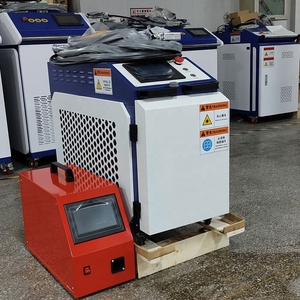
Laser Welders 4 Functions 1500W 2000W 3000W Handheld Machine
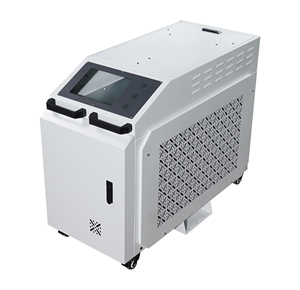
All-in-one Design Handheld Laser Welder Chiller SY-1500 For 1.5kW
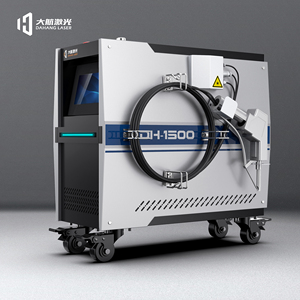
4 in 1 Air-cooled Laser Steel Aluminum Metal 1500W 2000W Fiber Welder
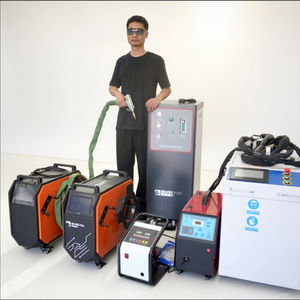
PANGOLIN Handheld Fiber Laser Welding Machine 1000W-3000W Air-Cooled
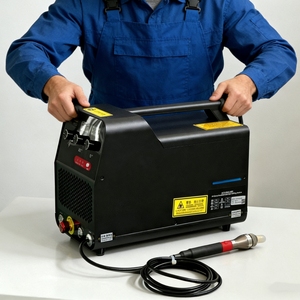
Portable Laser Welding Machine 600W Mini Handheld Spot Welder
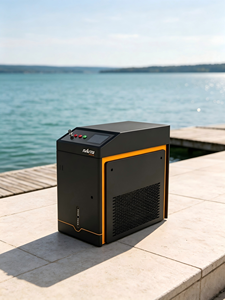
Economical 1500W 2000W 3000W Laser Welder for Stainless Steel & Aluminum
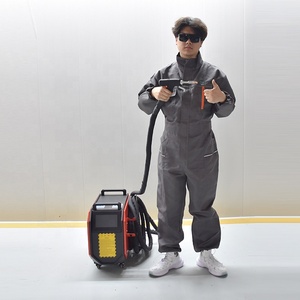
4in1 Laser Welding Machine Outdoor Portable Stainless Steel Iron Metal
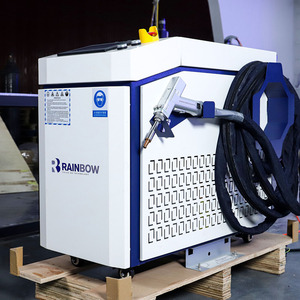
4 In 1 Handheld Laser Welder 1500W Iron Aluminum Welding Gun Package
Submerged Arc & Submerged Underwater Welding Metallurgy: An Operational Analysis
In heavy manufacturing, infrastructure build-outs, offshore platform fabrication, and naval engineering, the selection of joining equipment defines operational efficiency, structural integrity, and long-term fatigue resistance. Submerged welding encompasses two major industrial paradigms: Submerged Arc Welding (SAW)—where a blanket of granular, fusible flux completely subdues the electrical arc—and Underwater Submerged/Hyperbaric Welding—utilized for submarine hull restoration, offshore pipeline tie-ins, and port infrastructure maintenance.
1. Thermomechanical Principles of Submerged Arc Welding (SAW)
The fundamental mechanics of Submerged Arc Welding rely on creating a completely isolated reaction zone. A continuous solid or metal-cored electrode wire is fed into a weld pool blanketed by a formulated mineral flux (consisting of manganese silicates, calcium fluoride, and aluminum oxides). The heat generated by the electric arc melts both the wire electrode and the surrounding flux, forming a dense liquid slag layer over the molten metal pool.
This heavy liquid slag shield performs three crucial functions: first, it prevents atmospheric contamination (oxygen and nitrogen ingress); second, it slows down thermal dissipation to prevent brittle martensitic phase transformations in high-tensile structural steels; third, it acts as a metallurgical refining zone where active flux additives strip impurities such as sulfur and phosphorus from the weld metal matrix.
2. Underwater Submerged Welding: Wet vs. Dry Hyperbaric Modalities
When evaluating submerged welding solutions for maritime and subsea environments, technical buyers must differentiate between wet submerged welding and dry hyperbaric chambers:
- Wet Submerged Arc & Stick Welding: The welder operates directly in the aquatic environment using specialized waterproof flux-coated electrodes (rutile-based coatings with hydrophobic vinyl resins). The arc operates within a self-generated gaseous bubble (composed primarily of hydrogen, water vapor, and carbon monoxide). Rapid thermal quenching from surrounding water poses significant risks of micro-cracking due to hydrogen embrittlement.
- Dry Hyperbaric Submerged Welding: A custom pressure vessel or habitat is sealed around the submerged structural joint and pressurized with a gas mixture (typically helium-oxygen). Operators utilize advanced TIG, MIG, or Submerged Arc equipment inside the dry pocket, producing weld microstructures identical to onshore shop floor standards.
Process Comparison Matrix for Industrial Procurement
| Welding Process | Deposition Rate | Joint Thickness Range | Heat-Affected Zone (HAZ) | Primary Industrial Use |
|---|---|---|---|---|
| Submerged Arc (SAW) | 12 – 25 kg/hr | 6.0 mm to 100+ mm | Moderate to Wide | Shipbuilding, Pressure Vessels, Wind Towers |
| Handheld Fiber Laser | 2 – 6 kg/hr | 0.5 mm to 8.0 mm | Ultra-Narrow | Auto Components, Stainless Enclosures, HVAC |
| Inverter MIG/MAG | 3 – 8 kg/hr | 1.2 mm to 25.0 mm | Moderate | Structural Steel, Heavy Repair, Frame Lines |
| AC/DC Pulse TIG | 0.5 – 2 kg/hr | 0.5 mm to 6.0 mm | Controlled / Precise | Food & Pharma Piping, Aerospace Alloys |
Future Procurement Trends in Submerged & Laser Welding
Key technological shifts that global purchasing managers, plant engineers, and EPC contractors must account for in their capital equipment budgets over the next decade.
Industrial fabricators are increasingly shifting away from bulky liquid-cooled laser setups toward 4-in-1 air-cooled handheld fiber laser systems (1500W – 3000W). By eliminating external refrigeration chillers, factories reduce energy consumption by up to 35% and drastically simplify field maintenance while retaining clean cutting, cleaning, and welding capabilities.
Modern submerged welders and MIG rectifiers are evolving into fully networked edge devices. Industry 4.0 connectivity enables real-time voltage/amperage logging, heat-input calculation, and remote diagnostics, ensuring strict compliance with ISO 3834 and ASME Section IX quality standards.
To combat raw material inflation, major heavy engineering shops are standardizing on submerged arc welding tractors equipped with continuous vacuum flux recovery units. Unfused granular flux is immediately sieved, heated, and returned to the hopper, cutting flux expenditure by up to 40%.
For thick-wall pipe production and offshore monopile manufacturing, multi-wire tandem submerged arc welding (combining DC lead arc for penetration with AC trail arcs for cap appearance) is replacing single-wire units, effectively doubling travel speeds without risking center-line solidification cracking.
Why Global Buyers Partner With Our Factory & Export Hub
With over six decades of industrial engineering experience (originating in 1965), our manufacturing and export organization bridges the gap between rugged, heavy-duty welding hardware and precision electronic control. Every unit shipped from our facilities undergoes strict validation protocols designed to handle grid volatility in developing markets and heavy multi-shift industrial cycles in high-throughput shipyards.
100% Full-Load Testing
Unlike mass-market assemblers that perform quick open-circuit checks, every single welding power source is run at maximum rated amperage under simulated resistance load. Insulation resistance, thermal rise curves, and arc stability are verified and recorded against the machine's serial number.
Class H Copper Windings
Our transformer and inductor sub-assemblies utilize premium Class H insulated copper windings capable of withstanding operating temperatures up to 180°C. This provides immense thermal headroom during continuous 100% duty cycle applications.
Global Voltage Adaptability
Export machines can be configured for single-phase 220V or three-phase 380V, 415V, and 440V grids at both 50 Hz and 60 Hz. Wiring layouts adhere to CE international standards, complete with heavy-duty terminal blocks and flame-retardant internal ducting.
Frequently Asked Procurement Questions (FAQ)
Direct technical answers to common questions asked by overseas buyers, structural engineers, and equipment importers.
Ready to Optimize Your Industrial Welding Output?
Consult with our engineering team to select the ideal output rating, wire feeder configuration, or laser power source tailored to your production materials and duty requirements.