Featured Industrial Handheld Laser Systems
Explore our factory-direct handheld laser machines, engineered for high-precision welding, cutting, and multi-functional cleaning across stainless steel, aluminum, and carbon alloys.
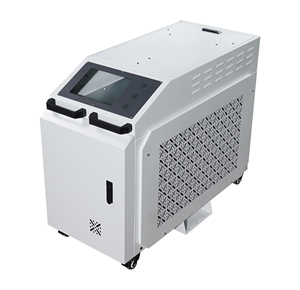
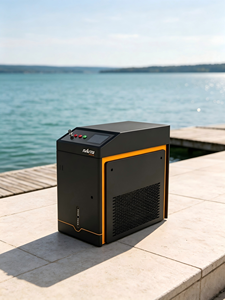
All-in-one Design Handheld Laser Welder Chiller SY-1500 (1.5kW)
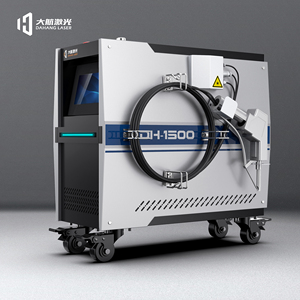
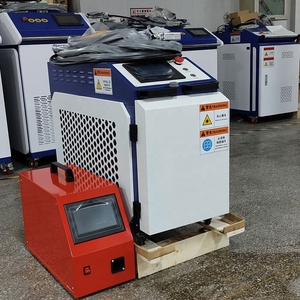
4 in 1 Air-Cooled Fiber Laser Welder 1500W-2000W for Steel & Aluminum
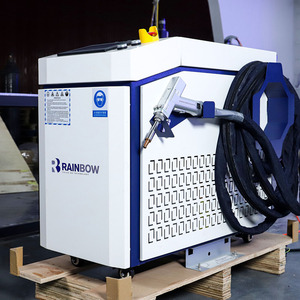
PANGOLIN Handheld Fiber Laser Welder 1000W-3000W Air-Cooled
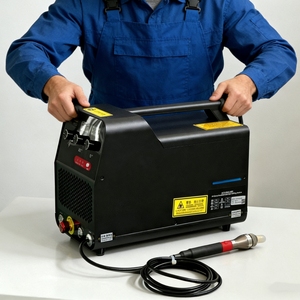
Portable 600W Mini Handheld Laser Spot Welder for Thin Sheet & Signage
Economical Wholesale 1500W-3000W Laser Welder for Metal Fabrication
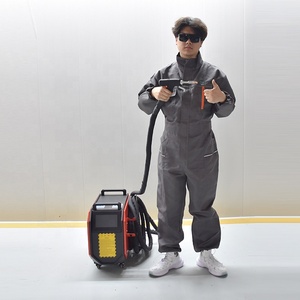
Outdoor Small Portable 4-in-1 Laser Welder Source Factory Direct
Industrial 4-in-1 1500W Handheld Fiber Laser Welding Gun Package
Executive Market Analysis: The Handheld Fiber Laser Revolution
How high-power density fiber lasers, wobble head optics, and air-cooled architectures are reframing cost structures across global metal fabrication facilities.
Thermal Efficiency & HAZ Reduction
Handheld fiber laser welding operates at focused energy densities exceeding 10 MW/cm². Unlike conventional Gas Tungsten Arc Welding (GTAW/TIG) or Gas Metal Arc Welding (GMAW/MIG), which flood the surrounding metal substrate with excessive heat, fiber laser beam interaction creates a localized keyhole effect. This drastically reduces the Heat-Affected Zone (HAZ), eliminating thermal warping, metal discoloration, and structural stress on thin sheet fabrications.
Operator Skill Democratization
Traditional high-spec TIG welding on aluminum or stainless steel requires years of certified welder training. Modern handheld wobble laser guns equipped with pre-programmed parameter libraries allow entry-level operators to produce radiographic-quality seams within hours. Automated wire feeding coupled with adjustable wobble widths (up to 5mm) bridge uneven fit-up gaps easily, resolving labor shortages for high-throughput manufacturing plants.
Key Technological & Product Development Trends
Understanding next-gen advancements in laser optics, air-cooling engines, and multi-functional 4-in-1 head architectures.
1. Air-Cooled Engine Architecture
While early generation 1kW–3kW laser welders relied strictly on heavy liquid chillers containing deionized water, recent advances in high-efficiency semiconductor pump diodes have birthed air-cooled fiber laser engines. These units eliminate water maintenance, refrigerant leakage risks, and freezing hazards in cold climates while cutting total chassis footprint by over 50%.
2. Smart 4-in-1 Multi-Process Optics
Modern factory floors demand high tool flexibility. High-end handheld systems feature quick-change focal nozzles allowing immediate transition between laser welding, rust/oxide laser cleaning, sheet metal cutting, and weld-bead post-cleaning. This multi-tool capability eliminates capital expenditure on separate laser surface preparation stations.
3. Dual-Wobble Beam Trajectory
First-generation static laser guns produced extremely narrow weld beads, requiring perfect seam alignment. Contemporary dual-axis wobble optical heads oscillate the laser beam at frequencies up to 300 Hz in circular, ellipse, triangle, and line patterns. This broadens the melt pool, improves gap tolerance up to 2.5mm, and allows smooth filler wire integration.
Future Procurement Trends for Industrial Buyers (2026–2030)
A strategic roadmap for procurement managers evaluating OEM vs ODM suppliers, laser source longevity, and total cost of ownership (TCO).
Standardization of Core Optical Components
Global procurement teams are shifting away from proprietary closed-loop hardware toward standardized, modular laser systems. Sourcing managers now prioritize handheld laser manufacturers who utilize standard QBH fiber connectors, industry-standard protective lens geometries, and universally available dual-drive wire feeder components.
This standardization ensures that replacement optics, protective windows, and wire nozzles can be sourced locally across North America, Europe, and Asia-Pacific without causing extended line shutdowns.
Key Buyer Evaluation Checklists
- Laser Source MTTF Rating: Verify mean time to failure (MTTF > 100,000 hours) for continuous wave single-mode fiber modules.
- Electrical & Voltage Adaptability: Confirm multi-voltage transformer capability (220V 1-Phase / 380V–440V 3-Phase) for global regional grids.
- Safety Interlock Compliance: Ensure guns feature dual-contact grounding circuits and optical beam shut-off sensors.
- Consumable Life Cycles: Review replacement frequency and pricing for protective lenses, copper nozzles, and gas diffusers.
Manufacturing Excellence & Industrial Heritage
Combining 60 years of heavy industrial machinery engineering with state-of-the-art fiber laser manufacturing.
60 Years Engineering Heritage
Established in 1965, Uttam Industries brings six decades of machine design, transformer winding, and structural arc stability engineering. Our facilities in Mandi Dabwali (Haryana) and Delhi, India, deliver robust machinery built specifically for multi-shift industrial environments.
100% Full-Load Test Protocols
No machine leaves our production floor without undergoing rigorous full-load testing. Every laser welder and plasma system is verified under maximum duty cycles, tested for optical power stability, current insulation resistance, and thermal endurance under heavy loads.
Global Export & Customization
We engineer custom power configurations (220V/380V/440V, 50/60Hz), custom extended fiber cable lengths (up to 15m), specialized wire feeder rollers, and export-ready sea crating to serve fabricators, shipyards, and automotive tiers worldwide.
Handheld Laser vs. Traditional Metal Joining Processes
Compare mechanical efficiency, operator learning curves, and total operation costs between process technologies.
| Performance Metric | Handheld Fiber Laser | TIG (GTAW) Welding | MIG (GMAW) Welding | Plasma Cutting / Joining |
|---|---|---|---|---|
| Process Speed | Ultra-High (Up to 120 mm/s) | Slow (15-25 mm/s) | Moderate (30-50 mm/s) | High Speed (Cut) |
| Heat-Affected Zone (HAZ) | Microscopic / Minimal | Extremely Wide | Moderate to Wide | Moderate |
| Post-Welding Grinding | Rarely Needed (Smooth Seam) | High (Discoloration removal) | Extremely High (Spatter) | Dross Removal Required |
| Thin Metal Performance (<1mm) | Zero Burn-Through / Distortion | High Risk of Warp | Unsuitable for ultra-thin | N/A |
| Operator Skill Required | Basic (1-2 Hours Training) | Master Welder Required | Semi-Skilled Welder | Basic Operator |
| Shielding Gas Consumption | Argon / Nitrogen (Low Flow) | Argon (High Flow) | CO2 / Argon Mix | Compressed Air / Nitrogen |
Handheld Laser Procurement & Technical FAQ
Expert insights addressing common engineering, maintenance, and commercial questions from international buyers.
Maximum single-pass full-penetration welding capacities vary by power level and material alloy:
- 1.5kW System: Stainless steel & carbon steel up to 4.5mm; aluminum alloys up to 3.5mm.
- 2.0kW System: Stainless steel & carbon steel up to 6.0mm; aluminum alloys up to 5.0mm; brass up to 4.0mm.
- 3.0kW System: Stainless steel & carbon steel up to 8.0mm; aluminum alloys up to 7.0mm; brass up to 6.0mm.
Water-cooled laser systems use an active compressor chiller with liquid coolant lines routed alongside the fiber optic cable. They excel in ambient temperatures above 45°C (113°F) during non-stop 24/7 continuous operation. Air-cooled systems use forced radiator heat sinks directly within the cabinet, offering a smaller footprint, lower power draw, lighter weight, and zero risk of water line leaks or freeze damage, making them ideal for mobile site work and standard shop environments.
Mode switching is accomplished by changing the front copper nozzle assembly and selecting the corresponding preset profile on the controller touchscreen. Swapping to a wide-beam cleaning nozzle adjusts the wobble motor optics to sweep a broad laser line (up to 120mm width) for surface rust and paint removal. Installing a narrow cutting tip focuses power for metal slicing, while a wire-feed welding nozzle guides filler metal precisely into the melt pool.
The primary consumable is the protective optic lens (window), which protects the internal focusing optics from spatter. Depending on gas cleanliness and wire feeding parameters, a protective window lasts between 100 to 300 welding hours. Other lower-wear consumables include copper contact nozzles (500+ hours) and wire feeder guide tubes.
Handheld laser welders are Class 4 laser products. Operators must wear certified Laser Safety Goggles matching the fiber laser wavelength (typically 1064nm – 1080nm with OD6+ protection rating). Operating areas should feature interlocking safety enclosures, anti-reflection barriers, and safety grounding clamps attached to the workpiece to enable optical emission circuits.
Yes. We regularly supply machines configured for international three-phase grids (380V, 415V, 440V at 50/60 Hz) as well as heavy-duty single-phase 220V units. All export consignments include CE-compliant wiring practices, robust circuit breaker protection, and seaworthy moisture-proof packaging.
Ready to Upgrade Your Metal Fabrication Efficiency?
Request a customized commercial quote, technical parameters sheet, or schedule a live video demonstration with our expert engineering team today.