
Direct Factory Catalog
Featured Industrial Stud & Laser Welding Systems
Exceeding international standards for continuous heavy fabrication, automotive assembly lines, and high-precision sheet metal joining.
Technical Insight
Evaluating Top China Stud Welder Factories: An Engineering Sourcing Framework
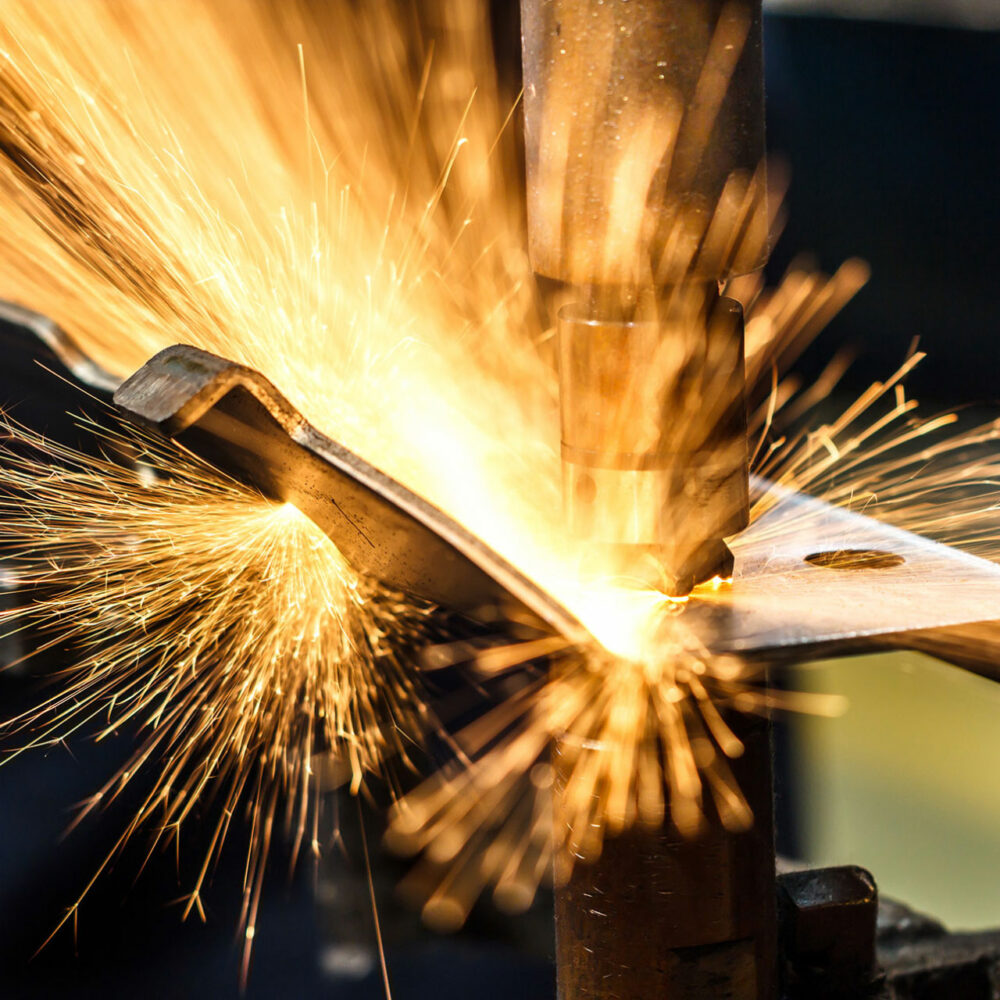
When global procurement directors evaluate China stud welder manufacturers and exporters, technical performance metrics must supersede simple baseline pricing. Stud welding—encompassing both Capacitor Discharge (CD) and Drawn Arc (DA) processes—demands extreme power electrical stability, sub-millisecond switching precision, and thermal resilience under multi-shift industrial load.
Leading OEMs and Tier-1 structural fabricators require stud welding power sources capable of consistently securing threaded studs, shear connectors, and unthreaded pins without reverse-side plate distortion or cosmetic burn-through. The engineering benchmarks that separate tier-one Chinese manufacturing plants from assembly workshops include:
- Capacitor Bank Quality: Utilization of high-capacitance, rapid-discharge electrolytic capacitors rated for over 1,000,000 continuous weld cycles without voltage drift.
- Transformer Winding Specifications: Heavy-gauge Class F or Class H insulated copper windings delivering high duty cycles (60% to 100%) even under ambient shop floor temperatures exceeding 40°C.
- Dynamic Arc Control Electronics: Microprocessor-driven current regulation preventing arc blowout and minimizing spatter during drawn arc operations on rusted or mill-scale steel surfaces.
Strategic Sourcing 2026-2030
Emerging Technology & Procurement Trends in Metal Joining
How global industrial buyers are restructuring their equipment portfolios toward multi-process flexibility and fiber laser integration.
Convergence of 4-in-1 Handheld Laser Platforms
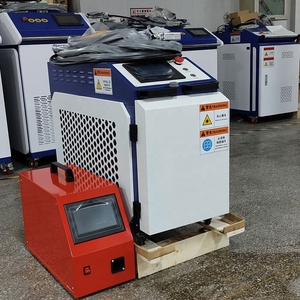
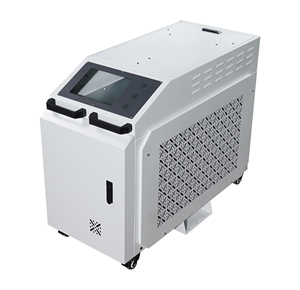
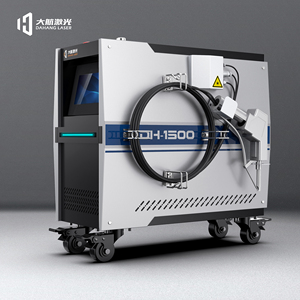
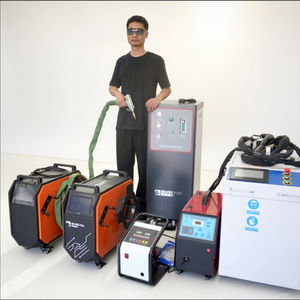
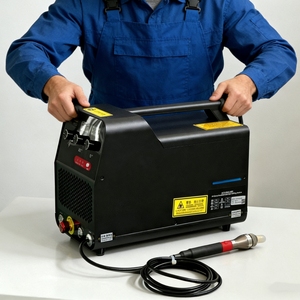
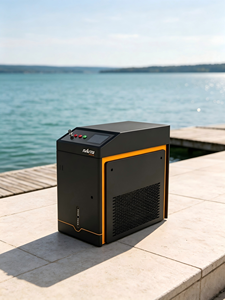
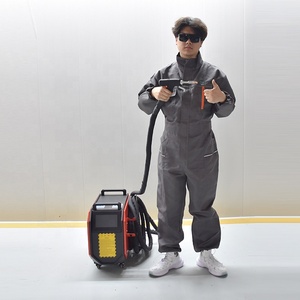
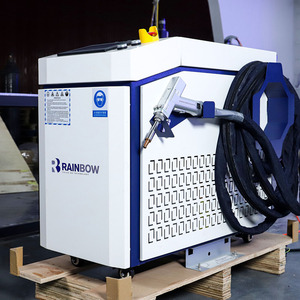
The rapid rise of air-cooled and water-cooled 1500W–3000W fiber laser systems has redefined thin-gauge sheet metal production. Modern factories are moving away from dedicated single-function machines toward versatile 4-in-1 architectures capable of high-speed laser welding, rust/oxide laser cleaning, precision beam cutting, and seam weld-cleaning within a single portable torch setup.
Grid-Tolerant Export Power Designs
Overseas infrastructure variations require export-grade stud welders and arc rectifiers to operate reliably across broad voltage swings (380V / 415V / 440V three-phase, 50/60Hz). Leading Chinese exporters now standardise CE-compliant isolation transformers, thermostatic overload protection, and dual-voltage auto-switching circuits to ensure uninterrupted duty in global shipyards and remote construction sites.
Reductions in Total Cost of Ownership (TCO)
Procurement officers are increasingly auditing lifecycle consumable costs alongside initial machine acquisition. By selecting modular, repairable machine architectures with standardized torch connectors and readily available spare parts, industrial buyers avoid vendor lock-in, streamline maintenance overhead, and achieve payback within 6 to 12 months of deployment.
Engineering Selection Matrix
Industrial Joining Process Technical Comparison
Match your component material, thickness, and throughput requirements against key industrial welding methodologies.
| Joining Technology | Optimal Material Thickness | Deposition & Speed Rate | Heat-Affected Zone (HAZ) | Cosmetic / Finish Quality | Primary Industrial Use Case |
|---|---|---|---|---|---|
| Capacitor Discharge (CD) Stud Welding | 0.5 mm – 3.0 mm sheet metal | Ultra-High (10-20 studs/min) | Negligible (No reverse marking) | Flawless (No post-grinding) | Enclosures, HVAC ducting, elevator panels |
| Drawn Arc (DA) Stud Welding | 2.0 mm – 25.0+ mm heavy plate | High (5-12 studs/min) | Controlled / Moderate | Structural weld collar | Shipbuilding, bridges, composite beams |
| Fiber Laser 4-in-1 Handheld | 0.3 mm – 6.0 mm metals | Extremely High (Up to 10x TIG) | Narrow / Minimal distortion | Smooth bead / Minimal oxidation | Automotive parts, stainless tanks, cabinetry |
| MIG/MAG Synergic Inverter | 0.8 mm – 20.0 mm steel/aluminum | High continuous deposition | Moderate to Wide | Clean, low spatter | Structural steel, automotive chassis, general fab |
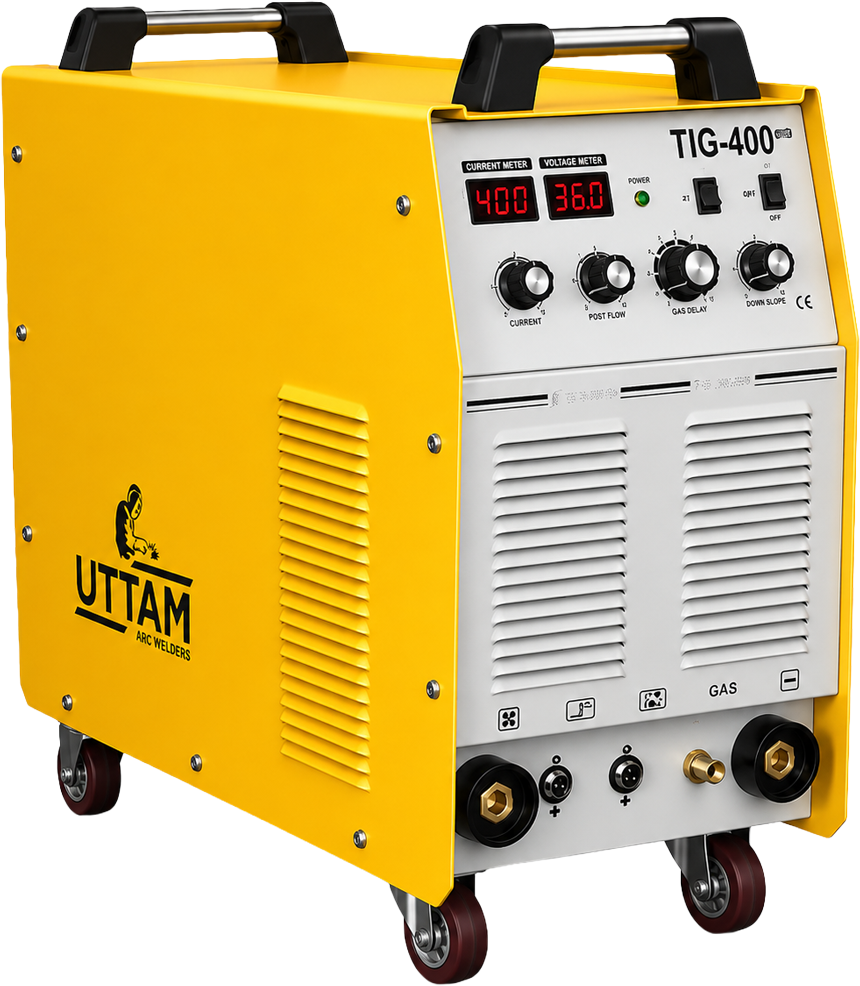
| TIG (GTAW) AC/DC Pulse | 0.5 mm – 8.0 mm alloys | Low to Moderate | Controlled thermal input | Radiographic / Cosmetic perfection | Aerospace, pharmaceutical piping, food-grade vessels |
| Heavy-Duty Arc Rectifier (SMAW) | 3.0 mm – 40.0+ mm structural | Moderate | Wide thermal impact | Requires manual slag removal | Heavy engineering, shipyard repair, site erection |

Manufacturing Excellence
Strict Quality Assurance & Load Testing Protocols
Enterprise reliability is established on the factory floor, long before equipment is loaded into sea containers. A true tier-one welding equipment exporter operates under strict ISO 9001 quality management guidelines, enforcing multi-stage inspections during production:
1
Full-Load Thermal & Current Testing
Every power source undergoes continuous max-amperage load testing to verify thermostatic overload cutouts, cooling airflow design, and insulation resistance against high-humidity conditions.
2
Component-Level Traceability
Main PCBA control boards, IGBT inverter modules, and heavy copper transformers are logged with individual serial numbers for full lifecycle traceability and straightforward overseas spare part replacement.
3
Export-Grade Packaging & Moisture Control
Machinery shipped internationally is packed in vacuum-sealed anti-moisture barrier film inside reinforced wooden crates engineered to absorb ocean freight vibration and handling forces.
Global Applications
Engineered Solutions for Critical Industrial Sectors
Different industrial manufacturing sub-sectors present distinct joining requirements. China’s leading equipment exporters customize current parameters, duty ratings, and torch accessories to match exact job-site environments:
Automotive & Electric Vehicles
Rapid stud fixing for wiring harness brackets, ground studs, and aluminum body panel reinforcement.
Shipbuilding & Marine Structures
Heavy-duty drawn arc stud welding of insulation pins and structural shear connectors on deck plates.
Commercial HVAC & Enclosures
Zero-mark CD stud welding on stainless and galvanized steel cabinets without paint damage.
Heavy Steel Fabrication
High-amperage SMAW/MIG systems for thick-section structural beam joining and bridge building.
Procurement FAQ
Frequently Asked Questions by International Buyers
Addressing standard technical, commercial, and logistical inquiries regarding industrial welding exports.
Q: Which welding and cutting machines do top China factories produce for export?
Leading Chinese export facilities manufacture comprehensive product ranges including Capacitor Discharge (CD) and Drawn Arc stud welders, 4-in-1 handheld fiber laser welding/cleaning/cutting units, double-holder and single-holder manual arc welders, synergic MIG/MAG inverter systems, AC/DC pulse TIG units, industrial air plasma cutters, and automated CNC gantry profile cutting tables spanning output classes from 130A to 1250A.
Q: What is the fundamental difference between MIG and TIG welding equipment?
MIG (GMAW) welding feeds a continuous consumable wire electrode shielded by inert or active gas, yielding high metal deposition speeds ideal for high-volume structural steel and production manufacturing. TIG (GTAW) uses a non-consumable tungsten electrode under pure argon shielding to deliver precise, highly controlled heat input—producing clean, low-distortion welds on stainless steel, aluminum, and thin tubing where cosmetic or radiographic quality is mandatory.
Q: Are China-manufactured stud welders suitable for continuous multi-shift industrial duty cycles?
Yes. Industrial-tier export models are designed for 60% to 100% duty cycles at maximum rated current. They feature Class F/H copper winding insulation, forced-air cooling tunnels, heavy-duty capacitor banks, and thermostatic overload cutouts, ensuring uninterrupted performance during multi-shift shipyard, structural steel, and automotive manufacturing operations.
Q: Can machines be configured for 380V, 415V, or 440V three-phase international power grids?
Yes. Export equipment can be tailored for 220V single-phase or 380V–440V three-phase power supplies at both 50 Hz and 60 Hz frequencies. Machines are wired according to CE safety guidelines, supplied with region-specific industrial plugs, and accompanied by multilingual operation manuals for seamless commissioning.
Q: Are OEM customizations available for specialized industrial applications?
Absolutly. Manufacturers provide extensive OEM customization, including tailored cable harness lengths, heavy-duty transport trolley integrations, closed-loop water chiller torch packages, remote control interfaces, automated stud-feeding guns, and custom-sized CNC plasma/laser cutting tables tailored to customer sheet formats.
Q: What technical support and spare-parts services are provided to overseas buyers?
Every export shipment includes comprehensive schematic wiring diagrams, exploded spare-parts lists, and operator commissioning documentation. Factory engineering teams offer video remote diagnosis, supply recommended wearable spares kits (contact tips, nozzles, collets, chucks) with initial orders, and provide parameter guidance for specific material grades.
Optimize Your Industrial Joining Pipeline Today
Consult with our experienced engineering specialists to match your material requirements, production volumes, and duty cycles with the ideal stud welding or fiber laser system.