
Featured Cold Welding & Precision Laser Systems
Direct factory-engineered cold welding equipment, handheld fiber laser platforms, and multi-functional 4-in-1 systems rated for continuous B2B manufacturing.
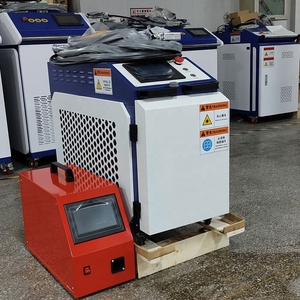
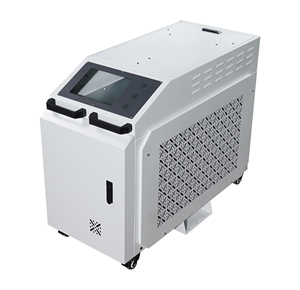
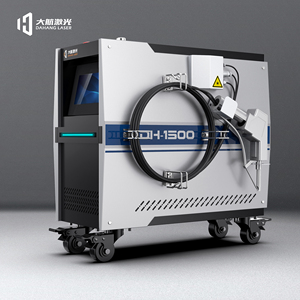
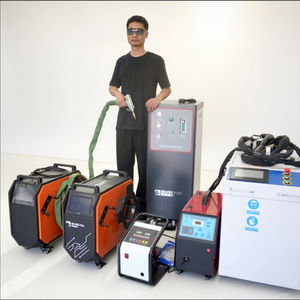
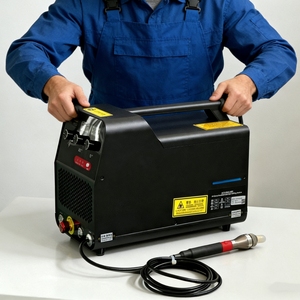
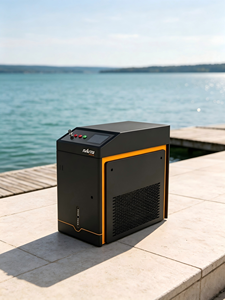
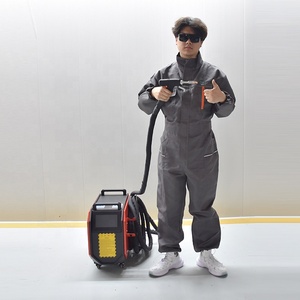
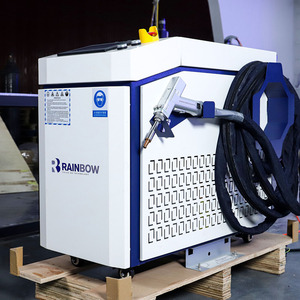
1. The Metallurgy of Cold Welding: Heat-Input Control & Thermal Distortion Elimination
In modern high-precision metal fabrication, conventional arc welding processes such as standard MIG (GMAW) or unpulsed TIG (GTAW) often deliver excessive linear heat input into thin-gauge sheet metals. This excessive heat generates significant thermal stress, workpiece warping, burn-through, and metallurgical degradation, including carbide precipitation in austenitic stainless steels (304/316L) and grain growth in high-strength aluminum alloys. Sourcing equipment from top China cold welder factories requires a clear understanding of the thermodynamic mechanisms that define true "cold welding."
Precision industrial cold welding—whether executed via Micro-Pulse TIG Cold Welding, Electric Contact Resistance Cold Discharge, or High-Speed Pulse Fiber Laser Cold Welding—operates on the principle of ultra-short energy release. By delivering high peak electric current or laser energy density across millisecond duration windows (typically 1 to 99 ms), the molten pool solidifies almost instantaneously. The net heat input equation is governed by:
Thermal Energy Equation: Q = (V × I × 60 / v × 1000) × η
Where Q represents heat input (kJ/mm), V is voltage, I is peak current, v is welding speed, and η is process efficiency. Industrial cold welders minimize Q by compressing time duration rather than sacrificing peak arc intensity, keeping the surrounding metallic lattice near room temperature.
As a direct consequence of this restricted thermal envelope, the Heat-Affected Zone (HAZ) is reduced by up to 85% compared to conventional TIG welding. The base metal retains its original tensile yield strength, grain structure, and corrosion-resistant surface passivation layer without necessitating secondary thermal stress relief, mechanical straightening, or intensive post-weld grinding.
Key Metallurgical Advantages of Factory-Engineered Cold Welders
Zero Substrate Warping
Instantaneous pulse discharge ensures heat dissipates faster than thermal conduction spreads through 0.3mm–3.0mm thin sheet metal panels.
No Discoloration & Oxidation
Protects chromium content in stainless steels, preventing surface blueing/blackening and maintaining innate anti-corrosion properties.
Mold Repair & Precision Restorations
High discharge accuracy permits pin-point deposit buildup on expensive injection molds, stamping dies, and turbine blades without sink marks.
2. Global Procurement & Technology Trends in Cold Welding Equipment
The global market for industrial metal joinery is undergoing a major technological transformation. International procurement officers, OEM factory auditors, and structural engineering managers are progressively replacing legacy manual arc systems with automated and handheld cold welding tech. Modern global procurement strategies are currently shaped by several macro-industrial shifts:
A. Rapid Transition from Water-Cooled to Air-Cooled Handheld Systems
Historically, high-power fiber laser cold welding required bulky external refrigeration chillers, adding substantial floor footprint, higher failure rates in freezing temperatures, and steep energy overheads. Next-generation China cold welder factories have pioneered highly efficient heat-pipe radiator assemblies and direct-refrigerant chips, enabling 4-in-1 air-cooled fiber laser welders (1500W–2000W) that operate reliably in ambient temperatures ranging from -15°C to 45°C.
B. Convergence of Multi-Process Capabilities (4-in-1 Systems)
Modern workshop agility demands multi-functional capital equipment. Procurement specifications increasingly mandate multi-mode laser engines that seamlessly switch between Precision Cold Welding, Surface Laser Cleaning, Narrow-Kerf Laser Cutting, and Weld Bead Pre-Pass Preparation inside a single modular chassis. This multifunctionality dramatically lowers Total Cost of Ownership (TCO) and accelerates Return on Investment (ROI) for contract fabricators.
C. Energy Efficiency and Carbon Compliance Standards
With stringent global carbon regulations (such as EU CBAM compliance), manufacturing plants are auditing electrical efficiency. Modern inverter-driven micro-cold welders and fiber laser systems exhibit up to 85% electrical-to-optical conversion efficiency, reducing kilowatt-hour power consumption by over 50% compared to traditional transformer-based 400A rectifiers.
3. Technical Selection Matrix: Cold Welding vs. Traditional Joining Processes
Selecting the optimal equipment configuration requires matching structural load demands, plate gauge thickness, and aesthetic tolerance against operational process attributes:
| Welding Technology | Typical Gauge Range | Heat-Affected Zone (HAZ) | Post-Weld Grinding Need | Operator Skill Level | Primary Industrial Use Case |
|---|---|---|---|---|---|
| Micro-Pulse Cold Welder | 0.2 mm – 3.0 mm | Ultra-Narrow (<0.3 mm) | None to Minimal | Low to Semi-Skilled | Precision Sheet Metal, Medical Enclosures, Mold Repair |
| Handheld Fiber Laser Cold Welder | 0.5 mm – 6.0 mm | Narrow (<0.5 mm) | Zero (Cosmetic Finish) | Low (Rapid 1-Hour Training) | Automotive Bodies, Stainless Cabinets, Kitchenware |
| Pulsed TIG (GTAW) | 0.8 mm – 8.0 mm | Moderate (1.5 – 3.0 mm) | Moderate (Pickling/Polishing) | High (Certified Welder Required) | Pressure Piping, Aerospace Elements, Chemical Tanks |
| MIG / MAG (GMAW) | 1.5 mm – 20.0 mm | Wide (>4.0 mm) | High (Heavy Slag & Spatter) | Medium | Structural Steel, Heavy Machinery Frames, Shipyards |
| Capacitor Stud Welding | Fasteners M3 – M12 | Localized Base Discharge | None | Semi-Skilled | HVAC Ducting, Architectural Cladding, Electrical Panels |
4. China Cold Welder Factory Evaluation: Technical Audit & Quality Control Benchmarks
When evaluating Chinese manufacturing sources for commercial cold welding systems, procurement teams must look beyond superficial catalog specifications. Achieving reliable performance in demanding factory environments requires strict adherence to international electrical, mechanical, and safety standards.
100% Full-Load Thermal Stress Testing
Leading factories execute 48-hour continuous full-duty thermal soak tests inside climate-controlled chambers to ensure power electronics withstand high ambient temperatures without thermal shutdown.
Class F / Class H Insulation Copper Windings
High-grade copper windings insulated to 155°C (Class F) or 180°C (Class H) eliminate inter-turn short circuits during unstable voltage drops typical of overseas job sites.
Global Voltage & Frequency Compatibility
Export-ready configurations support 220V single-phase, 380V, 415V, and 440V three-phase grid inputs at both 50Hz and 60Hz, compliant with CE and ISO wiring practices.
Factory Procurement Insight: A top-tier cold welder manufacturer maintains full component traceability from silicon insulated-gate bipolar transistors (IGBT modules) down to transformer core lamination thickness. Always request complete load-test certificates, insulation resistance logs, and earth-continuity verification reports prior to container dispatch.
5. Frequently Asked Questions (FAQ) for Global Buyers & Engineers
What distinguishes a Cold Welder from a standard TIG welding machine?
A standard TIG welder maintains continuous current flow, generating significant heat that quickly transfers into the surrounding metal, often leading to warping and discoloration. In contrast, a cold welder discharges micro-energy pulses ranging from 1 to 99 milliseconds. The interval between pulses allows the weld pool to cool rapidly, delivering high-density arc energy while keeping the base substrate cool to the touch.
Can cold welding equipment handle aluminum and copper alloys effectively?
Yes. Advanced AC/DC pulse cold welders and high-power fiber laser cold welding systems break through the tough oxide layer of aluminum alloys (such as 6061, 5082) and high-conductivity copper without overheating the substrate. For aluminum, utilizing clean argon shielding gas alongside precise pulse frequency control yields dense, porosity-free weld beads.
What is the expected operating duty cycle under continuous industrial production?
Industrial-grade cold welders built with forced-air or integrated chiller cooling systems feature a 60% to 100% duty cycle at maximum rated power output. Internal thermostatic cut-out sensors automatically protect internal power modules against voltage spikes, phase loss, and thermal overloads during multi-shift operation.
How do 4-in-1 handheld fiber laser cold welders streamline factory workflows?
4-in-1 systems combine welding, cleaning, cutting, and weld-channel preparation into one handheld torch head. By quickly changing the optical nozzle and choosing the appropriate firmware preset, an operator can clean rust off a seam, execute a cold weld, and trim excess sheet metal without switching out machines, dramatically reducing handling time.
What spare parts and maintenance kits should be included with export orders?
We recommend stocking essential consumables alongside your initial machine order: specialized tungsten electrodes, copper welding nozzles, protective optical lenses, wire-feed drive rollers, and replacement gas hoses. Top Chinese suppliers provide modular sub-assemblies and marked wiring schematics to ensure your maintenance personnel can service equipment independently.
What custom packaging standards are implemented for ocean freight export?
Export machinery is sealed in vapor-barrier vacuum foil bags containing industrial desiccants, then packed into reinforced, heat-treated plywood crates (ISPM-15 compliant). This prevents salt-air corrosion, humidity accumulation, and mechanical shock during long transit times.
Ready to Upgrade Your Factory's Precision Joining Capabilities?
Consult with our senior welding engineers to map your material specifications, target throughput, and technical requirements to the ideal cold welding platform.