
Featured Laser & Industrial Joining Machine Range
Select from China's top-tier handheld fiber laser welders, multi-function laser cleaners, and continuous duty joining systems engineered for stainless steel, copper, aluminum, and brass alloys.
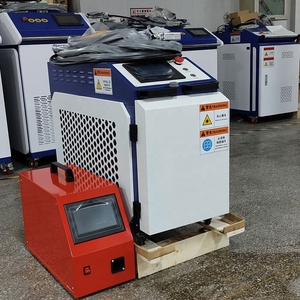
Laser Welders 4 Functions 1500W 2000W 3000W 4 in 1 Handheld Laser Cutting Cleaning Welding Machine
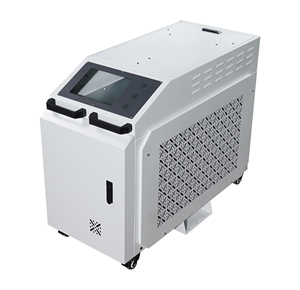
All-in-one Design Handheld Laser Welder Chiller SY-1500 For 1.5kW Handheld Laser Welding New
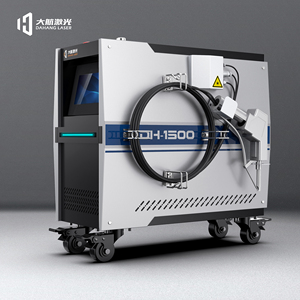
4 in 1 Air-cooled Laser Steel Aluminum Metal 1500W 2000W Fiber Laser Welding Welder Machines
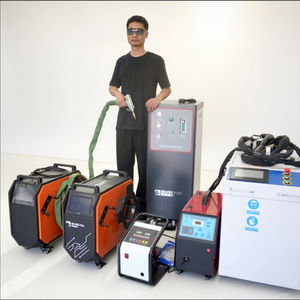
Professional High-Efficiency PANGOLIN Handheld Fiber Laser Welding Machine 1000W-3000W Air-Cooled
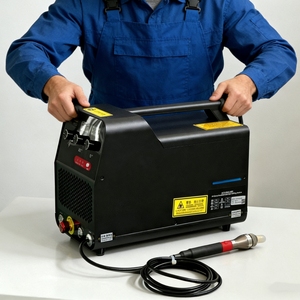
Portable Laser Welding Machine 600W Mini Handheld Spot Welder for Thin Sheet Advertising & DIY
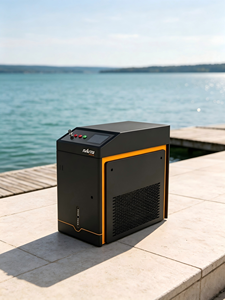
Wholesale Economical Price 1500W 2000W 3000W Laser Welding Machine For Stainless Steel Aluminum
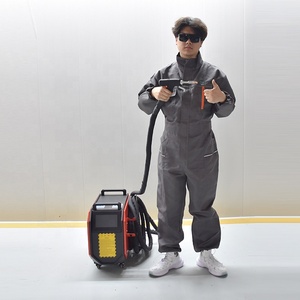
4in1 Laser Welding Machine Outdoor Small Portable Stainless Steel Iron Aluminum Source Factory
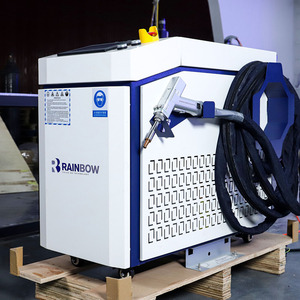
Cheapest 4 In 1 Laser Welding Machine 1500w Laser Welder Handheld Fiber Laser Metal Welding Gun
The Metallurgy & Thermodynamics of Modern Industrial Brazing Systems
As global industrial manufacturing advances toward higher energy density, micro-distortion requirements, and lightweight alloy joining, evaluating a China brazing machine manufacturer & supplier requires a thorough understanding of metallurgical capillary action, localized heat flux management, and solid-state power topology. Unlike standard fusion welding, high-efficiency brazing relies on heating base metals above 450°C (840°F) while maintaining base metal integrity below its liquidus temperature.
1. Capillary Action & Joint Clearance Dynamics
Optimal joint strength in automated brazing is governed by capillary attraction. Capillary attraction forces the molten filler metal (such as silver, copper-phosphorus, or aluminum-silicon alloys) into the narrow interface between workpiece components.
- Optimal Joint Clearance: Precise tolerances between 0.015 mm and 0.12 mm yield maximum tensile strength, often exceeding base metal ratings.
- Surface Tension Control: Automated fluxing and inert gas shielding (Argon/Nitrogen) lower interfacial contact angles to under 15 degrees.
- Wetting Velocity: High-frequency induction power supplies accelerate wetting cycles to under 2.5 seconds per joint.
2. Power Supply Topologies: IGBT Inverters vs. Flame Torch Systems
Modern Chinese OEM production lines have shifted decisively from open-flame oxy-fuel torches to 3rd-generation IGBT (Insulated-Gate Bipolar Transistor) solid-state induction generators and high-brightness continuous-wave (CW) fiber lasers.
- Energy Efficiency: IGBT inverter induction heating converts over 92% of electrical power into localized electromagnetic thermal energy.
- Thermal Gradient Management: Closed-loop pyrometer feedback prevents grain growth and softening in heat-treated copper and brass alloys.
- Process Repeatability: Microprocessor parameter storage replaces manual operator error, delivering Cpk > 1.67 in automotive HVAC production.
Brazing & Thermal Joining Process Selection Matrix
Evaluate key performance indicators across different industrial joining methods to specify the correct machine architecture for your factory floor.
| Joining Technology | Typical Base Metals | Heating Speed | Thermal Distortion | Automation Grade | Primary Industrial Use Case |
|---|---|---|---|---|---|
| High-Frequency Induction Brazing | Copper, Brass, Steel, Carbide | Ultra-Fast (1.5 - 5s) | Extremely Low | Fully Automated / Robotic | HVAC Coils, EV Motors, Carbide Tools |
| Fiber Laser Brazing / Welding | Galvanized Steel, Stainless, Al | High Speed (> 3 m/min) | Negligible (Localized) | CNC / 6-Axis Arm | Automotive Roof Seams, Enclosures |
| Vacuum Furnace Brazing | Stainless, Superalloys, Titanium | Batch Heating (Hours) | Zero Uniform Gradient | Batch Programmable | Aerospace Heat Exchangers, Medical |
| Automated Flame Brazing | Copper Aluminum Hybrid Pipes | Moderate (8 - 20s) | Moderate | Semi-Automated Rotary | Refrigeration Fittings, Plumbing Valves |
| Resistance Spot / Brazing | Electrical Contacts, Busbars | Instantaneous (< 1s) | Localized | Pneumatic / Servo Integrated | Switchgear, Transformer Lead Brazing |
Future Procurement Trends in China's Brazing & Joining Machinery Sector
Key technological shifts driving global procurement decisions for tier-1 industrial buyers, procurement managers, and system integrators.
1. Multi-Axis Robotic & Vision-Guided Integration
Future procurement is heavily leaning toward smart automated brazing cells. Integrating 6-axis articulated robots with machine vision allows automatic detection of joint coordinates, dynamic wire-feeding rate adjustment, and real-time gap compensation for complex 3D pipe manifolds.
2. Transition to Air-Cooled Handheld Fiber Lasers
Eliminating bulky water chillers, air-cooled fiber laser technology (such as 4-in-1 handheld units) is revolutionizing field repair and sheet metal shop floors. Lower power consumption (under 3.5 kW mains draw) combined with high mobility cuts operational overhead by up to 40%.
3. Closed-Loop Pyrometric Quality Assurance
To meet zero-defect mandates in EV battery busbar production, modern China suppliers are embedding infrared pyrometers directly into induction coils. Power output automatically ramps down within milliseconds upon reaching the filler alloy's exact eutectic liquidus temperature.
4. Eco-Friendly Fluxless Vacuum & Inert Gas Systems
Environmental compliance is accelerating the phase-out of corrosive chemical fluxes. Procurement trends show a 35% year-over-year increase in demand for controlled atmosphere (nitrogen/hydrogen cover gas) induction systems that produce clean, oxide-free joints without post-braze acid washing.
60 Years of Engineering Rigor & Industrial Confidence
Rooted in over six decades of practical shop-floor engineering, our manufacturing facilities assemble, wind, calibrate, and load-test industrial joining equipment to survive continuous multi-shift production line duties worldwide.
- Class F/H Insulated Copper Windings: Transformers and induction heating coils are wound in-house using heavy-gauge copper for thermal headroom under 100% duty cycle conditions.
- 100% Full-Load Rigorous Testing: Every machine undergoes voltage drop, thermal runaway, and insulation resistance testing before packaging, with serial-linked test certificates.
- Worldwide Power Grid Adaptability: Configured for multi-voltage export markets (220V single-phase to 380V/415V/440V three-phase, 50/60 Hz) with full CE compliance.
- Documented Spare-Parts Traceability: Modular sub-assemblies ensure maintenance teams overseas can replace standard torches, boards, and chillers without machine retirement.
Engineered for Critical Industrial Sectors
Discover how specialized induction heating and fiber-laser joining systems solve joint integrity challenges across diverse global industries.
HVAC & Commercial Refrigeration
High-frequency induction brazing of copper-to-copper U-bends, brass service valves, and aluminum evaporator headers with zero leak rates under 50 bar pressure testing.
Automotive EV Power Electronics
Precision resistance and laser brazing of laminated copper busbars, hairpin stator wire connections, and aluminum cooling plate seals.
Cutting Tool Manufacturing & Mining
Induction silver-brazing of tungsten carbide tips onto alloy steel saw blades, PDC drill bits, and masonry core drills requiring shear strengths > 300 MPa.
Aerospace & Electrical Power Transmission
Controlled atmosphere joining of high-purity copper transformer leads, switchgear busbars, and stainless steel hydraulic lines.
Frequently Asked Questions for Equipment Procurement
In-depth technical answers addressing operational parameters, custom configurations, warranty coverage, and export logistics.
Transform Your Factory's Joining Efficiency Today
Consult with our senior application engineers to match your workpiece material, joint geometry, and production throughput to the ideal brazing or fiber laser machine configuration.
Get a Quote