
Featured Industrial & Collaborative Welding Robots
Explore our engineering-grade articulated arms, MIG/TIG cobots, and multi-axis automated welding platforms designed for high repeatability and continuous multi-shift production.
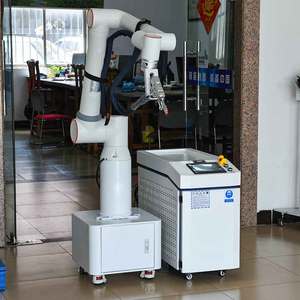
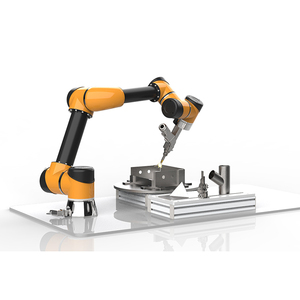
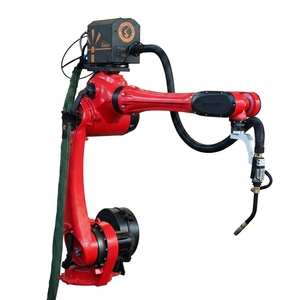
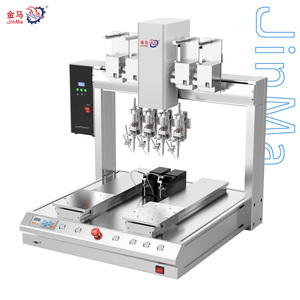
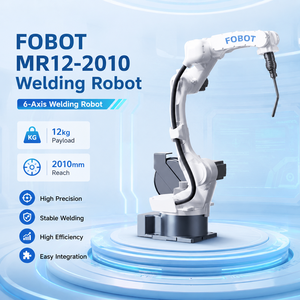
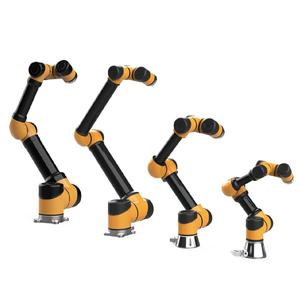
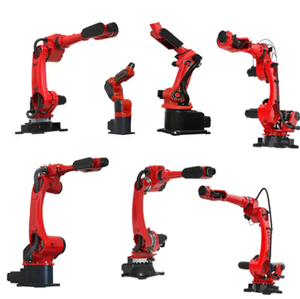
Global Benchmark: Top 10 Welding Robot Manufacturers & Exporters (2025 Architectural Guide)
The global manufacturing ecosystem is undergoing an unprecedented shift toward zero-defect automated joinery. As tier-1 automotive fabricators, shipbuilding yards, structural steel EPC contractors, and electronics producers demand higher throughput alongside shrinking qualified welder availability, robotic welding automation has transitioned from a competitive advantage to an operational baseline. Modern welding robot arms integrate multi-axis motion controllers, high-speed vision sensors, laser seam tracking, and synergic power sources to achieve continuous, high-efficiency weld seam consistency.
To assist global procurement directors, industrial automation engineers, and plant managers in selecting optimal manufacturing partners, this technical whitepaper provides an exhaustive comparative breakdown of the top 10 global welding robot manufacturers and exporters. Analysis is grounded in real-world duty cycles, payload capacities, motion control precision, fieldbus compatibility, total cost of ownership (TCO), and after-sales support infrastructure.
| Manufacturer / Brand | Primary HQ | Core Robot Payload Range | Key Strengths & Proprietary Tech | Primary Export Markets |
|---|---|---|---|---|
| 1. Fanuc Corporation | Japan | 3 kg – 20 kg (Arc Mate Series) | Integrated iRVision, Servo Torch control, extreme MTBF reliability | Global (North America, Europe, Asia) |
| 2. Yaskawa Motoman | Japan | 6 kg – 50 kg (AR/MA Series) | Singularity avoidance algorithms, integrated hose design, fast cycle times | Worldwide (Automotive & Heavy Machinery) |
| 3. ABB Robotics | Switzerland | 5 kg – 150 kg (IRB Series) | TrueMove & QuickMove motion control, RobotStudio offline programming | Global Tier-1 Automotive & Aerospace |
| 4. KUKA Robotics | Germany | 6 kg – 60 kg (KR CYBERTECH) | Path accuracy under high dynamics, modular arm configurations | Europe, Americas, Greater China |
| 5. Uttam Industries / Rayman Automation | India / China | 5 kg – 20 kg (Articulated & Cobots) | 60-Yr heavy arc heritage, Class F/H insulation, customized open-source PLC bus | Global (Southeast Asia, Middle East, Europe, Americas) |
| 6. Kawasaki Robotics | Japan | 6 kg – 20 kg (BA Series) | Built-in arc welding software, hollow wrist design for internal cable routing | Asia-Pacific, North America |
| 7. OTC Daihen | Japan | 4 kg – 12 kg (Almega Synchro) | Seamless synergic power source integration, zero-spatter Synchro-feed MIG | Asia, Europe, Americas |
| 8. Panasonic Robot & Welding | Japan | 6 kg – 12 kg (TA/WG Series) | TAWERS integrated robot & power source architecture, high-speed weave pattern | Global Automotive Tier 1 & 2 |
| 9. Universal Robots (UR) | Denmark | 3 kg – 20 kg (URe Series Cobots) | Rapid drag-and-teach deployment, safety rated for human collaboration | Worldwide SMEs & High-Mix Fabrication |
| 10. Comau Robotics | Italy | 6 kg – 130 kg (SMART AX Series) | Heavy-duty spot welding focus, high payload wrist capacity for multi-torch setups | Europe, Latin America, North America |
Information Gain Insight: Beyond the Robot Arm
A robotic arm is only as capable as the power source powering its arc. Leading global exporters emphasize deep integration between the 6-axis kinematics controller and the digital inverter welding supply. High-speed feedback loops (operating at >10 kHz) adjust arc voltage in real-time during drop transfer, eliminating weld spatter and minimizing post-weld grinding labor.
Technical Evaluation Criteria for Global Procurement Teams
When evaluating international manufacturers and exporters, structural engineering departments must scrutinize four critical metrics beyond basic price-per-unit:
- Positioning Repeatability & Dynamic Path Accuracy: High-precision welding requires repeat accuracy within ±0.03 mm to ±0.05 mm. Lower quality arms suffer from thermal expansion drift during extended duty cycles, leading to seam off-tracking.
- Hollow Wrist vs. External Cable Harnesses: Modern 6-axis welding arms feature hollow wrist structures (e.g., 50mm+ internal bore) that route gas hoses, wire feeds, and torch cables through the center of axis 6. This eliminates cable snagging inside complex structural weldments.
- Duty Cycle Rating & Thermal Management: Industrial plants operating 24/7 demand power supplies and robot controllers rated for 60% to 100% duty cycle at maximum amperage (e.g., 400A to 600A continuous). Windings insulated to Class F (155°C) or Class H (180°C) standards prevent dielectric breakdown under tropical or unconditioned shop floor environments.
- Open Architecture & Fieldbus Protocols: Seamless connectivity via EtherCAT, PROFINET, DeviceNet, or Modbus TCP allows the welding arm to communicate directly with external positioners, gantry slide rails, and central SCADA systems.
Future Sourcing Trends & Technological Innovations (2025–2030)
The global welding robotics market is expanding rapidly, driven by breakthrough technological convergences. Industrial buyers must align their 5-year capital equipment planning with the following key developments:
1. Collaborative Robots (Cobots) Overtaking Fixed Automation
While traditional articulated robots require perimeter safety fencing and heavy floor mounting, 6-axis collaborative welding cobots equipped with joint torque sensors allow operators to work alongside the arm safely. Drag-to-teach programming reduces job setup time from hours to minutes, making cobots economically viable for low-volume, high-mix job shops.
2. AI-Driven Adaptive Laser Seam Tracking
Real-time optical vision sensors mounted ahead of the welding torch capture 3D joint profile geometry. Machine-learning algorithms dynamically adjust torch angle, wire feed speed, and travel velocity to compensate for thermal distortion or improper bevel preparation on the fly.
3. High-Power Handheld & Robotic Fiber Laser Welding
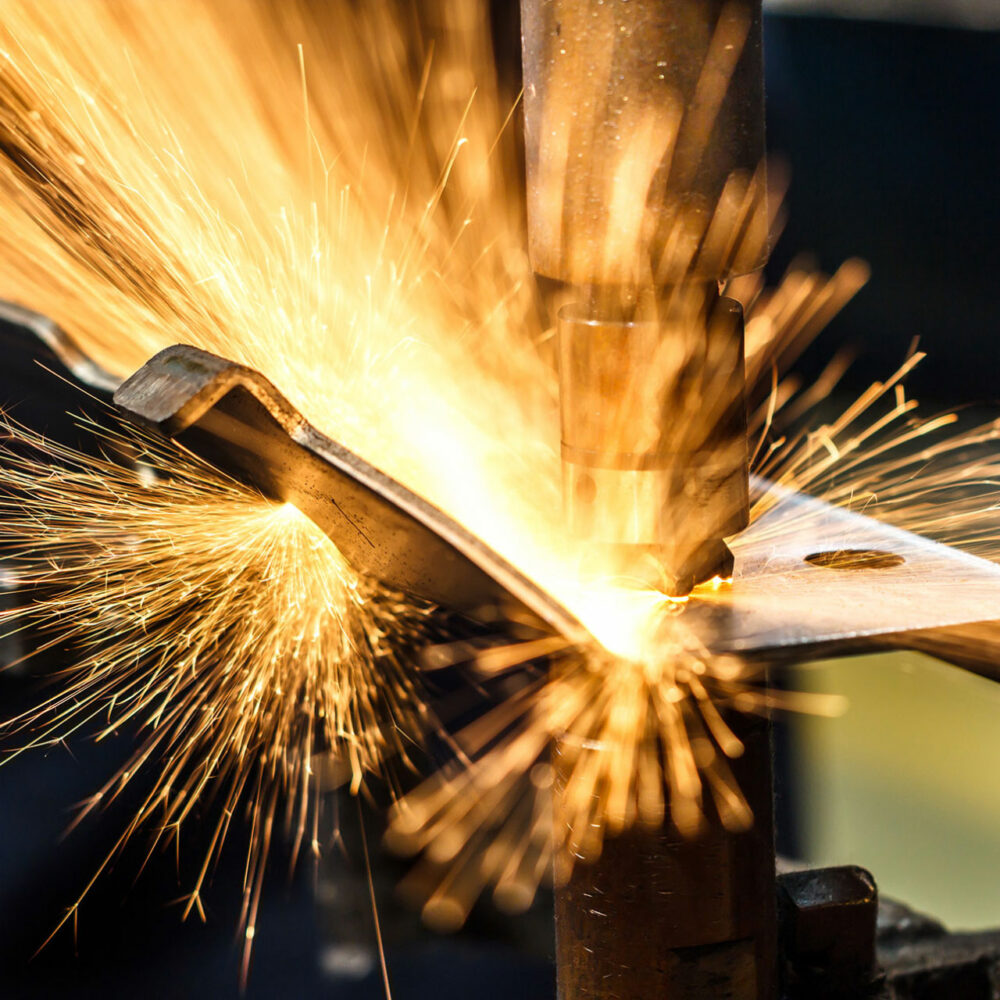
Transitioning from conventional GMAW/GTAW to fiber laser welding delivers up to 5x to 10x higher travel speeds with minimal heat-affected zones (HAZ). Robot arms retrofitted with wobble laser heads are quickly becoming standard in sheet metal enclosure, automotive battery, and solar panel frame production lines.
4. Multi-Axis Sync & External Positioner Integration
Advanced cell architectures now synchronize 6-axis robot arms with 2-axis servo rotary positioners (total 8 synchronized axes). This guarantees that the weld pool remains in the flat (1G/1F) gravity position at all times, optimizing bead appearance and metallurgical penetration.
Manufacturing Heritage & Engineering Trust: Why Partner With Us
Building on over 60 years of foundational welding engineering since 1965, our manufacturing facilities in Mandi Dabwali (Haryana) and Delhi, India, combined with specialized robotic automation partnerships, represent an uncompromised commitment to industrial reliability. We bridge the gap between heavy-duty welding durability and modern robotic precision.

Uncompromising Quality Control & Load Testing
Unlike assembled brands that rely on off-the-shelf components, every single unit and power source undergoes rigorous full-load testing prior to packing:
- Class F & H Copper Winding: High-grade electrolytic copper windings guarantee minimal electrical resistance and maximum heat dissipation.
- 100% Load & No-Load Verification: Machines are run continuously under maximum rated amperage to verify thermal stability, open-circuit voltage stability, and insulation integrity.
- Traceable Serial-Linked Quality Logs: Test data is permanently logged against each serial number for lifetime global maintenance support.
Comprehensive Application Support & Export Readiness
We serve overseas buyers across 6 continents with tailored export configurations:
- Multi-Voltage Support: Fully compliant single-phase 220V or three-phase 380V / 415V / 440V transformer and inverter configurations at 50/60 Hz.
- Turnkey Spare Parts Traceability: Standardized, widely available torch consumables, modular PCB boards, and recommended wear-and-tear spares kits shipped with initial orders.
- Application Parameter Optimization: Our welding engineers assist in mapping parameter selection (current, voltage, gas mix, wire feed rate) to your exact alloy specifications.
Frequently Asked Questions (Industrial Buyer FAQ)
Address key technical, commercial, and operational queries encountered by procurement teams during robotic welding automation projects.