Top 8 Industrial Tube & Pipe Welding Systems
Engineered for high-yield precision tube jointing, thin-wall stainless steel piping, structural steel tubing, and multi-metal industrial production lines.
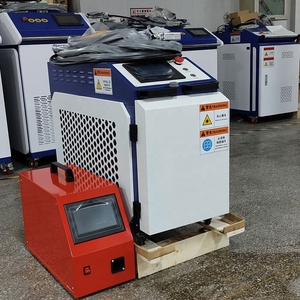
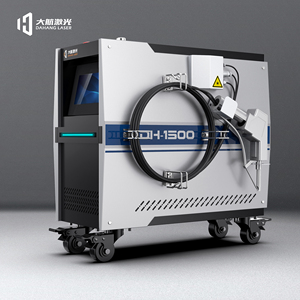
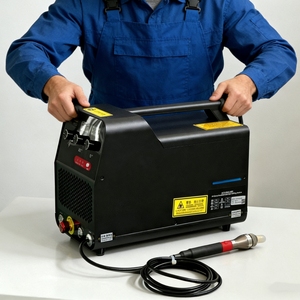
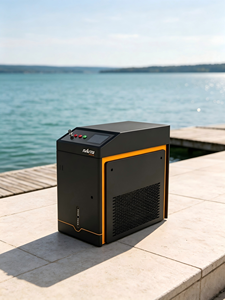
All-in-one Integrated Handheld Tube Laser Welder with Dual-Loop Chiller SY-1500
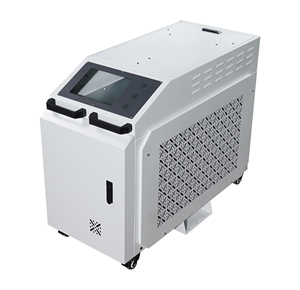
4-in-1 Air-Cooled Handheld Fiber Laser Tube & Pipe Welder
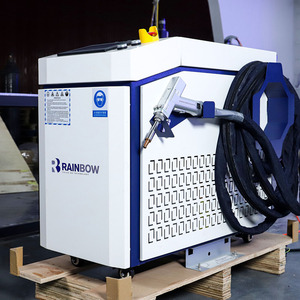
Professional High-Efficiency PANGOLIN Industrial Fiber Laser Tube Welder
Portable 600W Precision Micro Tube & Thin Sheet Spot Laser Welder
Wholesale Economical High-Speed Continuous Tube Laser Welding Workstation
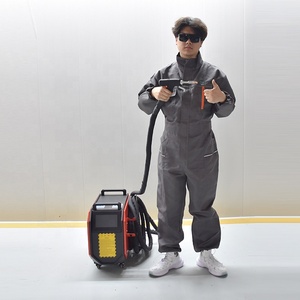
Outdoor Small Portable 4-in-1 Stainless Steel & Galvanized Tube Welder
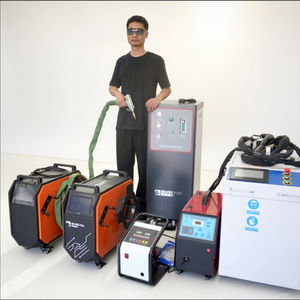
Heavy-Duty 1500W Handheld Fiber Laser Gun Tube & Pipe Welding System
Executive Procurement Report: The Evolution of Industrial Tube Welding Technology
In modern industrial manufacturing—spanning oil & gas transport pipelines, HVAC condenser coils, sanitary stainless steel pharmaceutical tubing, and high-strength automotive exhaust channels—the requirement for zero-defect tube and pipe joints has elevated Tube Welder Suppliers & Exporters to a critical role in the global supply chain.
Traditional manual TIG (GTAW) and stick (SMAW) tube welding processes, while historically reliable, present severe throughput bottlenecks. The thermal input of conventional manual welding causes significant Heat-Affected Zone (HAZ) enlargement, leading to tube deformation, carbide precipitation in stainless grades, and labor-intensive post-weld passivation or grinding. To overcome these constraints, global EPC contractors and tube fabrication facilities are rapidly pivoting toward Fiber Laser Tube Welders and high-frequency automated orbital welding power sources.
This comprehensive procurement white paper analyzes the technical selection metrics, supplier evaluation standards, global market trends, and metallurgical considerations necessary for international machinery buyers seeking high-return tube welding capital equipment.
Technical Matrix: Comparative Analysis of Tube Welding Methodologies
Selecting the optimal tube welder requires evaluating key metallurgical and mechanical variables including wall thickness, joint fit-up tolerance, thermal sensitivity, and production speed requirements.
| Welding Methodology | Typical Wall Thickness | Travel Speed / Efficiency | Heat-Affected Zone (HAZ) | Radiographic (X-Ray) Pass Rate | Primary Industry Fit |
|---|---|---|---|---|---|
| Handheld Fiber Laser | 0.5 mm – 4.5 mm | Ultra-High (4x – 10x TIG) | Extremely Narrow (<0.5mm) | 99.2% (Minimal porosity) | Sanitary SS tubing, HVAC, Furniture, Auto Exhaust |
| Orbital GTAW (TIG) | 0.8 mm – 6.0 mm | Moderate / Precision | Moderate | 99.8% (Aerospace Standard) | Pharma, Semiconductor Cleanroom, Nuclear Piping |
| High-Frequency (HFW) Mill | 1.0 mm – 12.0 mm | Automated High-Speed Continuous | Localized Narrow Zone | 98.5% | Continuous ERW Carbon Steel Pipe Mills |
| Heavy-Duty Arc / MIG (GMAW) | 3.0 mm – 40.0 mm | High Deposition Rate | Broad HAZ | 95.0% (Requires multi-pass) | Cross-Country Oil & Gas, Structural Tubular Steel |
*Data derived from internal load-testing and comparative metallurgical cross-section analysis across standard AISI 304, AISI 316L, and S235JR carbon steel tubes.
Future Procurement & Technology Trends in Tube Welding (2025-2030)
Strategic insights for procurement directors: how emerging industrial technologies are redefining profitability, weld quality, and energy efficiency.
1. Transition to Air-Cooled Fiber Lasers
Traditional high-power fiber laser welders required massive external water chillers, increasing energy usage and floor footprint. Next-generation 1500W-2000W handheld tube welders utilize advanced semiconductor refrigeration and air-cooled heat sink architecture, reducing power consumption by up to 35% and allowing effortless field mobility for structural tube installers.
2. Industry 4.0 Telemetry & Smart Wobble Control
Modern tube welding power sources incorporate embedded IoT controllers that log real-time current, voltage, laser peak power, gas flow rate, and wire feed speed. Dual-axis wobble welding heads allow operators to adjust weave width dynamically (0.5mm to 5.0mm), bridging wider tube seam gaps without requiring filler wire addition.
3. Multi-Function 4-in-1 Machinery Convergence
Procurement teams are shifting capital expenditure away from single-purpose machines. Multi-functional tube laser workstations—combining precision seam welding, surface laser cleaning (oxide removal), weld-bead cleaning, and sheet/tube cutting into a single portable engine—are maximizing shop-floor ROI.
Why Uttam Industries Leads Global Tube & Pipe Welder Exporting
Combining 60 years of heavy engineering tradition with cutting-edge fiber laser innovations for international industrial buyers.
60 Years of Applied Engineering
Founded in 1965 in Mandi Dabwali, Haryana & Delhi, India, Uttam Industries has engineered heavy-duty welding equipment across six decades. Our deep familiarity with shop-floor realities drives every design decision.
Class F/H Copper-Wound Durability
Unlike budget suppliers using aluminum windings, our arc, TIG, and MIG power sources utilize 100% Class F/H insulated copper windings, delivering superior thermal dissipation and extended duty cycles under harsh climate conditions.
100% Full-Load Test Protocol
Every machine is subjected to rigorous full-load burn-in testing, open-circuit voltage stability checks, and thermal overload simulation prior to export packing, ensuring zero out-of-box failures.
Global Voltage & CE Compatibility
Configured for 220V single-phase or 380V–440V three-phase export grids (50/60Hz). Delivered in ocean-worthy reinforced crates with complete schematics and recommended maintenance spare kits.
Industrial Tube Welder Procurement FAQ
Comprehensive answers to critical technical and commercial questions requested by global procurement officers and chief welding engineers.
Q1 Which welding technology is optimal for thin-wall stainless steel tube fabrication?
For thin-wall stainless steel tubing (wall thickness from 0.5 mm to 3.0 mm), Handheld Fiber Laser Welding or Automated Orbital TIG Welding provides superior performance. Fiber laser welders achieve travel speeds up to 10 times faster than manual TIG while imparting minimal linear heat input. This eliminates tube warping, prevents chromium carbide precipitation, and delivers smooth, non-porous welds ideal for food, beverage, and sanitary pharmaceutical applications.
Q2 How does a 4-in-1 Handheld Laser Tube Welder handle wider joint root gaps?
Traditional single-point fiber laser beams require extremely tight joint fit-up (gap < 0.2 mm). Our advanced 4-in-1 Laser Tube Welders incorporate high-speed optical wobble heads. The wobble motor oscillates the focused laser beam in circular, c-shaped, or linear patterns at frequencies up to 300 Hz. This expands the effective beam spot up to 5.0 mm and, when combined with our automatic dual-roll wire feeder, bridges joint gaps up to 2.5 mm easily without undercutting.
Q3 Are Uttam Industries welding power sources suitable for unconditioned field generator power?
Yes. Heavy engineering sites and cross-country pipeline projects often suffer from grid voltage spikes and generator frequency fluctuations. Our inverter and transformer-rectifier tube welders feature broad input voltage tolerance (±15% voltage window), high-grade Class F/H insulation, and heavy duty IGBT surge suppression circuits, guaranteeing stable arc force and uncompromised penetration on remote jobsites.
Q4 What shielding gases are required for laser and TIG tube welding?
For standard carbon steel tubing, Industrial Grade Argon (99.99%) or Argon/CO2 mixes provide cost-effective shielding. For stainless steel, titanium, and high-nickel alloy tubes, High-Purity Argon (99.999%) or Argon-Hydrogen mixtures (e.g., 95% Ar + 5% H2) should be utilized alongside internal purging gas (Nitrogen or Argon) to prevent back-side weld oxidation ("sugar formation").
Q5 How does Uttam Industries support international warranty and spare parts replacement?
Every export shipment includes a 1-Year Comprehensive Warranty, complete electrical schematics, explosive component diagrams, and a complimentary "First-Line Maintenance Kit" containing replacement protective lenses, nozzles, wire feed rollers, and torch consumables. Remote video engineering support and direct DHL express parts dispatch ensure minimum equipment downtime.
Q6 Can machines be customized for automated tube mill integration or special OEM voltages?
Absolutely. As an actual equipment manufacturer with internal R&D and electrical assembly capabilities, we engineer custom power sources, extended cabling packages (10m - 30m), automated start/stop interfaces for robotic tube mills, and specialized electrical input configurations (e.g., 200V 3-Phase for Japan/Taiwan, 575V 3-Phase for Canada, or 415V 3-Phase for UK/Australia).

Need Tailored Tube Welding Machinery Specifications or Direct Factory Quotes?
Share your material grade, tube wall thickness, diameter range, and target daily production volume with our chief application engineers. We will recommend the exact machine configuration, duty cycle rating, and customized accessory package for your facility.
Contact Us