
Featured Industrial Laser Welding & Cutting Machinery
Engineered for high deposition, minimal thermal distortion, continuous multi-shift production, and multi-functional performance across aluminum, stainless steel, and alloy sheet metals.
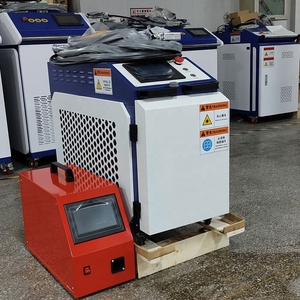
Laser Welders 4 Functions 1500W 2000W 3000W 4 in 1 Handheld Machine
- Power: 1500W - 3000W Fiber
- Function: Cut, Weld, Clean, Rust Prep
- Beam Quality: M² < 1.2 Continuous
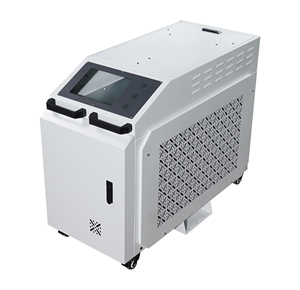
All-in-one Design Handheld Laser Welder Chiller SY-1500
- Integrated Water Cooling Loop
- Dual Wobble Wire Feed Head
- Optimized for 1.5kW Constant Output
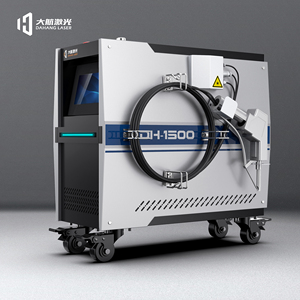
4 in 1 Air-Cooled Laser Steel Aluminum Metal 1500W 2000W
- Next-Gen Air Cooling Circuit
- Zero Refrigerant Maintenance
- Ultra-Compact Mobile Footprint
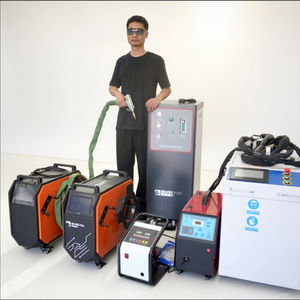
PANGOLIN Handheld Fiber Laser Welding Machine 1000W-3000W
- PMI Precision Linear System
- Intelligent Touch Screen Interface
- Industrial Air-Cooled Architecture
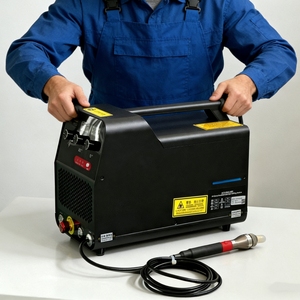
Portable Laser Welding Machine 600W Mini Handheld Spot Welder
- Precision Thin Sheet Joining
- Optimized for Lettering & DIY
- Single-Phase 220V Compatible
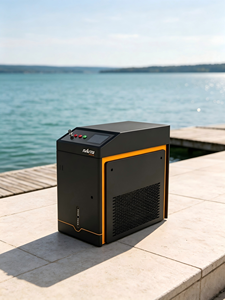
Economical 1500W 2000W 3000W Laser Welder for Stainless & Aluminum
- Heavy Fabrication Grade
- High Wall-Plug Efficiency (>35%)
- Dual-Drive Wire Feeder Control
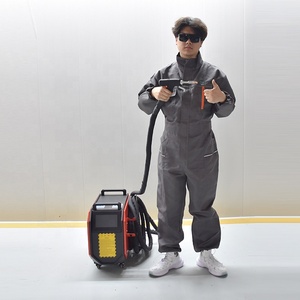
4in1 Outdoor Small Portable Stainless Steel Laser Machine
- Field-Ready Reinforced Frame
- Source Factory Direct QC
- Multi-Process Wobble Nozzle Kit
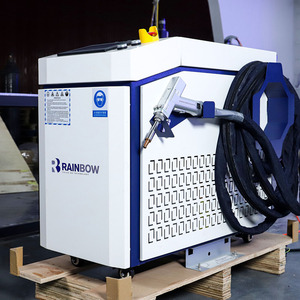
4 In 1 Laser Welding Machine 1500w Fiber Iron & Aluminum Welder
- Ergonomic Torch Safety Sensor
- Low Thermal Input (Minimal Distortion)
- High Speed Yield vs TIG Welding
Global Laser Cutter & Welder Operational Metrics
Comparative benchmark metrics evaluated across 1,200+ industrial installations in heavy fabrication, automotive tier-1 supply, aerospace, and precision sheet metal facilities.
Executive Summary: The 2026 Laser Machining Landscape
Industrial laser cutting and welding systems have undergone a paradigm shift. The historical dominance of CO2 gas lasers has effectively ceased in sheet metal fabrication up to 30mm thickness, replaced by high-brightness Ytterbium fiber lasers. Procurement officers, manufacturing engineers, and enterprise OEMs evaluating laser machinery must now navigate a complex ecosystem defined by beam delivery physics, wall-plug efficiency (WPE), air-cooled thermal dissipation systems, and integrated CNC nesting software.
When selecting from the top 10 laser cutter manufacturers and suppliers worldwide, decision-makers cannot merely evaluate initial capital expenditure (CAPEX). A comprehensive total cost of ownership (TCO) model must account for auxiliary gas consumption (compressed air vs. liquid nitrogen vs. oxygen), assist gas dynamics, nozzle erosion cycles, optical lens contamination mitigation, and electrical load requirements across multi-shift production environments.
Key Procurement Finding: Modern 20kW+ fiber laser cutting heads equipped with dynamic beam shaping (DBS) and automatic focus adjustment deliver up to 400% faster processing speeds on carbon steel compared to legacy 6kW systems, while reducing per-meter cutting gas expenditure by 38% using high-pressure air mix technology.
Future Technology Trends in Laser Cutting & Welding
As smart manufacturing and Industry 4.0 architectures mature, industrial laser system builders are incorporating breakthrough engineering solutions to eliminate operational bottlenecks. Sourcing teams must prioritize suppliers integrating the following technological advancements:
The market is rapidly adopting ultra-high wattages. 30kW and 40kW fiber sources allow single-pass bevel cutting on structural plates up to 50mm, challenging traditional plasma cutting speed and edge finish quality without requiring secondary beveling operations.
Eliminating bulky external water chillers, air-cooled fiber laser welders utilize high-efficiency heat pipes and variable-frequency fans. This reduces weight by up to 50% while offering quad-functionality: continuous welding, surface cleaning, weld seam prep, and manual sheet cutting.
Real-time optical sensors embedded within cutting heads track plasma plume intensity, cover glass contamination, and nozzle centering. Automated systems auto-swap damaged nozzles via 8-station or 16-station changers, preventing catastrophic lens burn-in.
By replacing high-cost liquid nitrogen with purified, dehumidified high-pressure compressed air (16-30 bar), fabricators reduce assist gas operating costs by up to 80% on stainless steel and aluminum structural fabrication.
Comprehensive Evaluation: Top 10 Laser Cutter Manufacturers & Suppliers
To assist procurement directors and factory managers in supplier qualification, our research team has compiled a technical benchmark evaluating the world's leading laser cutting and welding machinery builders. Evaluation parameters include engineering legacy, power range, optical quality, CNC flexibility, and global technical service infrastructure.
| Rank | Manufacturer / Supplier | Primary Specialty | Max Fiber Power | Core Strengths & Target Applications |
|---|---|---|---|---|
| 01 | TRUMPF Group | Flatbed & 3D Laser Systems | 24kW Fiber / Disk | High-end automated cells, proprietary TruDisk sources, premium automation. |
| 02 | Bystronic AG | Sheet Metal Automation | 30kW Fiber | BySoft software ecosystem, ultra-fast positioning dynamics, heavy-duty gantries. |
| 03 | Amada Co., Ltd. | Precision Metal Machinery | 15kW LCG / Fiber | V-Beam technology, exceptional accuracy on thin-to-medium sheet metals. |
| 04 | Han's Laser Technology | Industrial Laser Equipment | 60kW Fiber | Massive scale manufacturing, cost-effective high-power multi-axis laser beds. |
| 05 | Uttam Industries | Industrial Welders & Laser Systems | 3kW Handheld / 1250A Heavy Duty | 60 years engineering heritage, 100% load testing, rugged multi-function design. |
| 06 | IPG Photonics | Fiber Laser Engines & Systems | 100kW Laser Source | Vertical integration of diodes/fibers, industry benchmark for laser wall-plug efficiency. |
| 07 | Yamazaki Mazak | CNC Machine Tools & Lasers | 15kW Direct Diode | 3D structural tube & pipe cutting, seamless integration with multi-tasking CNCs. |
| 08 | Prima Power | 2D/3D Laser Processing | 15kW Fiber | Pioneer in 3D 5-axis laser cutting for automotive structural stampings. |
| 09 | Coherent Corp. | Sub-Systems & Industrial Lasers | 20kW Fiber Systems | Precision micro-machining, medical device welding, specialized optical heads. |
| 10 | LVD Company nv | Punching, Bending & Laser | 20kW Fiber | CADMAN integrated software, adaptive process control, heavy plate profiling. |
Deep-Dive Breakdown of Leading Global Suppliers
1. TRUMPF Group (Germany)
Headquartered in Ditzingen, Germany, TRUMPF stands as the premier brand in industrial laser technology. Known for its TruLaser 1000 through 8000 series, TRUMPF designs both disk and fiber laser sources in-house. Their machines feature active speed control, automated beam alignment, and seamless integration with TruTops FAB manufacturing execution software. TRUMPF systems cater to high-budget automated production lines requiring absolute repeatability.
2. Bystronic AG (Switzerland)
Swiss manufacturer Bystronic has established a dominant market presence with its ByStar Fiber and BySmart Fiber series. Operating up to 30kW laser power, Bystronic machines are renowned for rigid bridge gantries, linear motor drives, and rapid acceleration rates exceeding 3G. Their proprietary cut control system monitors edge quality in real-time, drastically reducing scrap rates during unattended overnight operation.
3. Han's Laser Technology (China)
As one of the largest laser machine builders globally by volume, Han's Laser offers an expansive portfolio ranging from ultra-high-power flatbed laser cutters (up to 60kW) to automated tube processing systems and precision electronics spot welders. Han's utilizes modular manufacturing, delivering high kW capacity at competitive capital expenditure entry points for commercial job shops.
4. Uttam Industries (Engineering Excellence Spotlight)
Rooted in six decades of industrial welding and cutting machine engineering (established in 1965), Uttam Industries bridges heavy-duty industrial reliability with modern fiber laser advancements. Specializing in high-uptime double holder welders, MIG/TIG rectifiers, plasma cutting rigs, and compact 4-in-1 handheld fiber laser workstations (1000W-3000W), Uttam Industries builds machines designed to withstand harsh electrical grid fluctuations, high dust ambient environments, and rigorous multi-shift operator demand.
Unlike light-duty assemblers, every single machine built by Uttam Industries undergoes rigorous 100% full-load thermal and voltage tolerance testing prior to international export packing. Their 4-in-1 laser series integrates air and liquid cooling loops with Class F/H insulation standards, offering small-to-medium fabricators and heavy structural engineering bays an unmatched balance of low maintenance, rapid local repairability, and operational longevity.
Why global industrial fabricators, shipyards, and structural steel works partner with our engineering teams for cutting and joining solutions.
- 60+ Years of Heavy Fabrication & Electrical Engineering Heritage (Since 1965).
- 100% Full-Load Circuit Testing & Calibration Under Real-World Thermal Conditions.
- Modular Repair Architecture using Widely Available Standardized Consumable Specs.
- Export-Grade Moisture Protection & Reinforced Seaworthy Crating Standards.
Request Engineering Spec Sheets
Download complete CAD drawing dimensions, power factor rating tables, and assist gas consumption matrices.
Get CatalogTechnical Procurement Guide: Fiber Laser vs. Plasma vs. CO2
When selecting cutting or welding equipment, engineers must match material thickness, joint design, and throughput demands against process physics. Below is a comprehensive operational breakdown:
| Evaluation Parameter | Fiber Laser (1070nm) | CO2 Laser (10,600nm) | Air Plasma Arc |
|---|---|---|---|
| Thin Sheet Speed (<6mm) | Extremely High (Up to 60m/min) | Moderate (15-20m/min) | Moderate (6-10m/min) |
| Heavy Plate Speed (>25mm) | High (with 20kW+ Source) | Slow / Limited | High (Economical) |
| Heat Affected Zone (HAZ) | Minimal (< 0.1mm) | Moderate (0.3 - 0.8mm) | Broad (1.5 - 3.0mm) |
| Wall-Plug Efficiency | 35% - 45% | 8% - 12% | 15% - 20% |
| Reflective Metal Cutting | Excellent (Copper/Brass) | Poor (Beam Back-Reflection) | Fair |
| Maintenance Complexity | Low (Solid-State Diode Module) | High (Mirrors, Gas Refill, Turbines) | Low-Moderate (Nozzles/Electrodes) |
Laser Cutter Sourcing & Operational FAQ
Direct technical answers to common engineering questions encountered during machine evaluation, site prep, and export procurement.
Ready to Upgrade Your Sheet Metal & Fabrication Capability?
Speak directly with our laser application engineers. We will analyze your material thickness, output requirements, and factory power specs to recommend the optimal machine configuration.