
Featured Industrial Fiber Laser & Welding Systems
Factory-direct 4-in-1 handheld laser systems, air-cooled engines, and multi-kW production units load-tested for continuous 24/7 industrial duty cycles.
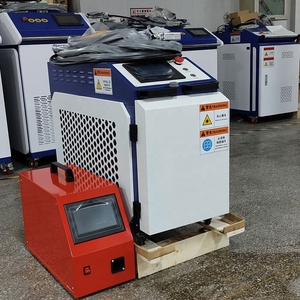
Laser Welders 4 Functions 1500W 2000W 3000W 4 in 1 Handheld Laser Cutting Cleaning Welding Machine Laser Welding Machine
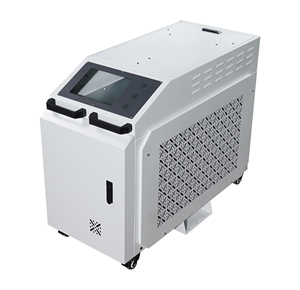
All-in-one Design Handheld Laser Welder Chiller SY-1500 For 1.5kW Handheld Laser Welding New
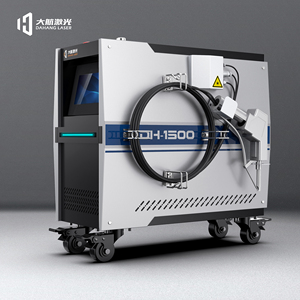
4 in 1 Air-cooled Laser Steel Aluminum Metal 1500W 2000W Fiber Laser Welding Welder Machines
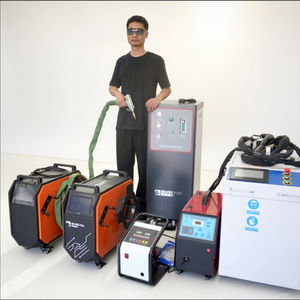
Professional High-Efficiency PANGOLIN Handheld Fiber Laser Welding Machine 1000W-3000W Air-Cooled Engine PMI Easy Operation
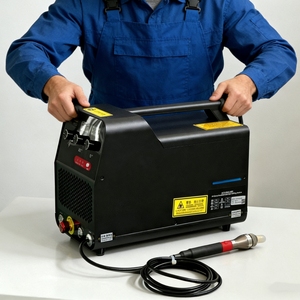
Portable Laser Welding Machine 600W Mini Handheld Spot Welder for Thin Sheet Advertising Letter DIY Production
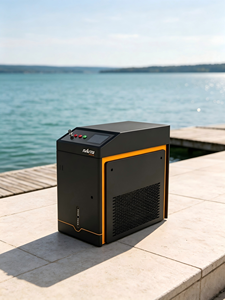
Wholesale Economical Price 1500W 2000W 3000W Laser Welding Machine For Stainless Steel Aluminum Metal
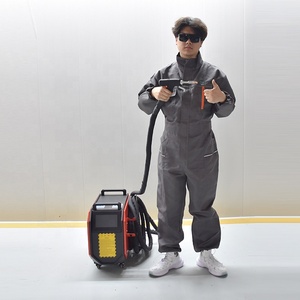
4in1 Laser Welding Machine Outdoor Small Portable Stainless Steel Iron Aluminum Metal Source Factory Laser Welding Machine
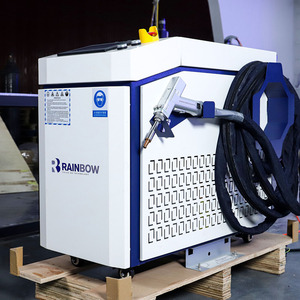
Cheapest 4 In 1 Laser Welding Machine 1500w Laser Welder Handheld Fiber Laser Iron Aluminum Welding Machine Welding Gun
Global Fiber Laser Manufacturing Landscape: Technical Paradigm Shifts
The global metal fabrication industry is experiencing a generational shift from legacy gas metal arc welding (GMAW/MIG) and tungsten inert gas (GTAW/TIG) architecture to continuous-wave (CW) and quasi-continuous-wave (QCW) fiber laser processing systems. Procurement leaders evaluating top fiber laser manufacturers must navigate complex technical metrics including Beam Parameter Product (BPP), Wall-Plug Efficiency (WPE), thermal lensing stability, and diode pump architecture reliability.
Unlike conventional arc welding, which dissipates vast energy into the work area creating wide Heat-Affected Zones (HAZ), a fiber laser focuses high-power density (up to 10^7 W/cm²) into a pinpoint keyhole seam. This reduces total thermal distortion by 80–90%, eliminates post-weld grinding labor, and enables structural joining of previously problematic dissimilar metals (such as copper-to-aluminum batteries or high-strength steel automotive stampings).
| Technology Standard | Wall-Plug Efficiency (WPE) | Heat-Affected Zone (HAZ) | Process Speed (1.5mm SS) | Maintenance & Consumables TCO |
|---|---|---|---|---|
| TIG (GTAW) Manual Arc | < 10% | Wide (3.5mm – 6.0mm) | 0.15 m/min | High (Tungsten electrodes, heavy shielding gas) |
| MIG (GMAW) Wire Feed | 15% – 20% | Moderate (2.5mm – 4.5mm) | 0.40 m/min | Moderate (Contact tips, nozzles, spatter clean) |
| Legacy CO2 Laser (10.6 µm) | 8% – 12% | Narrow (0.8mm – 1.5mm) | 1.20 m/min | Very High (Resonator gas, mirror alignment) |
| Modern Fiber Laser (1.07 µm) | 35% – 42% | Minimal (< 0.3mm) | 3.50+ m/min | Ultra-Low (Solid-state diode, protective lens) |
Analysis of the Top 10 Fiber Laser Manufacturers & Factories
An objective technical benchmark evaluating global tier-1 laser source producers and high-precision system integrators for enterprise OEM buyers.
1. Uttam Industries / Raykhe OEM Ecosystem
Factory Location: Haryana & Delhi, India | Core Specialty: Heavy Industrial Duty Arc & Integrated Fiber Laser Welders
With 60 years of heavy-duty welding machine manufacturing heritage (since 1965), Uttam Industries combines industrial power electronics with high-brightness fiber laser engines. Known for 100% full-load thermal burn-in testing, wide input voltage tolerance (380V–440V 3-phase site protection), and direct OEM customization for global structural, automotive, and sheet metal fabricators.
2. IPG Photonics Corporation
Factory Location: Oxford, Massachusetts, USA | Core Specialty: Ytterbium Fiber Laser Sources & High-Power Resonators
IPG remains the global market pioneer in fiber laser technology, vertically manufacturing semiconductor pump diodes, active optical fibers, and laser delivery cables. Their single-mode and multi-mode Ytterbium laser sources power high-end automated aerospace and automotive welding production lines globally.
3. TRUMPF Group
Factory Location: Ditzingen, Germany | Core Specialty: TruDisk & TruFiber Machine Tool Integration
TRUMPF represents the apex of European precision machine tool engineering. Their TruFiber and disk laser systems feature active thermal drift compensation and back-reflection protection, making them ideal for highly reflective copper and brass processing.
4. Wuhan Raycus Fiber Laser Technologies
Factory Location: Wuhan, Hubei, China | Core Specialty: Mass-Scale Industrial Fiber Laser Sources
Raycus dominates high-volume commercial laser source production. Ranging from 1000W to 30,000W, Raycus sources are widely integrated into cost-effective handheld laser welders and gantry cutting systems worldwide.
5. Maxphotonics Co., Ltd.
Factory Location: Shenzhen, Guangdong, China | Core Specialty: High-Power Density Air-Cooled Handheld Sources
Maxphotonics is a key innovator in portable fiber laser modules. Their specialized small-core-diameter fiber engines allow high beam brightness, driving the rapid adoption of lightweight air-cooled handheld 4-in-1 machines.
6. nLIGHT, Inc.
Factory Location: Camas, Washington, USA | Core Specialty: Programmable Beam Profile Fiber Lasers (Corona Technology)
nLIGHT specializes in high-brightness semiconductor lasers and programmable fiber lasers. Their Corona™ technology allows operators to tune the laser beam profile on-the-fly from a tight spot to a donut shape, drastically reducing spatter in heavy steel welding.
7. Coherent Corp. (Formerly II-VI)
Factory Location: Saxonburg, Pennsylvania, USA | Core Specialty: Sub-Assembly Optics & Industrial Fiber Sources
Coherent combines advanced optical components, processing heads, and diode pumps to build robust laser manufacturing solutions for micro-electronics, EV battery pack manufacturing, and medical device sealing.
8. LVD Company nv
Factory Location: Gullegem, Belgium | Core Specialty: Heavy Plate CNC Fiber Laser Processing Systems
LVD builds heavy-duty CNC fiber laser cutting cell automation systems. Focused on large-format sheet metal fabrication, their factories incorporate intelligent adaptive process monitoring for high-yield steel processing.
9. Bystronic Laser AG
Factory Location: Niederönz, Switzerland | Core Specialty: High-End Laser Cutting & Bending Automation
Bystronic manufactures automated fiber laser cutting platforms integrated with smart factory software. Their systems focus on energy efficiency, rapid acceleration gantries, and automated material handling.
10. Han's Laser Technology Industry Group
Factory Location: Shenzhen, China | Core Specialty: Turnkey Industrial Laser Systems & Robotic Automation
Han's Laser operates large-scale manufacturing parks producing automated robotic laser welding cells, 5-axis pipe cutting machines, and automated marking systems for global consumer electronics and industrial buyers.
Air-Cooled vs. Water-Cooled Fiber Laser Architecture
A critical decision in modern fiber laser procurement is choosing between liquid-chilled (water-cooled) systems and direct refrigerant/air-cooled units. Industrial buyers must match ambient operational parameters to the optical cavity requirements:
Water-Cooled Systems (Dual-Circuit Chiller)
- Continuous Duty: Essential for continuous 2000W–3000W laser power outputs in ambient environments exceeding 40°C.
- Optics Thermal Protection: Cools both the fiber laser resonator cavity and the QBH optics head independently.
- Trade-off: Higher overall machine weight (150kg–220kg) requiring a stationary or wheeled shop-floor footprint.
Air-Cooled Systems (Phase-Change Heat Exchanger)
- Maximum Mobility: Weighs under 60kg–80kg; can be loaded into field service vehicles for site installation.
- No Chiller Maintenance: Eliminates deionized water changes, glycol monitoring, and water pump seal replacements.
- Trade-off: Recommended for 1000W–2000W power envelopes in moderate ambient temperature field environments.
The Metallurgy of 4-in-1 Multifunction Laser Heads
Modern handheld fiber laser guns utilize high-speed optical scanning galvanometers to oscillate the laser beam. Known as Wobble Welding Technology, this mechanism sweeps the beam in circular, linear, or double-triangle patterns across the joint seam. This optics technique solves three historic challenges in handheld laser operation:
1. Fit-Up Gap Tolerance
Standard focused laser spots (0.2mm) require perfect joint fit-up. Wobble oscillation widens the weld pool up to 5.0mm, bridging wide gaps while using auto wire feeding.
2. Surface Rust & Oxide Stripping
By switching the gun controller to wide line-scan mode (up to 120mm width), high-frequency pulsed energy ablates surface rust, paint, and oil prior to welding.
3. Post-Weld Oxide Passivation
Defocused low-power laser sweeping cleans heat-tint discoloration off stainless steel welds, removing the need for hazardous pickling chemicals.
Future Procurement Trends in Fiber Laser Technology
Key technological and supply chain shifts shaping B2B purchasing strategies for manufacturing plants over the next five years.
1. Migration toward High-Brightness Air-Cooled Systems
Procurement departments are prioritizing compact air-cooled fiber laser welders due to their lower maintenance footprint and higher portability. As semiconductor diode efficiency reaches 50%+, air-cooled units will handle continuous 2kW power levels under severe site conditions without thermal shutdown.
2. Embedded AI Vision & Real-Time Weld Monitoring
Next-generation handheld heads incorporate coaxial CMOS cameras and neural network algorithms. These heads dynamically adjust wire feed rate, wobble frequency, and laser power in real-time, preventing burn-through on thin sheet metal regardless of operator skill level.
3. Total Cost of Ownership (TCO) & Energy Efficiency
With industrial electricity tariffs rising globally, the high Wall-Plug Efficiency (35-40%) of fiber lasers compared to TIG welders (7-10%) provides rapid return on investment. Procurement models now calculate operating energy cost per meter of weld seam rather than initial hardware cost alone.
4. Standardized Global OEM Spare Parts Ecosystem
Industrial buyers are avoiding proprietary optic threads and non-standard electrical connectors. Leading factories now mandate standardized QBH output connectors, standard protective lens dimensions (D20x4), and open-source wire feeder protocols to guarantee spare parts availability.
Why Global Enterprise Buyers Partner With Uttam Industries
With over 60 years of machine manufacturing experience (founded in 1965), Uttam Industries bridges heavy-duty industrial power engineering with advanced fiber laser technology.
100% Load-Tested Thermal Validation
Every fiber laser system, arc welder, and plasma cutting machine undergoes rigorous continuous full-load testing before packing. Voltage drop, insulation resistance, and beam output stability are documented against every machine's serial number.
Custom Export Power Engineering
We build application-specific variants supporting 220V single-phase, 380V, 415V, and 440V 3-phase mains (50/60 Hz). Heavy-duty internal copper transformers and surge suppression protect electronics in unstable grid environments.
Direct Factory Application Support
Our engineers consult on joint geometry, shielding gas mix selection (Argon vs Nitrogen vs CO2), and parameter selection for stainless steel, mild steel, aluminum, and copper alloys.
Comprehensive Spares Traceability
Every export consignment includes complete electrical schematics, user operating manuals, consumable wear kits, and direct engineering diagnostic access to keep client production lines running uninterrupted.
Frequently Asked Questions for B2B Laser Procurement
Detailed answers addressing technical, commercial, and operational questions from plant engineers and international buyers.
Request Factory Direct Technical Quotation
Send us your base material specifications, thickness range, and daily production target. Our engineering team will match your requirements with the optimal fiber laser power source, cooling system, and parameter guidance.