
Industrial Laser & Multi-Process Pipe Welding Series
Engineered for high deposition efficiency, tight weld joint tolerances, and continuous industrial duty cycles across pipeline construction, chemical plant fabrication, and aerospace manufacturing.
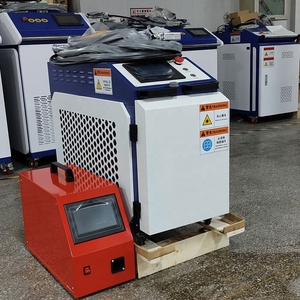
Laser Welders 4 Functions 1500W 2000W 3000W 4 in 1 Handheld Laser Cutting Cleaning Welding Machine
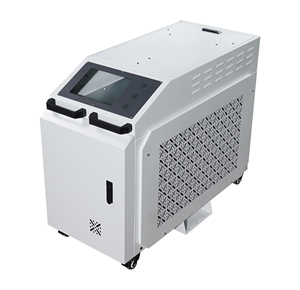
All-in-one Design Handheld Laser Welder Chiller SY-1500 For 1.5kW Handheld Laser Welding
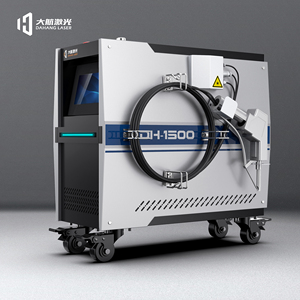
4 in 1 Air-cooled Laser Steel Aluminum Metal 1500W 2000W Fiber Laser Welding Machines
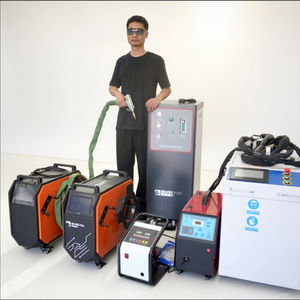
Professional High-Efficiency PANGOLIN Handheld Fiber Laser Welding Machine 1000W-3000W Air-Cooled
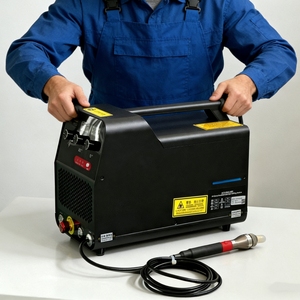
Portable Laser Welding Machine 600W Mini Handheld Spot Welder for Thin Sheet Metal Production
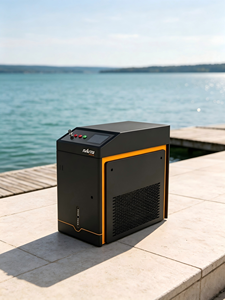
Wholesale Economical Price 1500W 2000W 3000W Laser Welding Machine For Stainless Steel Aluminum
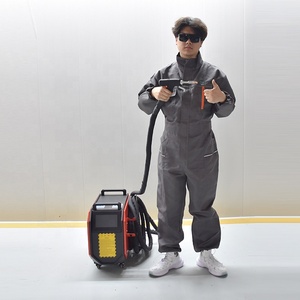
4in1 Laser Welding Machine Outdoor Small Portable Stainless Steel Metal Source Factory
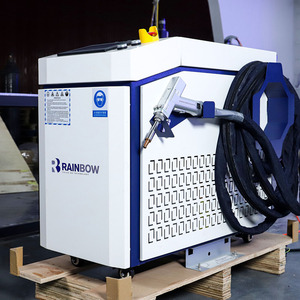
Cheapest 4 In 1 Laser Welding Machine 1500W Laser Welder Handheld Fiber Iron Aluminum Gun
The Strategic Evolution of Industrial Pipe Welding Machinery: OEM/ODM Sourcing Architecture
In modern energy infrastructure, petrochemical processing, shipbuilding, and structural civil engineering, pipe welding represents a mission-critical metallurgical discipline. Selecting an OEM/ODM pipe welder factory and supplier requires evaluating not merely power electronics, but systemic thermal management, arc control algorithms, high-frequency pulsing capabilities, and physical mechanical robustness. Pipe welding applications—ranging from small-diameter thin-wall sanitary stainless steel tubing to thick-wall carbon steel transmission lines—demand precise deposition rates, root-pass penetration, and minimal heat-affected zones (HAZ) to guarantee 100% radiographic X-ray clearance under stringent ASME Section IX and ISO 15614 standards.
As global industrial procurement shifts toward consolidated manufacturing partnerships, original equipment buyer requirements have evolved beyond standardized off-the-shelf welding rectifiers. Global buyers seek bespoke OEM engineering solutions: customized duty-cycle ratings (60% to 100% continuous output), specialized input voltage handling (ranging from 220V single-phase up to 380V/415V/440V three-phase 50/60 Hz mains), specialized torch cooling loop dynamics, and automated CNC/orbital motor control interfaces. A tier-one manufacturing partner must bridge the gap between heavy-duty transformer reliability and micro-processor-controlled inverter precision.
Six Decades of Engineering Excellence: Why Global Buyers Trust Our Manufacturing Operations
Founded in 1965, our manufacturing footprint in Mandi Dabwali, Haryana, and strategic Delhi distribution hubs have established a 60-year legacy of engineering dominance. Operating with class F/H insulated copper transformer windings, forced-air cooling, and heavy-duty thyristor/IGBT power modules, every welding power source and laser integration platform undergoes rigorous stress testing prior to export dispatch.
In-House Manufacturing & Quality QA
100% full-load thermal run testing, insulation resistance testing, and arc stability calibration conducted on every unit under real-world workshop load profiles.
OEM & ODM Customization Scope
Full private labeling, custom cabinet fabrication, multi-voltage transformer TAPs, custom cable harness lengths, water-cooler integration, and orbital bug automation sync.
Export Packing & Global Compliance
Seaworthy timber crating, desiccant vapor barrier protection, complete schematics, CE wiring conformity, and dedicated overseas technical engineering support.
Future Sourcing & Procurement Trends in Pipe Welding Machinery (2026–2030)
Procurement officers and engineering managers must analyze long-term operational costs when selecting pipe welding infrastructure. Technological convergence is reshaping industrial purchasing parameters:
1. Air-Cooled Fiber Laser Convergence
Traditional heavy water-chilled systems are rapidly giving way to high-efficiency air-cooled 4-in-1 fiber laser welding engines (1000W–3000W). These systems dramatically reduce field maintenance, cut electrical consumption by up to 40%, and combine welding, cleaning, and cutting in a single portable enclosure suitable for remote pipeline repair.
2. Inverter Digital Synergy & Memory Taps
Procurement specifies smart DSP (Digital Signal Processing) control boards capable of saving multi-pass pipe welding parameters (root, hot pass, fill, and cap). Modern power sources automatically adjust wire feed speed and peak voltage dynamically to eliminate operator error during position welding (5G, 6G pipe tests).
3. Dual-Operator & Multi-Circuit Power Density
Fabrication yards are optimizing floor space by specifying dual-holder welding rectifiers and twin-arc inverter systems. A single transformer core driving two independent 400A or 600A welding circuits reduces equipment capital expenditure by 30% while lowering primary power distribution infrastructure overhead.
Key Technological Trends Driving the Industrial Pipe Welder Market
The industrial pipe joining landscape is experiencing a paradigm shift driven by stringent non-destructive testing (NDT) mandates, labor shortages of skilled high-pressure code welders, and the introduction of advanced alloy materials (Duplex Stainless Steel, Inconel, Titanium, and High-Strength Low-Alloy Steels). Understanding these technological drivers helps EPC contractors select future-proof equipment:
- Orbital TIG Automation & Closed-Head Fusion: For sanitary pharmaceuticals, semiconductor gas lines, and high-purity hydraulic piping, automated orbital TIG heads deliver repeatable 360-degree full-penetration welds without filler wire, eliminating internal root concavity and oxidation.
- Wobble Laser Beam Technology: Modern handheld laser pipe welders utilize dual-axis galvanometer wobble heads. By dynamically oscillation-patterning the laser spot (0-5mm wobble width), operators can bridge wider root gaps in pipe fit-ups that previously required extensive TIG wire feeding, increasing join speed by up to 400%.
- Heavy-Duty Air Plasma & Beveling Integration: Pipeline preparation requires precise edge beveling (V-prep, J-prep). Multi-process automated cutting and welding stations combine CNC air-plasma torch profiling with synchronous welding bug units, streamlining field pipe fabrication.
Comprehensive Industrial Pipe Welder Selection Matrix
Compare process performance, thickness limits, and operational parameters across primary pipe welding machine categories to determine optimal factory configuration:
| Welding Process / Machine Type | Wall Thickness Range | Position Capability | Deposition Rate | Ideal Pipe Applications |
|---|---|---|---|---|
| Handheld Fiber Laser (1.5kW - 3kW) | 0.5 mm – 6.0 mm | All Positions (1G to 6G) | Ultra High (5x TIG Speed) | Sanitary stainless steel, thin-wall tubing, HVAC, exhaust manifolds. |
| Inverter AC/DC TIG (GTAW) | 0.5 mm – 10.0 mm | All Positions (Full Code Weld) | Low to Moderate | High-pressure steam pipes, chemical process piping, stainless root passes. |
| MIG/MAG Synergic (GMAW/FCAW) | 1.5 mm – 25.0 mm | 1G, 2G, 5G Downhill/Uphill | Very High | Structural pipe columns, cross-country oil/gas lines, heavy spool fabrication. |
| Heavy-Duty ARC Rectifier (SMAW) | 3.0 mm – 50.0+ mm | All Positions (Field Tolerant) | Moderate | Cross-country pipelines, heavy structural tubular piling, site maintenance. |
| Dual Holder ARC Station | 3.0 mm – 40.0 mm | Twin Simultaneous Operators | High Consolidated Output | Shipyard pipe bays, heavy industrial spool fabrication shops. |
Frequently Asked Questions (FAQ) for Pipe Welder Procurement
Technical and commercial guidance for purchasing managers, engineering consultants, and global distributors.
Q1: What makes a laser welder suitable for pipe welding compared to traditional TIG systems?
Fiber laser welders (1500W–3000W) deliver energy via concentrated light beam optics, resulting in an extremely high power density. This produces deep penetration with a minimal heat-affected zone (HAZ), reducing thermal distortion on thin-wall pipes by over 80% compared to TIG welding. Weld speeds are typically 3 to 5 times faster, and minimal post-weld grinding or metal cleaning is required. TIG remains preferred for heavy-wall code welding requiring extensive wire deposition and severe joint misalignment.
Q2: Can your factory customize input voltages and duty cycles for overseas export markets?
Yes. As an established OEM/ODM factory supplier, we engineer machines to meet specific regional grid characteristics. Standard configurations cover 220V/230V single-phase, as well as 380V, 415V, 440V, and 480V three-phase 50/60 Hz industrial supplies. Duty cycles can be scaled up to 100% continuous duty at maximum amperage using heavy-gauge copper windings and augmented thermal cooling designs for extreme ambient temperature operations (e.g., Middle Eastern or tropical site conditions).
Q3: How does a Double Holder Welding Machine optimize operational efficiency in fabrication yards?
Our Double Holder Welding Machine utilizes a heavy-duty transformer architecture housing two independent welding circuits within a single compact enclosure. This allows two welders to operate concurrently at full power (e.g., 400A per holder) without mutual interference or arc voltage drop. It cuts power infrastructure setup costs in half, optimizes valuable shop floor space, and lowers overall capital expenditure per welder station.
Q4: What compliance documentation and quality certifications accompany overseas shipments?
Every export shipment includes comprehensive quality assurance documentation: 100% Factory Load-Test Inspection Certificates, Calibration Reports, Insulation Resistance & Earth Continuity Test Data, Detailed Electrical Circuit Diagrams, Explosive Spares Lists, and CE Compliance Manuals. Factory Acceptance Testing (FAT) via live video or third-party inspection (SGS, TUV, Bureau Veritas) is routinely supported.
Q5: What after-sales technical support and spare-parts availability do you provide to overseas buyers?
We maintain an extensive inventory of standardized consumable components (laser protective lenses, nozzles, focus rings, TIG torches, wire feed rollers, IGBT modules, control cards). Every first-time OEM order includes a recommended 2-year maintenance spares kit. Overseas technical support is handled by experienced welding engineers via remote video diagnostics, rapid air-freight spare parts dispatch, and parameter optimization consulting for specific base metals.
Q6: What is the typical production lead time for custom OEM/ODM orders?
Standard production models ship within 7 to 14 working days from order confirmation. Customized OEM/ODM builds—involving custom branding, bespoke cabinet colors, automated signal integration, or specific multi-voltage transformer TAPs—typically require 20 to 30 days depending on batch quantity and engineering complexity.
Partner with a World-Class OEM/ODM Pipe Welder Manufacturer
Whether you require a fleet of air-cooled handheld fiber laser welders, custom orbital pipe welding power sources, or continuous heavy-duty ARC rectifiers, our engineering team is ready to analyze your technical specifications.