
High-Efficiency OEM Seam & Laser Welding Systems
Engineered for high-volume metal joining, continuous linear seams, and precision micro-welding with robust export-grade standards.
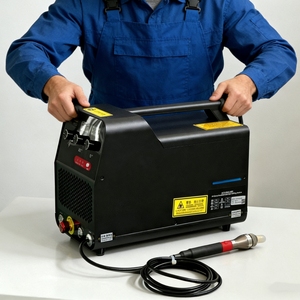
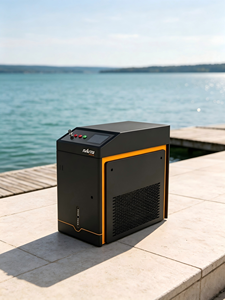
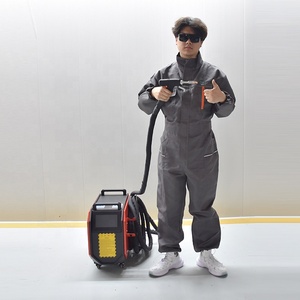
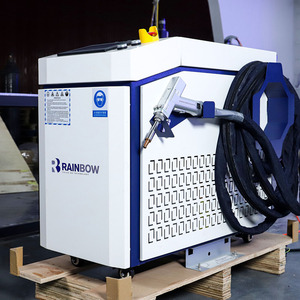
Engineering Whitepaper: Advanced Seam Welding Architecture & OEM Exporter Competencies
In modern industrial fabrication, achieving continuous, pressure-tight, and structurally sound linear seams across metal assemblies is paramount. As a premier Custom OEM Seam Welder Exporter, our engineering division integrates six decades of metallurgical experience into custom-designed longitudinal and circumferential seam welding systems. Whether fabricating automotive fuel tanks, stainless steel pressure vessels, HVAC ducting, or aerospace enclosures, selecting the correct seam welding topology dictates long-term thermal efficiency, cycle speed, and joint integrity.
Technical Insight: Continuous seam welding eliminates the distortion, thermal stress concentrations, and cycle-time bottlenecks inherent in manual multi-pass arc techniques. By combining controlled heat input with synchronized mechanical drive mechanisms, automated seam welders achieve hermetic sealing at travel speeds up to 5 times faster than conventional GTAW processes.
1. Fundamental Mechanics of Resistance Seam & Continuous Fusion Welding
Seam welding is fundamentally a specialized adaptation of spot welding or continuous fusion joining where rotating copper-alloy electrode wheels or high-precision optical laser heads traverse along a joint path. The core principle involves generating a continuous, overlapping sequence of weld nuggets along the interface of sheet metal workpieces.
During resistance seam welding (RSEW), current is passed through motor-driven wheel electrodes while compressive mechanical force is applied. As the wheels rotate over the overlapping sheets, discrete electrical pulses or continuous AC/DC power create a leak-tight seam. For high-purity stainless steel, aluminum, or thin-gage exotic alloys, fiber laser seam welding and continuous TIG seamers utilize focused thermal energy to create narrow Heat-Affected Zones (HAZ) without contact mechanical deformation.
Longitudinal Seam Welding Systems
Designed for joining flat sheets into cylindrical tubes, rectangular ducts, or flat-panel continuous plates. Features pneumatic expanding mandrels, copper backing bars with integrated gas shielding, and precision motorized carriages to ensure ZERO seam distortion on plates from 0.4mm to 12mm thickness.
Circumferential Seam Welding Lathes
Engineered for end-cap tank welding, pipe-to-flange joins, and circular vessel fabrication. Incorporates dual-head tailstocks, variable-speed headstock rotators, closed-loop tachometer feedback, and pneumatic torch positioners for absolute circumferential alignment.
2. OEM Customization Capabilities for International Buyers
Global procurement teams face unique challenges: distinct regional mains voltages (220V single-phase to 380V/415V/440V three-phase at 50/60 Hz), strict CE/UL compliance demands, and application-specific metallurgical constraints. Our OEM manufacturing paradigm addresses these exact variables:
- Custom Transformer & Inverter Power Sources: In-house winding of Class F/H insulated copper transformers and medium-frequency inverter (MFDC) power units ensuring 60% to 100% duty cycles under tropical and high-humidity factory environments.
- PLC & CNC Touchscreen Automation: Integrated multi-axis controllers allowing storeable job recipes, real-time current/voltage monitoring, arc length control (AVC), and automated seam tracking (optical and tactile).
- Modular Fixture & Clamping Engineering: Custom keyhole clamping fingers, chilled copper alloy backing bars, and pneumatic alignment stops tailored to customer-specific CAD drawings and component tolerances.
Comparison Matrix: Seam Welding Technologies
Evaluate key technical parameters across major continuous seam joining methods to select the ideal configuration for your manufacturing line.
| Welding Process | Material Range | Travel Speed | Heat-Affected Zone (HAZ) | Seam Sealing Quality | Ideal Industrial Application |
|---|---|---|---|---|---|
| Resistance Seam (RSEW) | Mild Steel, Stainless Steel (0.5 - 3.0mm) | 1.5 – 4.0 m/min | Moderate / Localized | 100% Hermetic / Pressure-Tight | Fuel tanks, drums, transformers, HVAC ducts |
| Fiber Laser Seam Welding | Stainless, Aluminum, Copper (0.3 - 6.0mm) | 3.0 – 12.0 m/min | Ultra-Narrow / Minimal Distortion | High Precision / Radiographic Grade | Automotive batteries, EV frames, medical devices |
| TIG Continuous Seaming (GTAW) | Stainless, Titanium, Inconel (0.5 - 8.0mm) | 0.3 – 1.2 m/min | Wider Thermal Footprint | X-Ray Quality Cosmetic Seams | Pharma tubing, food-grade vessels, aero pipes |
| MIG Automated Seam (GMAW) | Carbon Steel, Structural Alloys (2.0 - 16.0mm) | 0.8 – 2.5 m/min | Substantial Thermal Input | High Structural Strength | Heavy engineering, pressure vessels, shipbuilding |
Why International Buyers Trust Our Manufacturing Operations
Combining 60 years of industrial heavy-engineering heritage with modern ISO-calibrated quality assurance processes.
Rigorous Pre-Shipment Testing
Every single machine undergoes full-load duty cycle validation, insulation resistance tests, and continuous weld trials on customer-supplied sample materials before packaging.
Application Engineering Support
Our experienced welding engineers provide parameter consultation, electrode alloy selection, gas mix advice, and joint design optimizing for overseas production lines.
Seaworthy Export Packaging
Heavy-duty wooden crates with internal vacuum-sealed moisture barrier foil, anti-corrosion desiccant packs, and shock-absorbing mounts for safe ocean freight delivery.
Future Procurement Trends: Modernizing Seam Welding Lines (2025–2030)
As global manufacturers transition toward Industry 4.0 standards, seam welding procurement strategies are rapidly evolving beyond initial capital cost considerations. Smart buyers now focus on total operational efficiency, sensor integration, and sustainable energy consumption.
Key Technological Shifts Impacting OEM Specifications:
- Transition to Real-Time Optical Seam Tracking: Laser vision sensors now actively detect joint misalignment, gap variations, and bevel discrepancies ahead of the torch, dynamically adjusting weld trajectories and travel speeds in real-time.
- Energy-Efficient MFDC Power Supplies: Replacing traditional 50Hz single-phase AC resistance welders with 1000Hz Medium Frequency Direct Current (MFDC) inverters cuts energy consumption by up to 35% while increasing weld nugget consistency.
- Closed-Loop Thermal Sensing & Quality Logging: Pyrometric and infrared sensors measure weld pool temperature, automatically logging thermal data for 100% component traceability in automotive and aerospace production.
- Hybrid Laser-Arc Seam Welding: Combining fiber laser penetration with MIG/TIG filler metal deposition enables single-pass seam joining of thick plates up to 12mm with minimal joint preparation.
Frequently Asked Questions (FAQ)
Technical and procurement responses for industrial buyers, plant managers, and import directors.
Request a Custom OEM Seam Welder Proposal Today
Consult directly with our engineering team to design, configure, and build an automated seam welding system tailored to your exact manufacturing requirements.
Get a Quote