
Featured Projection & Laser Welding Equipment
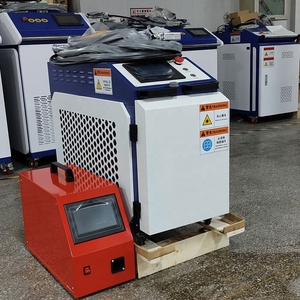
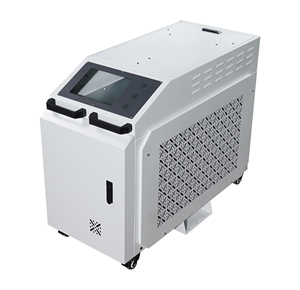
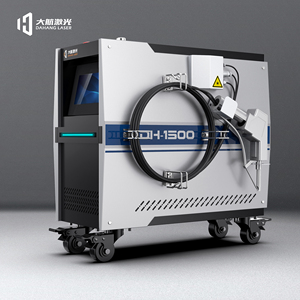
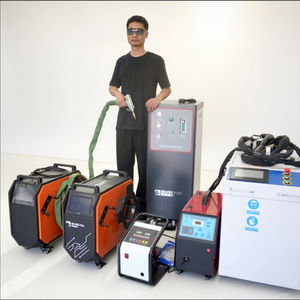
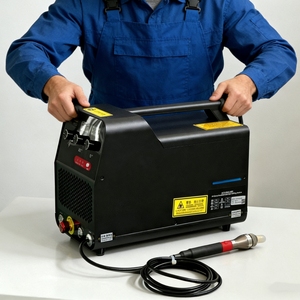
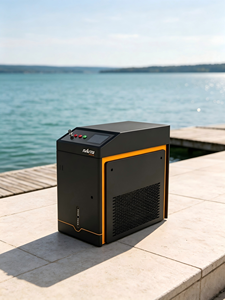
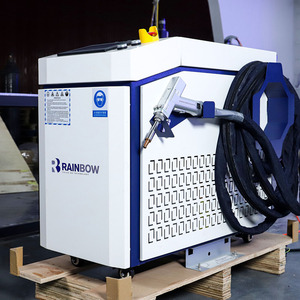
Explore our high-performance resistance projection welders, multi-function handheld laser welding systems, and integrated metal cutting machinery built for continuous production.

Comprehensive Engineering Guide: Custom OEM Projection Welding Architecture & Industrial Applications
In modern high-volume metal manufacturing, Resistance Projection Welding (RPW) stands as a cornerstone technology for joining structural components, fasteners, studs, and sheet metal sub-assemblies. Unlike standard resistance spot welding where current density is concentrated solely by the electrode tip contact area, projection welding utilizes embossed points, ridges, or natural localized geometric contours on the workpieces themselves. As a leading specialized custom OEM projection welder manufacturer and exporter, our engineering systems are designed to deliver targeted thermal energy, precise mechanical clamping forces, and high-frequency current control for repeatable, zero-defect weld nuggets.
The operational mechanics of custom projection welders rely heavily on the principle of Joule heating ($Q = I^2 R t$). By localizing electrical resistance at engineered projections, the thermal mass required to achieve fusion is drastically reduced compared to continuous seam or broad-surface spot methods. This localized heating minimizes the total Heat-Affected Zone (HAZ), preventing metallurgical degradation, surface discoloration, and dimensional warping in sensitive automotive, aerospace, and electrical enclosure fabrications.
MFDC Inverter Technology
Medium Frequency Direct Current (MFDC) 1000Hz power supplies provide instant current response, reducing energy consumption by up to 40% while eliminating inductive losses on deep-throat projection machine frames.
Capacitor Discharge (CD)
For high-conductivity metals like brass, copper, and galvanized steels, CD projection systems release high peak current in milliseconds, welding projections before surface heat sink dispersion occurs.
Closed-Loop Servo Force
Electric servo-driven RAM actuators provide dynamic force control during the projection collapse phase, ensuring constant mechanical follow-up to eliminate expulsion and internal voiding.
Designing Projections for Maximum Structural Integrity
Successful custom projection welding requires meticulous joint design. The geometrical parameters of embossed projections—including height, base diameter, and shear radius—must be matched to base metal thickness, tensile strength, and electrical conductivity. When specifying custom tooling and OEM machinery for global manufacturing plants, our engineers evaluate three primary projection geometries:
- Button & Embossed Projections: Spherical indentations stamped into sheet metals (0.5mm to 3.2mm thickness), universally used for auto-body brackets, structural reinforcement ribs, and electrical switchgear assemblies.
- Ring & Annular Projections: Continuous circular ridges engineered onto machined fittings, hydraulic tube sockets, and pressure vessel ports. Annular projections establish complete hermetic seals resistant to high operational pressures.
- Weld Nut & Stud Projections: Specialized cold-headed fastener projections (4-projection corners or 3-projection pilot rings) designed for rapid auto-feeding and vibration-proof attachment to chassis components.
OEM Customization & Turn-Key Welding Automation Capabilities
As an experienced global exporter, Uttam Industries builds application-specific projection welders tailored to precise factory automation environments. From single-head pneumatic benchtop welders to automated multi-projection rotary index tables with vision inspection systems, every unit is engineered for 24/7 industrial duty cycles. Our custom tooling includes water-cooled copper-chromium (CuCrZr) and copper-tungsten (CuW) electrodes designed to withstand millions of cycles under intense clamping pressures without thermal softening.
Cross-Technology Selection Matrix: Projection vs Laser vs Arc Systems
Selecting the optimal thermal joining process requires balancing capital expenditure, throughput requirement, material grade, and joint geometry. The engineering matrix below summarizes operational metrics across major welding equipment categories exported worldwide:
| Welding Technology | Typical Thickness Range | Energy Efficiency | Production Speed | Primary Industrial Use Case |
|---|---|---|---|---|
| OEM MFDC Projection Welder | 0.5 mm - 6.0 mm | Very High (>85%) | Ultra-Fast (<0.2s cycle) | Automotive nuts/studs, sheet brackets, appliance frames |
| Handheld Fiber Laser (4-in-1) | 0.5 mm - 8.0 mm | High (30% wall-plug) | High Travel Speed | Stainless enclosures, kitchenware, aluminum framing |
| Capacitor Discharge (CD) Welder | 0.3 mm - 4.0 mm | Maximum Peak Efficiency | Instantaneous (<15ms) | High-conductivity metals, coated steels, battery tabs |
| MIG / MAG Inverter Systems | 1.0 mm - 20.0 mm | Moderate (65-75%) | Continuous Feed | Heavy structural steel, shipbuilding, machinery frames |
| AC/DC TIG Pulse Welders | 0.3 mm - 6.0 mm | Moderate | Precision Manual/Robot | Aerospace tubing, sanitary piping, pressure vessels |
Global Procurement Trends & Technological Developments in Resistance & Laser Welding
The global metal fabrication landscape is undergoing a rapid transition toward digital connectivity, energy sustainability, and adaptive quality assurance. Buyers seeking Custom OEM Projection Welder Suppliers are prioritizing key technological innovations during vendor evaluations:
1. Shift to Medium Frequency Direct Current (MFDC) & Inverter Architecture
Traditional single-phase AC welding transformers are increasingly being phased out in high-duty industrial regions due to their uneven power grid loading, low power factor, and long weld times (50/60 Hz cycles). Modern manufacturing lines demand MFDC technology, which converts three-phase AC to high-frequency 1000Hz+ DC. This yields stable current delivery, extends electrode lifespan by preventing current spikes, and lowers utility transformer sizing requirement by up to 50%.
2. Adaptive Real-Time Quality Monitoring Algorithms
Industry 4.0 standards dictate zero-defect manufacturing. Advanced projection welding systems now integrate dynamic constant current control (CCC) coupled with displacement sensors. By measuring electrode penetration depth and dynamic resistance curves in real-time, the system automatically adjusts electrical parameters mid-weld to compensate for sheet thickness variations, oil contamination, or projection height tolerances.
3. Rise of Multi-Functional Hybrid Laser-Resistance Workstations
Fab shops are increasingly adopting hybrid manufacturing setups. While projection welding remains unmatched for localized stud and fastener attachment at millisecond speeds, handheld fiber laser machines (such as 4-in-1 welding, cutting, cleaning, and seam-cleaning units) provide flexibility for continuous seam joining without custom fixture hard-tooling. Progressive exporters offer both equipment portfolios to serve diverse shop floor demands.
Frequently Asked Questions (FAQ) for B2B Procurement
Expert engineering answers regarding custom projection welder manufacturing, parameter setup, export compliance, and after-sales support.
What is the core structural difference between spot welding and projection welding?
Spot welding relies on concentrated electrode tips to define the weld zone, which suffers from tip wear and mushrooming over long production runs. Projection welding uses flat, broad copper electrodes, and the weld area is defined by engineered projections on the workpiece. This allows multiple welds to be performed simultaneously in a single press stroke while drastically increasing electrode service life.
How do I calculate the KVA or KA capacity required for my projection welding application?
Capacity requirements depend on base material type, sheet thickness, number of projections welded per stroke, and cycle time. For example, welding four M8 steel weld nuts simultaneously typically requires 150KVA to 250KVA AC rating or a 100kA MFDC inverter supply with 800-1200 kg of pneumatic or servo electrode force. Our engineering team provides custom load calculations prior to quotation.
Can custom projection welders handle galvanized, plated, or coated steel sheets?
Yes. However, zinc coatings on galvanized steel increase electrical conductivity at the interface and tend to alloy with standard copper tips. We recommend Capacitor Discharge (CD) or MFDC inverter power supplies with dual-pulse timing (pre-heat burn-off pulse followed by primary weld pulse) combined with Class 3 (CuCrZr/CuCoBe) alloy electrodes.
What voltage and frequency configurations are supported for international export shipments?
All Uttam Industries export equipment is built to order with international power grid compatibility. Standard configurations include 220V/380V/415V/440V/480V three-phase input at 50Hz or 60Hz. Controls and safety interlocks utilize CE-compliant 24VDC control circuits with integrated circuit breakers and thermal overload protection.
What electrode maintenance and spare parts support is provided for overseas buyers?
Every custom projection machine export package includes a recommended 2-year maintenance spare parts kit (spare pneumatic seals, SCR thyristors/IGBT modules, secondary copper flex shunts, and customized electrode inserts). Complete CAD electrical/pneumatic schematics and remote engineer diagnostics are provided with all shipments.
How does dynamic follow-up force affect weld quality during projection collapse?
When electrical current melts the projection, the material collapses within milliseconds. If the machine RAM mass is too heavy or slow to move down, an arc gap opens, causing violent expulsion (sparking) and internal metal porosity. Our low-inertia guided RAMs and fast-acting air cylinders or electric servos maintain uninterrupted clamping force throughout the collapse sequence.
Why Partner With Uttam Industries for Custom OEM Projection Welding Solutions
With over six decades of dedicated manufacturing experience in industrial welding technology, Uttam Industries serves structural fabricators, automotive OEM suppliers, shipbuilding yards, and sheet metal enterprises across six continents. Our engineering facility in Mandi Dabwali, Haryana and sales engineering office in Delhi, India combine traditional mechanical robustness with modern digital control electronics.
Unlike standard off-the-shelf equipment resellers, every machine produced in our facility undergoes rigorous multi-stage quality control:
- Transformer Winding Excellence: In-house winding using Class F and Class H insulated electrolytic copper conductors, vacuum impregnated with dielectric varnish for high thermal endurance under 100% duty cycle conditions.
- Full-Load Factory Testing: 100% of projection welders, MIG, TIG, and Laser units are subject to continuous full-load short-circuit current testing, thermal rise evaluation, and insulation breakdown testing prior to seaworthy crating.
- Custom Tooling & Fixturing: Dedicated CAD/CAM design of air-operated clamp fixtures, magnetic locator pins, auto-nut feeders, and water-cooled multi-projection die blocks tailored to buyer component drawings.
- Documented Traceability: Complete serial-linked test certificate, component origin records, and circuit schematics included in every export crate for seamless local maintenance.
Request a Custom Engineering Quotation & Technical Specification
Consult with our senior application engineers to match your material specifications, production volume, and factory power grid with the ideal custom projection welder or fiber laser workstation.
Get Catalog