
Featured OEM Welding & Laser Cutting Solutions
Explore our factory-direct, highly customizable industrial welding machines engineered for maximum deposition rates, thermal duty cycles, and strict quality compliance.
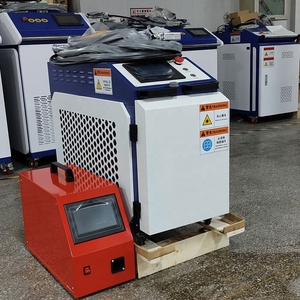
Laser Welders 4 Functions 1500W 2000W 3000W 4 in 1 Handheld Laser Cutting Cleaning Welding Machine Laser Welding Machine
Send an Inquiry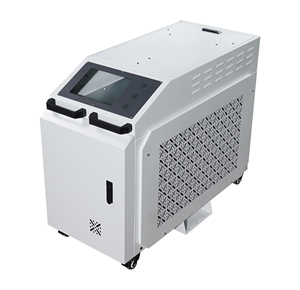
All-in-one Design Handheld Laser Welder Chiller SY-1500 For 1.5kW Handheld Laser Welding New
Send an Inquiry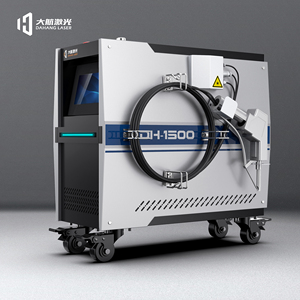
4 in 1 Air-cooled Laser Steel Aluminum Metal 1500W 2000W Fiber Laser Welding Welder Machines
Send an Inquiry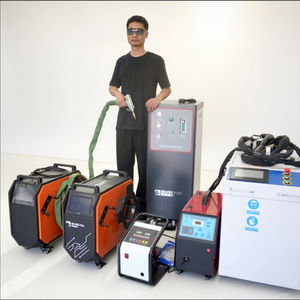
Professional High-Efficiency PANGOLIN Handheld Fiber Laser Welding Machine 1000W-3000W Air-Cooled Engine PMI Easy Operation
Send an Inquiry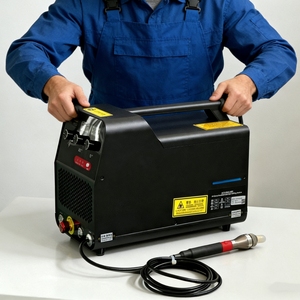
Portable Laser Welding Machine 600W Mini Handheld Spot Welder for Thin Sheet Advertising Letter DIY Production
Send an Inquiry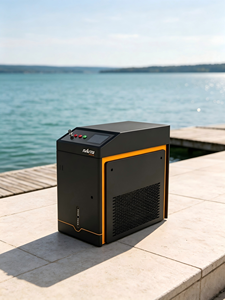
Wholesale Economical Price 1500W 2000W 3000W Laser Welding Machine For Stainless Steel Aluminum Metal
Send an Inquiry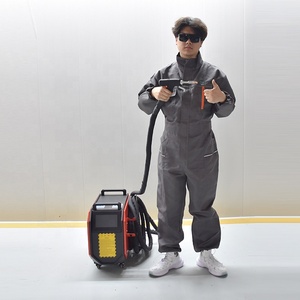
4in1 Laser Welding Machine Outdoor Small Portable Stainless Steel Iron Aluminum Metal Source Factory Laser Welding Machine
Send an Inquiry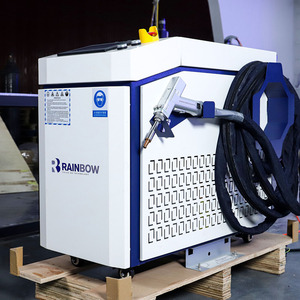
Cheapest 4 In 1 Laser Welding Machine 1500w Laser Welder Handheld Fiber Laser Iron Aluminum Welding Machine Welding Gun
Send an InquiryTechnical Whitepaper: Sourcing Custom OEM MIG Welders & Multi-Process Arc Power Sources
In modern structural steel fabrication, automotive assembly lines, shipbuilding, and heavy engineering, selecting the correct OEM MIG welder supplier is a pivotal capital investment decision. Metal Inert Gas (MIG) and Metal Active Gas (MAG) welding—collectively designated under Gas Metal Arc Welding (GMAW)—account for over 65% of all industrial metal joinery worldwide. As global supply chains demand higher deposition rates, reduced thermal distortion, and digital waveform control, B2B procurement teams must look beyond basic amp ratings to evaluate total cost of ownership (TCO), duty cycle reliability under extreme ambient temperatures, and custom OEM architectural flexibility.
Uttam Industries has operated at the forefront of industrial arc engineering since 1965. Drawing from six decades of direct shop-floor integration, this engineering whitepaper breaks down the metallurgical, electrical, and commercial parameters essential for sourcing heavy-duty OEM MIG welding machines and next-generation multi-process power units.
Key Information Gain for Procurement Officers:
A welder's nameplate rating does not equal continuous operational throughput. Standard industrial units must maintain a minimum 60% to 100% duty cycle at maximum output under IEC 60974-1 testing standards to prevent thermal shutdown in multi-shift manufacturing environments.
1. Metallurgy & Arc Physics: Why Synergic Waveform Control Matters
The primary objective during MIG/MAG welding is establishing a controlled metal transfer mode—Short-Circuit, Globular, Spray, or Pulsed-Spray Transfer—without generating excess spatter or micro-fissuring in the Heat-Affected Zone (HAZ). Custom OEM MIG welders manufactured with digital inverter topologies utilize high-frequency Insulated Gate Bipolar Transistors (IGBTs) switching at frequencies up to 20 kHz to 50 kHz.
- Spatter Reduction & Post-Weld Cleanup: Traditional transformer units yield erratic droplet detachment, escalating post-weld grinding labor costs by up to 35%. Synergic inverter MIG machines dynamically adjust voltage dynamically matching wire feed speed (WFS) thousands of times per second.
- Aluminum & Stainless Alloy Transfer: Pulsed MIG waveforms allow cold-to-hot current modulation, enabling penetration on aluminum (5000/6000 series) and thin stainless steel without burn-through or excessive porosity.
- Shielding Gas Dynamics: Optimized power sources operate seamlessly across diverse binary and ternary gas mixtures (e.g., 80% Ar / 20% CO2, 98% Ar / 2% O2, or 100% CO2 for heavy structural carbon steel).
Why Global Enterprise Buyers Partner With Uttam Industries
Built to be judged on real-world shop floor uptime, operational safety, and continuous duty cycles, not catalog marketing claims.
100% Full-Load Factory Testing
Every single OEM unit undergoes rigorous full-load burn-in, dielectric strength checking, thermal gradient tracking, and open-circuit voltage calibration before export crating. Every serial number holds a traceable quality passport.
Class H Copper Windings
Unlike budget suppliers substituting aluminum wire, Uttam Industries utilizes high-purity electrolytic copper windings with Class F/H insulation, rated to withstand internal temperatures up to 180°C without insulation breakdown.
Multi-Voltage Export Compliance
Engineered for global power grids. We configure OEM power sources for 220V single-phase, or 380V, 415V, and 440V three-phase grid systems (50/60 Hz), complete with CE-compliant internal harnesses and terminal safety blocks.
Industrial Joinery & Severance Process Selection Matrix
Technical decision framework comparing MIG/MAG, TIG, Manual Metal Arc (MMA/SMAW), Fiber Laser Welding, and Air Plasma Cutting.
| Welding / Cutting Process | Optimal Material Thickness | Deposition Speed / Travel Rate | Post-Weld Finishing Requirement | Primary Industrial Application |
|---|---|---|---|---|
| MIG / MAG (GMAW) | 0.8 mm – 20 mm | High (up to 120 cm/min) | Minimal (Low spatter with synergic control) | Automotive frames, structural steel, sheet metal assembly lines |
| TIG (GTAW AC/DC) | 0.5 mm – 8.0 mm | Low to Moderate | None (Radiographic quality, pristine cosmetic finish) | Sanitary stainless piping, pressure vessels, aerospace tubing |
| Heavy-Duty ARC (SMAW) | 3.0 mm – 40+ mm | Moderate | Requires slag chipping & wire brushing | Field construction, shipyards, heavy structural repair, foundries |
| Handheld Fiber Laser | 0.3 mm – 6.0 mm | Ultra-High (up to 4x faster than TIG) | Near zero (Narrow heat-affected zone) | Precision enclosures, medical devices, hardware manufacturing |
| Air Plasma Severance | 1.0 mm – 40 mm (cut) | Very High | Minor dross removal on thick plate bevels | Structural plate profiling, scrap processing, machinery building |
Sourcing Considerations & Procurement Trends (2025–2030)
As smart manufacturing and Industry 4.0 standards transform the fabrication sector, OEM MIG welder factories are evolving beyond basic analog power transformers. Modern industrial buyers must analyze three macro procurement trends when evaluating OEM supply contracts:
1. Automated Wire Feed Mechanics & Drive Systems
A common point of failure in high-volume production lines is wire feeding hesitation, leading to contact tip burn-back and arc instability. Premium OEM MIG welders feature heavy-duty 4-roll geared drive mechanisms powered by optical encoder feedback motors. This guarantees continuous push-pull feeding for soft wires such as ER4043 aluminum or micro-alloy flux-cored wires (FCAW) across 15-meter cable extensions.
2. Energy Efficiency & Power Factor Correction (PFC)
With industrial electricity tariffs climbing globally, thermal efficiency and power factor ratings directly impact plant operational expenses. Inverter-based OEM MIG power sources incorporating active PFC pull up to 30% less primary current than traditional step-controlled transformer welders at equivalent output currents. This allows facility operators to install more welding stations per electrical distribution breaker panel.
3. Custom OEM Branding & Enclosure Modularities
Global distributors and private-label brand owners require flexible contract manufacturing capabilities. From custom metal sheet powder-coating (RAL color matching) and customized user interface LCD panels to specialized euro-torch connectors and integrated water-chiller bases, partnering with a source manufacturer capable of rapid CAD prototyping reduces product launch lead times from years to weeks.
Frequently Asked Questions for Sourcing & Procurement
Technical and commercial guidance for purchasing managers, engineering contractors, and OEM importers.
Discuss Your Custom OEM Welder Requirements Today
From private-label MIG/MAG inverter series to specialized heavy-duty multi-operator arc systems, our senior welding engineers will assist you in specifying optimal voltage, duty cycle, and internal architecture.
Send an Inquiry