
Featured OEM Micro Welding Equipment & Systems
Engineered for precise thermal control, low heat-affected zone (HAZ) distortion, high repeatability, and continuous industrial production.
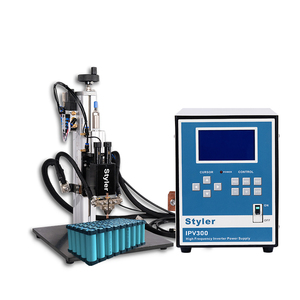
Micro Welder for Mold & Die Repair & Battery Spot Welding
Precision micro-pulse spot welder configured for high-conductivity battery tab joining and microscopic mold restoration without base metal thermal stress.
Contact Us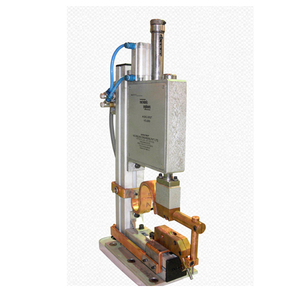
Compact Resistance Micro Welder for Fine Wire & Electronics
High-frequency inverter micro-resistance welder delivering sub-millisecond energy release for delicate electronic components and fine wire bonding.
Contact Us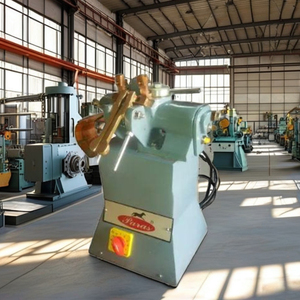
PARMO1 2 KVA Industrial Micro Butt Welding Machine
Heavy-duty micro butt welder designed for continuous wire alignment, uniform upset pressure, and zero-defect cross-sectional joint integrity.
Contact Us
150W / 200W YAG Laser Precision Micro Welding System
Pulsed YAG laser micro welder equipped with optical stereomicroscope for ultra-precise gold, silver, titanium, and medical instrument repair.
Contact Us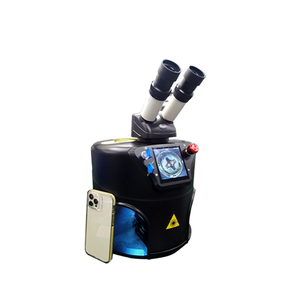
150W Desktop Micro Spot Welder for Fine Metallurgy
Compact footprint workstation featuring digital pulse waveform shaping, integrated argon shielding, and ergonomic continuous-duty cycle design.
Contact Us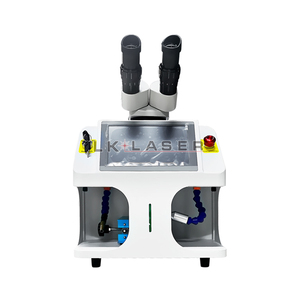
200W YAG Laser Mini Spot & Micro Soldering Unit
High-peak-power laser welder engineered for low thermal expansion metals, precision sensors, jewelry repair, and thin-film alloy joining.
Contact Us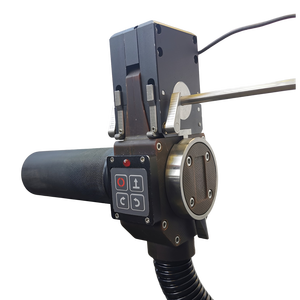
Automatic Orbital Micro Welding System 5H for Stainless Tubing
Enclosed orbital micro-TIG welding head engineered for ultra-high purity semiconductor piping, cleanroom lines, and aerospace tubing installations.
Contact Us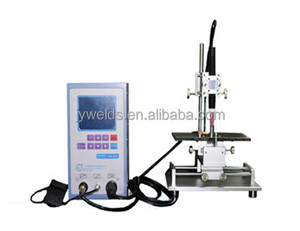
High-Precision 50A Output Micro TIG Welder for Copper Alloys
CE-certified micro-TIG power source with current control increments down to 0.1A, optimized for copper coil joining and ultra-thin foils.
Contact UsEngineering Principles & Physics of OEM Micro Welding Systems
Understanding energy density, current pulse kinetics, and heat-affected zone (HAZ) management in high-reliability micro-joining applications.
1. Thermal Heat-Affected Zone (HAZ) Control & Energy Delivery Dynamics
In high-precision micro-joining—spanning medical device assembly, battery tab interconnects, semiconductor packaging, and micro-electromechanical systems (MEMS)—standard arc welding processes fail due to excessive heat input, causing grain growth, warping, and substrate burn-through. Custom OEM Micro Welders mitigate these thermal degradation mechanisms by compressing electrical or optical energy into tight spatial and temporal parameters.
Energy input in micro-welding is governed by the relation Q = V × I × t (where Q is thermal energy in Joules, V is voltage, I is current, and t is pulse duration). Advanced pulse-arc and micro-resistance systems utilize high-speed insulated-gate bipolar transistors (IGBTs) or solid-state laser optics to limit t to millisecond or sub-millisecond intervals (typically 0.1 ms to 20 ms). By restricting energy release to precise micro-durations, the peak current melt pool solidifies prior to significant heat dissipation into adjacent substrate material, yielding a minimal HAZ (< 50 microns).
2. Comparative Matrix: OEM Micro Welding Process Technologies
Selecting the optimal micro-welding platform requires evaluating electrical conductivity, joint geometry, material thickness, and production speed requirements. The table below outlines technical boundaries across major micro-joining modalities:
| Technology | Typical Thickness Range | Energy Density | HAZ Impact | Primary Material Compatibility | Optimal B2B Application |
|---|---|---|---|---|---|
| Pulse Arc / Micro TIG | 0.05 mm – 2.5 mm | Moderate-High | Low (< 0.1 mm) | Stainless Steel, Titanium, Copper, Inconel | Mold Repair, Sensors, Medical Tubing |
| Micro Resistance Spot/Butt | 0.02 mm – 1.2 mm | High (Joule Heating) | Extremely Low | Nickel Tabs, Copper Foils, Kovar, Gold Wire | EV Battery Packs, Electronics, Relays |
| Pulsed YAG Laser | 0.01 mm – 1.5 mm | Ultra-High (106 W/cm2) | Negligible | Precious Metals, Dissimilar Alloys, Steel | Jewelry, Dental Implants, Micro-Optics |
| Orbital Micro TIG | 0.3 mm – 3.0 mm (Pipe) | Controlled Continuous | Uniform / Controlled | 316L Stainless, Hastelloy, Titanium Alloys | Semiconductor Gas Lines, Bio-Pharma Piping |
3. Shielding Gas Dynamics & Metallurgical Integrity
At micro-scale dimensions, oxidation during the molten state compromises mechanical tensile strength and electrical conductivity. OEM Micro Welders incorporate targeted gas delivery optics (Argon purity ≥ 99.999%) via coaxial nozzles or trailing shields. Maintaining laminar flow over the weld pool prevents atmospheric nitrogen and oxygen entrapment, eliminating porosity and micro-cracking in sensitive reactive alloys like Titanium Grade 5 and Oxygen-Free High Conductivity (OFHC) Copper.
Why Partner with Us for Custom OEM Micro Welder Sourcing?
Built on 60 years of heavy-duty and precision welding engineering, delivering end-to-end custom design, full-load validation, and international export compliance.
60 Years of Applied Engineering Heritage
Founded on rigorous industrial standards since 1965, our manufacturing operations encompass in-house transformer core winding, digital circuit assembly, CNC structural fabrication, and comprehensive quality control. Decades of engineering experience serving automotive Tier-1 suppliers, shipyards, aerospace sub-contractors, and precision electronics fabricators inform every micro-welder design choices.
100% Load-Tested & Serialized QC Protocol
Every custom OEM micro-welding unit undergoes rigorous multi-stage testing prior to packaging: no-load voltage stability checks, continuous full-duty thermal stress testing, insulation resistance verification (Class F/H standard), and micro-joint tensile pull verification. Serialized test logs accompany all international export shipments for audit traceability.
Comprehensive OEM Customization Flexibility
We tailor machines to precise production line specifications: custom electrical voltage inputs (220V 1-Phase, 380V–440V 3-Phase at 50/60 Hz), bespoke workstation mounting frames, automated pneumatic clamping fixtures, water-cooled micro-torch packages, PLC integration for automated robotic arms, and customized multi-language HMI interfaces.
Global Export & Dedicated Technical Support
Exporting to industrial buyers across six continents, all machines are packaged in seaworthy, moisture-sealed wooden crates with desiccant protection. Overseas purchasers receive full schematics, recommended maintenance spare-parts kits, remote engineer diagnostics support, and parameter selection guidelines tailored to their alloy grades.
Future Procurement & Development Trends in Micro-Welding Technology
Key technological shifts shaping capital equipment procurement strategies for OEM buyers, contract manufacturers, and system integrators worldwide.
1. Industry 4.0 & Closed-Loop Closed-Weld Monitoring
Procurement teams are prioritizing micro-welding power sources equipped with real-time sensor feedback. Future-ready micro-welders monitor dynamic contact resistance, voltage drops, and acoustic signatures during every millisecond of energy discharge. Closed-loop algorithms automatically adjust power output mid-pulse to compensate for surface oxides or fit-up variations, eliminating manual rework and delivering 100% inline quality verification.
2. EV Battery & Micro-Electronics Dissimilar Metal Joining
The global surge in electric vehicle (EV) energy storage, consumer wearables, and power electronics has expanded demand for joining dissimilar, highly reflective, or thermally conductive metals—such as Copper tabs to Aluminum busbars or Nickel to Stainless Steel. Modern OEM micro welding development focuses on hybrid pulse shapes and green/blue laser wavelengths that overcome high optical reflectivity and brittle intermetallic compound formation.
3. Ultra-High Purity (UHP) Cleanroom & Miniaturization Standards
In semiconductor fabrication facilities and pharmaceutical processing plants, tubing systems must eliminate micro-crevices where bacteria or corrosive process gases can collect. Procurement trends indicate a swift transition toward automated, enclosed orbital micro-welding systems capable of repeatable, full-penetration welds on thin-walled tubing down to 1/8" (3.175 mm) outer diameter under ISO Class 5 cleanroom conditions.
Micro Welder Sourcing & Procurement FAQ
Direct answers to commercial and engineering questions commonly raised by global purchasing managers and technical directors.
Consult Our Micro-Welding Application Engineers
Send us your base material specifications, component dimensions, and duty cycle requirements. Our engineering team will perform sample joint evaluations and recommend the ideal micro-welding power source and fixture setup.
Contact Us