
High-Performance Industrial Welders & Metal Processing Systems
Engineered to deliver exceptional joint integrity, minimal heat-affected zones (HAZ), and unmatched operational longevity under multi-shift industrial duties.
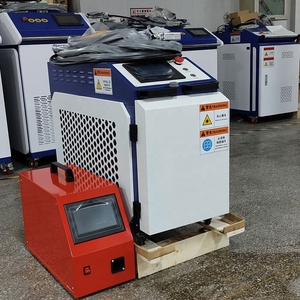
Laser Welders 4 Functions 1500W 2000W 3000W 4 in 1 Handheld Laser Cutting Cleaning Welding Machine Laser Welding Machine
Contact Us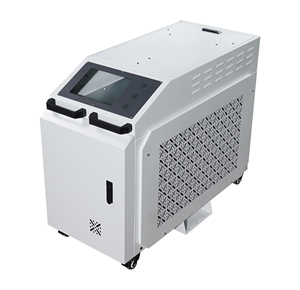
All-in-one Design Handheld Laser Welder Chiller SY-1500 For 1.5kW Handheld Laser Welding New
Contact Us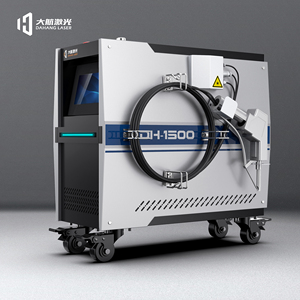
4 in 1 Air-cooled Laser Steel Aluminum Metal 1500W 2000W Fiber Laser Welding Welder Machines
Contact Us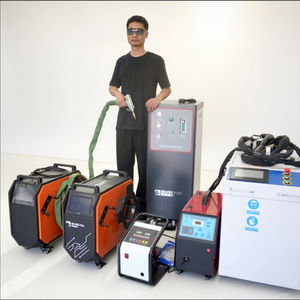
Professional High-Efficiency PANGOLIN Handheld Fiber Laser Welding Machine 1000W-3000W Air-Cooled Engine PMI Easy Operation
Contact Us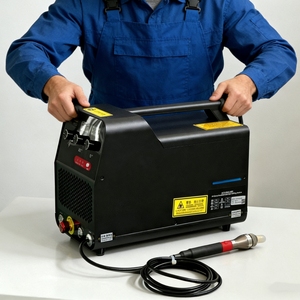
Portable Laser Welding Machine 600W Mini Handheld Spot Welder for Thin Sheet Advertising Letter DIY Production
Contact Us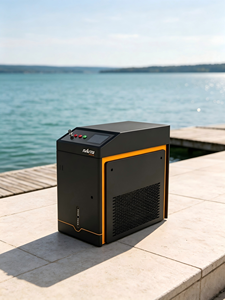
Wholesale Economical Price 1500W 2000W 3000W Laser Welding Machine For Stainless Steel Aluminum Metal
Contact Us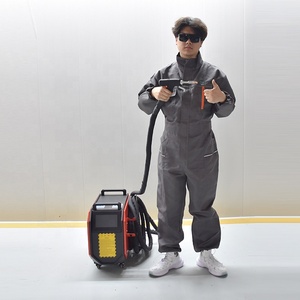
4in1 Laser Welding Machine Outdoor Small Portable Stainless Steel Iron Aluminum Metal Source Factory Laser Welding Machine
Contact Us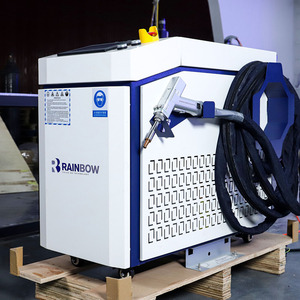
Cheapest 4 In 1 Laser Welding Machine 1500w Laser Welder Handheld Fiber Laser Iron Aluminum Welding Machine Welding Gun
Contact UsSolid-State Precision: The Physics & Metallurgy of Custom Friction Welding
How custom OEM rotary friction, friction stir, and hybrid joining technologies eliminate melt-phase defects to produce forge-quality structural joints.
In modern high-integrity manufacturing—spanning aerospace drive shafts, automotive bimetallic valve stems, drill pipes, and EV battery cooling plates—conventional fusion welding methods often fall short. Thermal cracking, porosity, excessive heat distortion, and intermetallic brittleness frequently occur when joining high-strength alloys or dissimilar metals such as copper to aluminum. Custom OEM friction welding presents a solid-state alternative that bypasses the liquid-to-solid phase change entirely.
Core Advantage: By converting rotational or linear mechanical friction directly into interfacial thermal energy under precise axial pressure, materials reach a plasticized state (typically 70% to 90% of the melting point) without liquefaction.
When the desired plasticized state is achieved, a rapid upset forge force is dynamically applied. This mechanically expels surface oxides and contaminants into a characteristic flash collar, creating a 100% dense, grain-refined forged atomic bond across the entire joint cross-section.
- Zero Porosity & Inclusions: Absence of liquid metal pool prevents gas entrapment and solidification shrinkage defects.
- Narrow Heat-Affected Zone (HAZ): Rapid cycle times restrict thermal diffusion, preserving temper in heat-treated base metals.
- Superior Metallurgical Integrity: Dynamic recrystallization leads to fine equiaxed grain structures with joint efficiencies approaching 100% of parent material strength.
Dissimilar Metal Compatibility Matrix
Our custom OEM friction welders are specifically tailored to join combinations deemed unweldable by traditional arc or laser processes:
- Copper to Aluminum (Cu-Al): Essential for EV busbars and electrical terminals without forming brittle Al2Cu phases.
- Stainless Steel to Carbon Steel: Cost-effective power generation turbine shafts and valve stems.
- Aluminum to Steel (Al-Fe): Automotive structural lightweighting applications.
- Titanium to Nickel Alloys: High-temperature aerospace engine structural assemblies.
Why Global Procurement Teams Partner with Us for OEM Customization
Combining six decades of heavy equipment engineering with computerized multi-axis servo control to build bespoke friction and hybrid welding systems.
Bespoke Machine Architecture
We do not supply standard off-the-shelf boxes when your geometry demands custom intervention. From 5-ton micro-friction setups to 250-ton heavy-duty tie-bar forge structures, every bed frame, headstock, and hydraulic clamp is engineered around your part CAD drawings.
Rigid Quality Assurance & FAT Testing
Every custom machine undergoes exhaustive Factory Acceptance Testing (FAT), including 100% full-load electrical duty cycle runs, hydraulic pressure transducer calibrations, ultrasonic weld non-destructive evaluation (NDE), and destructive tensile/bend tests on sample runs.
Closed-Loop Servo Control & Telemetry
Integrated Siemens S7-1500 / Allen-Bradley PLCs with high-frequency sampling (1 kHz) precisely monitor spindle RPM, displacement upset distances, dynamic torque, and forge pressure curves in real time for total traceably per component.
Emerging Trends in Industrial Procurement & Joining Technologies
Strategic insights for procurement leaders, plant managers, and chief technology officers navigating the next decade of advanced manufacturing.
1. Decarbonization & Direct Energy Savings
Global industrial supply chains face mounting ESG regulations and carbon reduction mandates. Traditional arc welding (MIG/TIG) consumes substantial electrical energy while generating high consumable filler metal costs and shielding gas emissions. Friction welding and fiber laser processing operate at up to 80% higher energy efficiency because thermal energy is concentrated localized strictly within the joint interface.
Future procurement protocols increasingly prioritize lifetime total cost of ownership (TCO) and kilowatt-hour per joint metrics, where solid-state friction welders lead the capital equipment sector.
2. Electric Vehicle (EV) Lightweighting Demands
The global EV transition requires lightweight battery enclosures, hybrid aluminum-copper power distribution busbars, and hollow rotor shafts to maximize vehicle range. Joining aluminum alloy structural members (e.g., 6061-T6 to 7075-T6) or bimetallic copper-to-aluminum contacts cannot be performed cleanly with traditional fusion welders due to severe galvanic corrosion risks and intermetallic cracking.
OEM Friction Stir Welding (FSW) and high-speed Rotary Friction Welding (RFW) are rapidly becoming compulsory specifications on Tier-1 automotive procurement RFQs worldwide.
3. Smart Industrial IoT & Digital Twin Welding
Modern manufacturing demands 100% part quality traceability without destroying test specimens. Industry 4.0 friction welding platforms incorporate IoT telemetry edge gateways. Every weld cycle records an immutable parameter stamp (peak torque, burn-off rate, forge delay, final length loss).
This dataset feeds directly into plant-wide ERPs and Digital Twin predictive maintenance models, automatically alerting operators if a forging parameter strays outside 6-sigma limits.
Procurement Action Item
When drafting OEM machinery tenders, mandate open-architecture PLC protocols (OPC UA, MQTT) and high-speed linear transducer feedback (±0.01 mm resolution) to ensure future compatibility with automated robotic loading cells.
Friction Welding vs. Laser, TIG/MIG & Resistance Welding
An engineering parameter comparison to guide process selection for your factory floor.
| Performance Parameter | Rotary / Stir Friction Welding | Fiber Laser Welding | MIG / TIG Arc Welding | Resistance Spot Welding |
|---|---|---|---|---|
| Joint Mechanical Strength | 100% parent metal strength (Forged) | 90% – 95% (Melted / Solidified) | 70% – 85% (High HAZ softening) | 60% – 75% (Localized nugget) |
| Dissimilar Metals (e.g., Al to Cu, Fe to Al) | Exceptional (No melt phase phase separation) | Moderate (Requires complex foil interlayers) | Poor (High intermetallic brittleness) | Poor (Galvanic & thermal mismatch) |
| Consumables Required | None (Self-generating friction heat) | Shielding gas (Argon/Helium) | Wire electrodes, tips, gas, flux | Copper electrode tips (High wear) |
| Heat-Affected Zone (HAZ) Width | Extremely Narrow (Localized plastic zone) | Very Narrow | Wide (Significant thermal distortion) | Moderate |
| Cycle Time Efficiency | Ultra-Fast (2 to 15 seconds per joint) | Fast | Slow to Moderate | Fast |
| Pre-Weld Surface Cleaning Needed | Minimal (Oxides expelled into flash collar) | High (Requires strict cleaning) | Moderate to High | Moderate |
| Operator Skill Requirement | Low (Fully automated PLC recipe control) | Moderate (CNC path setup) | High (Certified manual welder dependency) | Low to Moderate |
| Environmental & Safety Impact | Eco-Friendly (No fumes, sparks, arc flash) | Clean (High optical safety enclosure required) | High fumes, UV radiation, spatter | Spatter, electromagnetic bursts |
How We Build Your Machine: From Feasibility to Global Commissioning
Our standardized multi-gate engineering protocol ensures zero execution risk for overseas OEM buyers.
Metallurgical Joint Feasibility Study
We analyze component material chemistry, cross-sectional area, required tensile/torsional shear strength, and production rate. Prototype test welds are performed in our R&D lab to establish optimal parameter windows (RPM, pressure, burn-off length).
Custom Mechanical & Hydraulic Design
Our 3D CAD team models structural frame finite element analysis (FEA), custom spindle bearing arrangements, automatic clamping collets, and high-response hydraulic power units built for continuous 24/7 industrial duty cycles.
PLC Electrical Architecture & HMI Programming
Control systems are tailored to your factory standards (Siemens, Mitsubishi, Schneider, or Allen-Bradley). We program intuitive touch-screen HMIs with multi-language support, recipe management, and automated fault diagnostics.
Precision Assembly & Factory Acceptance Testing
Components are manufactured in-house, assembled, and wired under strict ISO standards. FAT includes continuous full-power endurance runs, vibration analysis, non-destructive weld inspection, and optical alignment verification.
Export-Grade Packaging & Ocean Logistics
Machines undergo anti-corrosion VCI vacuum foil wrap sealing and are mounted inside heavy-duty fumigated wooden crates designed to withstand harsh maritime transport conditions.
Global On-Site Commissioning & Remote Telemetry Support
Senior installation engineers deploy globally for facility integration, operator parameter training, and maintenance handover, backed by 24/7 encrypted remote IoT diagnostic access.
Frequently Asked Questions for OEM & Export Buyers
Direct, transparent answers regarding technical capabilities, customization options, and global support.
Our custom OEM friction welding machinery line covers solid rod diameters from 4 mm up to 150 mm (and hollow tubular sections up to 300 mm outer diameter). Forging forces range from 1 ton (10 kN) for micro-precision electrical connectors up to 250 tons (2500 kN) for heavy oil-field drill pipes and aerospace structural components.
Yes, absolutely. We custom-configure electrical power cabinets and transformer windings to meet any global line voltage requirement, including 220V, 380V, 415V, 440V, or 480V three-phase systems at 50 Hz or 60 Hz. All electrical wiring conforms to international CE and NFPA 79 safety practices.
Because friction welding operates below the melting temperature of both parent materials, it prevents the formation of thick, brittle intermetallic phase compounds (such as Al2Cu) that render fusion welds unusable. The mechanical scrubbing action expels oxides, forming a direct atomic lattice bond with electrical conductivity near 100% IACS and high shear strength.
Every exported machine is accompanied by a comprehensive technical dossier containing exploded-view schematics, hydraulic routing diagrams, PLC software back-ups, and a 2-year recommended consumable spare parts package. We maintain a dedicated fast-track global dispatch team for critical components and offer encrypted remote VPN module access for instant software parameter diagnostics.
Yes. Over 70% of our OEM custom projects involve fully automated turn-key production cells. We integrate multi-axis industrial robots (e.g., FANUC, ABB, KUKA) for automatic part loading/unloading, synchronized hydraulic flash removal turning tools, automated length-checking gauging, and laser barcode marking systems.
Our manufacturing and assembly facilities operate under an ISO 9001:2015 certified quality management system. Friction welding machinery designs comply strictly with ISO 15620 (Friction Welding of Metallic Materials) and international machine safety guidelines including dual-channel safety light curtains, interlocking enclosure guards, and redundant E-stop safety relays.
Transform Your Production Joining Capabilities Today
Have a complex joint geometry, dissimilar material challenge, or custom OEM machinery specification? Speak directly with our senior mechanical and metallurgical engineering team to request a complete technical feasibility analysis and quote.