
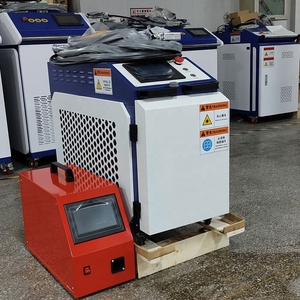
Featured Industrial Laser & Flux Welding Machinery
Explore our flagship OEM-customized multi-functional laser and flux-cored welding units, precision-engineered for heavy metal fabrication, structural assembly, and automated production lines.
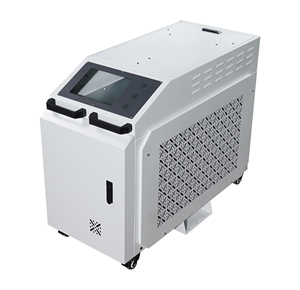
All-in-one Design Handheld Laser Welder Chiller SY-1500 For 1.5kW Handheld Laser Welding New
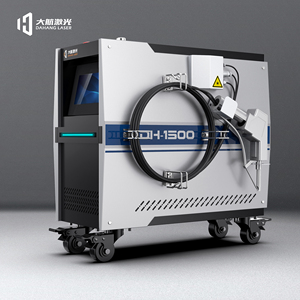
4 in 1 Air-cooled Laser Steel Aluminum Metal 1500W 2000W Fiber Laser Welding Welder Machines
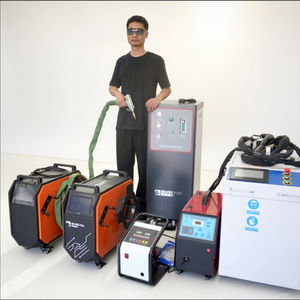
Professional High-Efficiency PANGOLIN Handheld Fiber Laser Welding Machine 1000W-3000W Air-Cooled Engine PMI Easy Operation
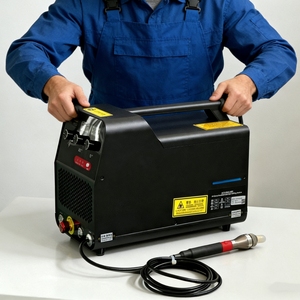
Portable Laser Welding Machine 600W Mini Handheld Spot Welder for Thin Sheet Advertising Letter DIY Production
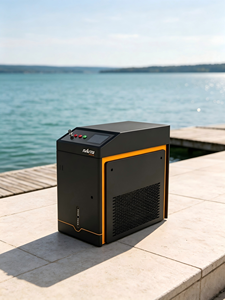
Wholesale Economical Price 1500W 2000W 3000W Laser Welding Machine For Stainless Steel Aluminum Metal
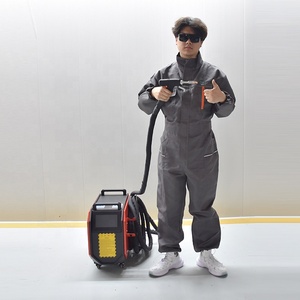
4in1 Laser Welding Machine Outdoor Small Portable Stainless Steel Iron Aluminum Metal Source Factory Laser Welding Machine
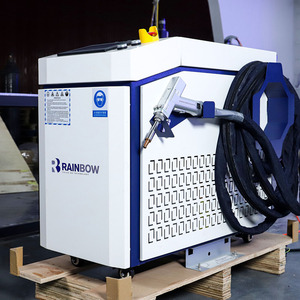
Cheapest 4 In 1 Laser Welding Machine 1500w Laser Welder Handheld Fiber Laser Iron Aluminum Welding Machine Welding Gun
Technical White Paper: OEM Customization in Flux-Cored Arc Welding (FCAW) Infrastructure
Understanding Metallurgical Deposition Rates, Arc Thermodynamics, and Inverter Power Electronics for High-Throughput Manufacturing.
Self-Shielded vs. Gas-Shielded FCAW Dynamics
Flux-cored arc welding operates through two distinct metallurgical delivery pathways: FCAW-S (Self-Shielded) and FCAW-G (Gas-Shielded). Custom OEM flux welder designs must optimize internal transformer secondary windings and IGBT wave-process control based on the chosen process. Self-shielded wires rely on core compounds that volatilize under the arc to form protective gases, producing slag barriers ideal for outdoor construction and high-wind environments where external gas cylinders fail.
Inverter IGBT Module Microprocessors
Modern OEM flux welding machinery utilizes high-frequency Insulated Gate Bipolar Transistors (IGBT) switching topologies operating at 20 kHz to 100 kHz. This high-speed control loop adjusts instantaneous voltage against wire feed speed variations, reducing spatter volume by up to 65% compared to legacy step-transformer units. Synergic microprocessors allow single-knob parameter synchronization for multi-pass carbon steel and alloy fabrication.
Class F/H Thermal Insulation & Duty Cycles
Industrial continuous-duty operations require robust thermal management. Custom OEM flux power sources manufactured with Class F (155°C) or Class H (180°C) copper wire windings, combined with thermostatic overload protection and forced air-tunnel cooling circuits, ensure a true 60% to 100% duty cycle at maximum amperage ratings under harsh multi-shift shipyard and structural steel shop conditions.
Engineering OEM Solutions: Wire Feeder Mechanics & Drive Roll Engineering
The performance of a heavy-duty flux-cored arc welding system depends heavily on wire drive stability. Tubular flux-cored wires possess thinner outer sheaths filled with granular alloying elements, fluxing agents, and deoxidizers. Standard knurled drive rolls designed for solid MIG wire can crush soft tubular wire profiles, causing core compaction, wire shaving, and feed tip burnbacks.
As an experienced OEM flux welder manufacturer, our engineering team integrates heavy-duty 4-roll dual-drive wire feed mechanisms featuring precision V-knurled and U-grooved rollers. Micro-adjustable tensioning arms prevent wire deformation while delivering consistent feeding torque across extended 15-meter torch umbilical bundles. Dual-shield applications further benefit from integrated gas solenoid timers, pre-flow/post-flow control circuits, and burn-back timing logic, ensuring clean puddle crater fills and zero porosity at start-stop weld terminals.
Comprehensive Process Selection & Specification Matrix
Selecting the ideal welding power source based on mechanical requirements, deposition speed, and operational environments.
| Welding Process | Typical Material Range | Deposition Rate | Shielding Requirement | Wind/Outdoor Tolerance | Primary Industrial Sector |
|---|---|---|---|---|---|
| Flux-Cored Self-Shielded (FCAW-S) | 1.2 mm – 38 mm | High (3.5–8.0 kg/hr) | None (Internal Core Gas) | Excellent (Up to 35 mph wind) | Structural Steel, Heavy Infrastructure, Field Repair |
| Flux-Cored Gas-Shielded (FCAW-G) | 1.5 mm – 50+ mm | Very High (4.0–11.0 kg/hr) | 75/25 CO2/Ar or 100% CO2 | Moderate (Requires Wind Screens) | Shipbuilding, Heavy Equipment, Pressure Vessels |
| MIG/GMAW Solid Wire | 0.8 mm – 19 mm | Moderate (1.5–5.5 kg/hr) | Ar/CO2 Gas Blends | Poor (Indoor Only) | Automotive Tier-1, Sheet Metal, Enclosures |
| TIG/GTAW Precision | 0.5 mm – 8 mm | Low (0.5–1.8 kg/hr) | 100% Pure Argon | Poor (Indoor Only) | Aerospace, Sanitary Stainless, Pharma Piping |
| Fiber Laser / Hybrid Welding | 0.3 mm – 6 mm | Ultra High (Travel Speed Driven) | Argon / Nitrogen Assist | Moderate (Enclosed Cell) | Precision Electronics, EV Battery Packs, Thin Sheet |
Global Procurement Trends in Industrial Welding Equipment
How B2B procurement managers and EPC contractors are restructuring supply chains to balance operational uptime, energy efficiency, and total cost of ownership (TCO).
1. Shift Toward Modular Inverter Platform Standardization
Global manufacturing enterprise buyers are phasing out monolithic, heavy transformer welding units in favor of modular inverter power sources. Modular architecture enables rapid swap-out of main control boards, reduces freight weight by over 60%, and significantly reduces factory floor footprint. Standardizing on universal OEM chassis simplifies spare parts stocking for multinational plant operations.
2. Demand for Customized OEM Voltage & Frequency Adaptability
With expanding global cross-border engineering projects, procurement teams require multi-voltage input machines. Custom OEM manufacturers capable of supplying units auto-sensing between 220V single-phase and 380V/415V/440V three-phase at 50/60 Hz eliminate site-level power incompatibility issues in cross-border deployments across South America, Africa, Southeast Asia, and Europe.
3. Digital Waveform Control & Data Logging Integration
Industry 4.0 compliance requires complete weld traceabilities. Modern OEM purchasing specs mandate IoT-ready ethernet or Modbus communications modules within welding power sources. Real-time logging of current, arc voltage, wire feed speed, and total arc-on time allows quality auditors to verify WPS compliance on critical structural joints.
4. Total Cost of Ownership (TCO) Prioritization
Initial purchase price represents less than 15% of a industrial welder's total lifetime operating cost. B2B buyers prioritize energy efficiency (power factor > 0.93), low idle power draw, consumable longevity, and standardized torch connection fittings (e.g., Euro Central Connectors) that reduce operational consumable overhead.
Next-Generation Technological Innovations in Flux Welding
How emerging power electronics, laser-flux hybridization, and automated wire control are redefining industrial joining efficiency.
Pulse FCAW Dynamics
Pulsed flux-cored arc welding combines the high deposition rates of FCAW with the low heat input of pulsed GMAW. By pulsing peak currents above droplet detachment thresholds followed by low background currents, heat-affected zone (HAZ) distortion is reduced by up to 40% on thin structural alloys.
Laser-FCAW Hybridization
Combining high-energy fiber laser beams with flux-cored wire delivery allows single-pass full-penetration welds on plates exceeding 15 mm thickness. The laser creates a deep keyhole while the flux-cored wire supplies filler metal and protective slag, delivering speeds up to 3x faster than conventional submerged arc systems.
Active Electronic Wire Brake
Next-gen OEM wire feeders incorporate active micro-stepping motors that instantly reverse wire feed fractionally upon arc termination. This completely eliminates wire burnback to the contact tip and prepares the wire end with optimal spherical geometry for immediate restrike.
Why Global Buyers Choose Our OEM/ODM Manufacturing Capabilities
Six decades of engineering expertise, vertically integrated production, and stringent quality control protocols.
Built for Uptime: In-House Winding, Calibration & Testing
Unlike pure assembly trade intermediaries, our manufacturing facilities execute complete component engineering—from transformer coil winding, varnish impregnation, and copper bussing to SMT circuit board assembly and sheet metal enclosure fabrication.
- 100% Full-Load Bench Testing: Every machine undergoes continuous burn-in testing at maximum current ratings prior to packaging.
- Custom Private-Label Branding: Comprehensive OEM services including custom enclosure colorways, branded panel overlays, software start-screens, and multilingual manuals.
- Site-Tolerant Power Electronics: Engineered to withstand +/- 20% grid voltage fluctuations common in remote project sites.
- Independent Spare Parts Traceability: Documented schematic mapping ensures global site maintenance teams can procure exact replacement components locally or directly.
OEM Technical Capabilities
Current Output Range: 130A to 1250A Heavy Duty Rectifiers & Inverters
Input Voltages Supported: 110V, 220V, 380V, 415V, 440V, 480V (Single / 3-Phase 50/60Hz)
Inclosure Ingress Rating: IP21S to IP23 Heavy-Duty Outdoor Weather Protection
Insulation Class: Class F (155°C) & Class H (180°C) Pure Copper Windings
Quality Certifications: CE, ISO9001:2015, CCC, RoHS Compliant Assembly
Frequently Asked Technical & Commercial Questions
Clear, expert answers to common procurement, engineering, and OEM customization inquiries.
What custom OEM modifications can be made to flux welder power sources?
Our factory provides end-to-end OEM and ODM customization, including specialized input voltage configurations (e.g., dual 220V/380V or dedicated 440V mining specs), custom panel graphics, branded front sheet metal, specific wire feeder drive gearing, specialized torch connectors (Euro, Tweco, Miller style), and custom software synergy curves optimized for proprietary wire alloys.
What is the difference between Flux-Cored (FCAW) and solid wire MIG (GMAW) welders?
FCAW utilizes tubular wire filled with flux materials. Self-shielded flux wire requires no external shielding gas tank, making it mobile and effective in drafty or outdoor conditions. Flux welding delivers significantly higher deposition rates and deeper joint penetration on thick steel plate compared to solid wire GMAW, though it leaves a removable slag layer over the completed weld bead.
How does your factory ensure 100% duty cycle reliability on heavy engineering models?
Our heavy-duty models feature oversized Class H copper transformers, high-surface-area aluminum heatsinks, and forced air-tunnel cooling that isolated electronic PCB boards from dust intake. Units rated for 100% duty cycle are continuously load-tested at full rated amperage in ambient temperatures up to 40°C before passing export release protocols.
Can your flux welders handle both gas-shielded (FCAW-G) and self-shielded (FCAW-S) wires?
Yes. Our multi-process inverter flux welders feature easy polarity reversal terminals (Direct Current Electrode Negative for self-shielded wires, Direct Current Electrode Positive for gas-shielded wires and solid MIG wire). Quick-change gas solenoids and dual knurled wire drive rolls allow seamless switching between wire types.
What after-sales, technical support, and spare parts availability do you provide to overseas buyers?
Every export shipment includes comprehensive circuit schematics, exploded parts diagrams, and a recommended 2-year maintenance spare parts kit (drive rolls, contact tips, gas nozzles, solenoid valves, and main control board modules). Our senior technical engineers offer remote video commissioning, parameter selection advice, and diagnostic support.
What are the minimum order quantities (MOQ) and production lead times for custom OEM orders?
Standard production models have low MOQs (as few as 5–10 units). Fully customized OEM orders featuring private-label enclosures and customized software UI typically require an MOQ of 20–50 units depending on machine complexity. Standard lead time is 15–25 days from engineering sign-off, with export-grade sea-worthy wood crating provided.
Partner with a Leading Custom OEM Flux Welder Manufacturer
Whether you require standard multi-process inverter machines or fully custom private-label power sources engineered for your specific industrial application, our engineering team is ready to consult on your technical parameters.