
Industrial Laser Welding, Cutting & Cleaning Systems
Explore our export-ready fiber laser systems engineered for high duty-cycle manufacturing, low spatter sheet metal fabrication, and multi-shift industrial production.
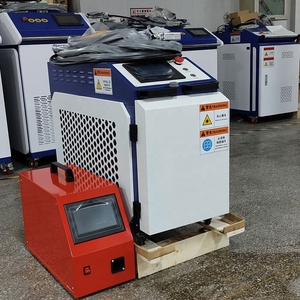
Laser Welders 4 Functions 1500W-3000W 4-in-1 Handheld Machine
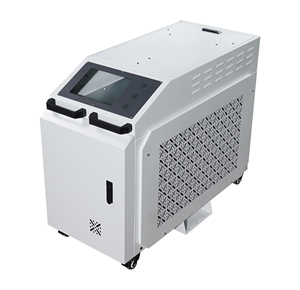
All-in-One Integrated Handheld Laser Welder Chiller SY-1500
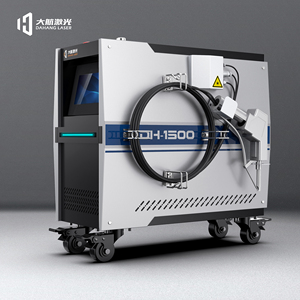
4-in-1 Air-Cooled Laser Steel & Aluminum Welder 1500W-2000W
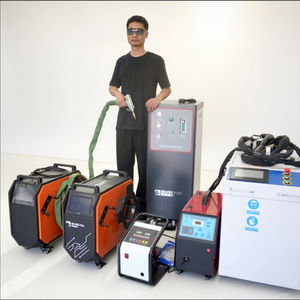
PANGOLIN High-Efficiency Air-Cooled Fiber Laser Welder 1kW-3kW
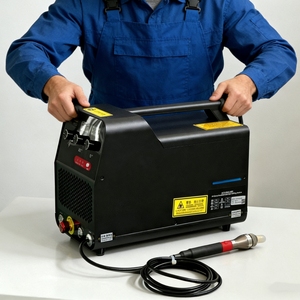
Portable 600W Mini Handheld Spot Laser Welder for Thin Sheet Metal
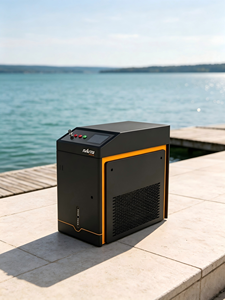
Economical Wholesale 1500W-3000W Fiber Laser Welding System
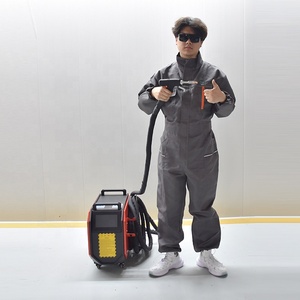
Outdoor Small Portable 4-in-1 Stainless & Aluminum Laser Welder
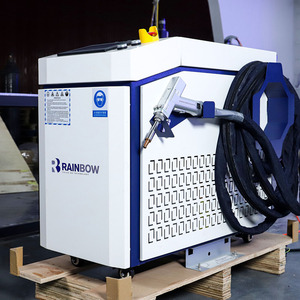
Commercial 4-in-1 1500W Handheld Laser Welder with Smart Wobble Gun
Engineering Evaluation of China Wholesale Laser Source Suppliers & Export Infrastructure
A comprehensive procurement framework for system integrators, OEM machinery builders, and industrial buyers evaluating fiber laser engines, pump diode architectures, and optical delivery channels.
The global photonics industry has undergone a radical structural transformation over the past decade. China has evolved from a regional assembly hub into the global epicenter of high-power fiber laser source manufacturing, exporting tens of thousands of continuous wave (CW), MOPA pulsed, and ultra-short pulse (picosecond/femtosecond) laser engines annually. For international procurement managers, machinery OEMs, and structural fabrication shops, navigating the landscape of China wholesale laser source suppliers requires a granular understanding of laser architecture, beam parameter metrics, component supply chains, and total cost of ownership (TCO).
1. Core Architecture of Modern Industrial Fiber Laser Sources
A fiber laser source generates coherent optical radiation by optical pumping of an ytterbium-doped (Yb³⁺) silica fiber core using semiconductor laser diodes. Unlike traditional solid-state crystal lasers (such as Nd:YAG) or gas lasers (CO₂), fiber lasers operate with an completely enclosed, all-fiber optical cavity. This design eliminates free-space optics, alignment mirrors, and sensitive optical adjustments, rendering the unit virtually immune to mechanical vibration and dust contamination.
Single-Module vs. Multi-Module
Single-module CW fiber lasers deliver ultra-high beam quality (BPP ≤ 0.35–1.0 mm·mrad) with power outputs up to 3kW–12kW. Multi-module lasers combine multiple fiber laser modules via an optical fiber combiner, scaling power levels up to 30kW–100kW for ultra-thick plate cutting and heavy welding.
Pump Diode Redundancy & MTBF
The primary point of degradation in a laser engine is the pump laser diode. Tier-1 Chinese suppliers utilize high-brightness single-emitter diodes with thermal decoupling, achieving Mean Time Between Failures (MTBF) exceeding 100,000 operating hours under full load conditions.
Back-Reflection Protection (QBH)
When processing highly reflective non-ferrous metals (copper, brass, aluminum, gold), back-reflected laser light can re-enter the optical cavity and damage the gain fiber. Advanced suppliers integrate multi-stage anti-reflection isolators and optical cladding strippers inside the QBH/QCS output head.
When selecting a supplier, engineering buyers must evaluate the laser source’s Wall-Plug Efficiency (WPE). Modern Ytterbium fiber laser engines achieve a WPE between 35% and 45%, converting input electrical energy into optical beam energy with minimal thermal losses. This high efficiency translates directly to lower industrial power bills and reduced chiller refrigeration load compared to legacy YAG systems (which operated at < 5% WPE).
2. Key Technical Specifications Matrix: Fiber vs. CO₂ vs. UV Solid-State
To assist system integrators in specifying the correct optical engine for their CNC cutting tables, handheld welding guns, or micro-marking stations, the following technical comparison details operational parameters across laser medium categories:
| Laser Source Category | Operating Wavelength | Wall-Plug Efficiency | Beam Quality (M²) | Typical Fiber Core | Primary Industrial Applications |
|---|---|---|---|---|---|
| Continuous Wave (CW) Fiber | 1070 nm – 1080 nm | 38% – 45% | 1.05 – 1.3 (Single Mode) 4.0 – 10.0 (Multi Mode) |
10 µm – 100 µm | High-speed sheet metal welding, carbon steel profile cutting, cladding, surface cleaning. |
| MOPA Pulsed Fiber | 1064 nm | 30% – 35% | < 1.5 | 20 µm – 50 µm | Anodized aluminum black marking, stainless steel color marking, plastic etching, foil stripping. |
| Air-Cooled Handheld CW Engine | 1080 ± 5 nm | 35% – 40% | 1.2 – 2.0 | 50 µm / 70 µm | Portable 4-in-1 welding/cutting guns, on-site structural erection, ductwork fabrication. |
| CO₂ Gas Laser Source | 10.6 µm (10,600 nm) | 8% – 12% | ~ 1.1 | Free-Space / Mirror Guide | Non-metallic material cutting (acrylic, wood, leather, glass), organic polymer engraving. |
| UV Solid-State (DPSS) | 355 nm (Third Harmonic) | 10% – 15% | < 1.2 | Galvo Scanner Optics | Cold laser micro-machining, PCB depaneling, medical glass marking, semiconductor wafers. |
Future Product Development & Technological Trends (2025–2030)
The industrial laser source sector is undergoing rapid technology transitions driven by material science demands, energy efficiency mandates, and smart factory automation. International buyers sourcing from China should align their procurement strategies with four key technological trends:
Trend 1: The Transition from Water-Cooling to Phase-Change Air-Cooling
Traditionally, fiber laser sources rated above 1000W required external water chillers with liquid circulation loops to dissipate heat from pump diodes and active optical fibers. This added weight, footprint, maintenance overhead (distilled water changes, deionizing filter replacement), and power consumption. The latest generation of air-cooled fiber laser sources (1500W to 3000W) utilizes micro-channel copper heat pipes, high-density aluminum heatsinks, and fluorocarbon refrigerant phase-change cooling. These modules reduce overall system mass by over 50% and enable compact, portable 4-in-1 handheld laser welders that operate directly from single-phase grid power.
Trend 2: Adjustable Ring-Mode (ARM) & Hybrid Beam Shaping
For high-speed deep-penetration welding of aluminum battery enclosures, copper busbars, and automotive chassis components, standard Gaussian beam profiles often generate keyhole instability and weld spatter. Advanced Chinese fiber laser manufacturers are deploying Adjustable Ring-Mode (ARM) laser source architectures. This optical technology features a central core beam surrounded by an independent annular ring beam. By dynamically controlling the power ratio between the inner core (which creates penetration depth) and the outer ring (which stabilizes the melt pool and reduces thermal gradients), fabricators achieve zero-spatter welds on reflective metals at speeds up to 300 mm/sec.
Trend 3: High-Power Blue (450nm) and Green (532nm) Diode Sources
Near-infrared laser light (1080nm) suffers from poor optical absorption when striking pure copper (which reflects ~95% of 1080nm energy at room temperature). This often causes weld porosity and initial spatter. In contrast, copper absorbs blue light (450nm) at rates exceeding 65%. China’s optics exporters are scaling high-brightness blue laser diode sources and hybrid blue-IR laser systems. These engines allow conduction-mode welding of copper hairpins in electric vehicle (EV) motor manufacturing without spatter or shielding gas turbulence.
Trend 4: Smart IoT Diagnostics and Predictive Maintenance
Modern export-grade laser sources are no longer passive light engines. They feature integrated microprocessors, bus communication interfaces (EtherCAT, CANopen, Modbus-TCP), and internal sensor arrays monitoring real-time humidity, temperature gradients, back-reflection amplitude, optical power degradation, and pump diode voltage draw. Connected to cloud telemetry, these intelligent sources alert operators to optical lens contamination or moisture condensation risks before catastrophic fiber breakdown occurs.
Global Procurement Trends & Supply Chain Optimization for B2B Buyers
Sourcing industrial machinery components directly from China requires a structured supplier qualification workflow. Global buyers must balance raw equipment costs against long-term operational uptime and serviceability.
TCO Calculation Methodology
Evaluate total cost beyond FOB pricing. Compute kilowatt-hour electricity costs based on WPE, annual chiller refrigerant servicing, protective quartz lens consumption rates, and shielding gas flow optimization.
Standardized Optical Interfaces
Ensure the laser source utilizes standardized optical output connectors—such as QBH (Quartz Block Head), QCS, or Euro-style SMA905—to guarantee cross-compatibility with third-party cutting and wobble welding heads.
Spare Parts Buffer Strategy
Maintain an overseas spare-parts buffer containing critical consumables: QBH protective cover slides, fiber delivery cables, focus lenses, collimators, and wire feeder drive rollers to minimize line-stop risks.
Enterprise Advantage: Why Partner with Our Export Infrastructure
Building upon 60 years of heavy industrial engineering heritage (since 1965), our manufacturing facilities bridge traditional metalworking durability with modern photonics precision. Unlike trading intermediaries, our integrated design, winding, assembly, and optical testing protocols ensure every laser engine and welding system meets stringent international standards.
- 100% Full-Power Burn-In Testing: Every fiber laser source and integrated welding machine undergoes a mandatory 48-hour continuous full-load burn-in cycle inside environmental test chambers to verify power stability, beam beam quality, and thermal dissipation prior to export packing.
- Multi-Phase Voltage & Grid Adaptability: Export machinery is configured with class F/H insulated transformers and heavy-duty filtering power supplies designed to handle severe grid fluctuations (220V single-phase, 380V, 415V, or 440V three-phase at 50/60 Hz).
- Traceable Component Sourcing & Serialization: Every optical fiber splice, pump diode cluster, and control circuit board is logged against a unique serial number, providing overseas maintenance technicians with instant schematic access and exact component replacement part codes.
- Sea-Worthy Hermetic Export Crating: Machinery consignments are packaged inside vacuum-sealed aluminum moisture barriers containing industrial desiccant bags and housed within reinforced wooden crates to prevent saltwater corrosion during ocean transit.
Frequently Asked Questions for Wholesale Laser Source Buyers
Technical and commercial answers addressing common engineering queries from international buyers, distributors, and laser system integrators.
What is the difference between single-mode and multi-mode fiber laser sources?
Single-mode fiber laser sources have a thin fiber core (typically 10 to 14 µm) that produces a Gaussian beam with an M² < 1.3, concentrating energy into an extremely small spot. This makes them ideal for thin sheet cutting (under 4mm) and fine micro-welding. Multi-mode sources have larger cores (50 to 100 µm) with an M² between 3.0 and 10.0, producing a wider energy distribution ideal for thick plate cutting, deep penetration welding, and wide-beam surface cladding.
How do air-cooled laser welders handle continuous 100% duty cycle operation?
Air-cooled systems use high-efficiency phase-change heat pipes combined with high-static-pressure brushless cooling fans and oversized aluminum heat sinks. Pump diodes are driven at optimized current densities to prevent thermal buildup. Internal thermal cut-off sensors constantly monitor temperature, allowing 1500W–2000W models to maintain continuous CW output under normal ambient factory conditions (up to 40°C).
How does back-reflection isolation work when welding copper or aluminum?
High-quality laser sources incorporate an optical isolator and a cladding light stripper inside the QBH output head. When laser energy reflects off highly reflective molten copper back into the output cable, the stripper redirects the reflected light into a water-cooled or air-cooled dump block, preventing damage to the Ytterbium gain fiber and pump diodes.
What is the expected operating lifespan of a fiber laser source pump diode?
Industrial-grade Ytterbium fiber laser engines utilize high-brightness single-emitter pump diodes with a rated Mean Time Between Failures (MTBF) of 100,000 hours. Under standard industrial operating conditions (8 to 16 hours per day at nominal thermal limits), a well-maintained laser source can operate for 10 or more years before requiring pump diode array maintenance.
Can 4-in-1 laser machines switch between welding, cutting, and cleaning seamlessly?
Yes. The 4-in-1 system relies on a multi-function wobble handheld torch and quick-change optical nozzles. By selecting the corresponding software preset on the touchscreen control panel and swapping the front nozzle tip (e.g., switching from a single-wire welding tip to a wide-beam cleaning tip or narrow cutting nozzle), operators can alternate between tasks in less than two minutes.
What electrical certifications and compliance standards are provided for export shipments?
Exported laser engines and complete laser welding systems comply with international electromagnetic compatibility (EMC) and electrical safety directives. Systems carry CE certification (EN 60825-1 for laser safety, EN 60204-1 for electrical equipment safety) and feature dual-channel interlock circuits, emergency stop buttons, and safety ground bonding.
Accelerate Your Laser System Sourcing with China's Premier OEM Exporter
Speak directly with our senior optical engineers. We provide technical consultation, tailored power scaling solutions, factory wholesale price sheets, and full export logistics support.