
Flagship Automatic & Fiber Laser Welders
Engineered for high-duty cycle performance, multi-process versatility, and factory-direct OEM reliability. Explore our top-tier export catalog below.
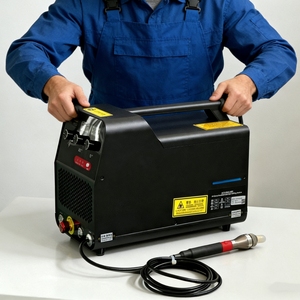
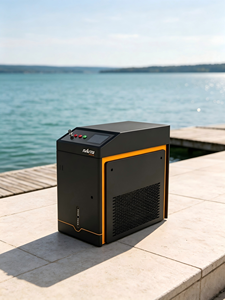
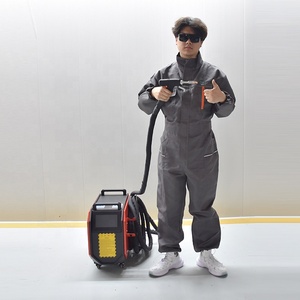
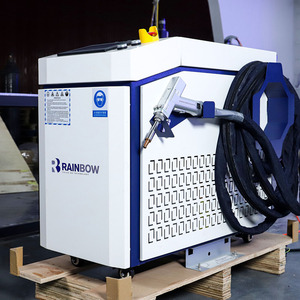
1. Global Manufacturing Landscape & Sourcing Intent for Automatic Welders
The global metal fabrication landscape is experiencing a seismic technological pivot. As industrial production lines transition from legacy Shielded Metal Arc Welding (SMAW/MMAW) and manual TIG welding toward high-speed, automated, and handheld fiber laser solutions, international B2B buyers—ranging from tier-1 automotive component makers to structural steel fabricators—are re-evaluating their procurement channels in China. When searching for China Wholesale Automatic Welder Suppliers & Exporters, procurement teams require much more than low pricing: they require verified E-E-A-T (Experience, Expertise, Authoritativeness, and Trustworthiness), rigorous duty-cycle ratings, international compliance certifications (CE, ISO9001, CSA), and long-term technical support.
In modern industrial fabrication, efficiency is measured by deposition rate, minimal Heat-Affected Zone (HAZ), low thermal distortion, and the total reduction of post-weld grinding labor. Modern China source factories have revolutionized the global welding machinery sector by integrating advanced fiber laser sources (such as Raycus, MAX, and IPG), smart wobble welding heads, synergistic IGBT inverter circuits, and air-cooled heat exchanger modules into compact, plug-and-play production equipment. This whitepaper serves as an authoritative B2B buyer’s guide, analyzing technological advancements, total cost of ownership (TCO), material compatibility matrix, and procurement strategies for sourcing automatic welders globally.
2. Key Technological & Future Procurement Trends (2025–2030)
To maintain a competitive edge, industrial buyers must align their machinery investments with emerging manufacturing paradigms. The automatic welding industry is advancing rapidly along several critical vectors:
Convergence of 4-in-1 Multi-Process Systems
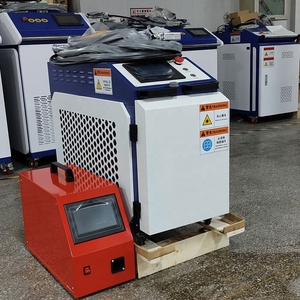
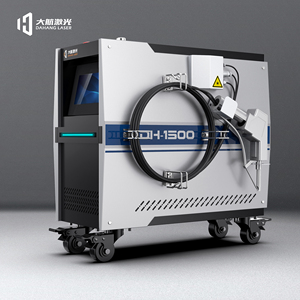
The market is rapidly shifting away from single-function machinery. Modern handheld laser welders seamlessly combine Welding, Cutting, Rust/Paint Cleaning, and Weld-Seam Passivation into a single optics-head configuration. This versatility enables job shops to perform surface pretreatment, seam joining, and post-weld cleanup using one equipment investment.
Transition from Water-Cooled to Phase-Change Air-Cooling
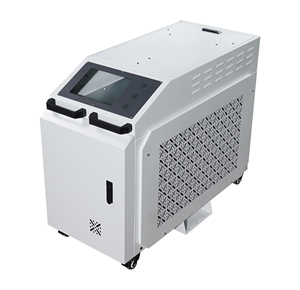
While traditional 2kW+ fiber lasers historically relied on heavy, high-maintenance water chillers, next-generation 1000W–2000W handheld systems now utilize phase-change refrigerant tubes and high-CFM brushless fan assemblies. Air-cooled laser welders reduce system footprint by up to 50%, lower shipping weight, and eliminate sub-zero freezing risks during transit or cold-climate operating environments.
Intelligent Synergic Control & IIoT Integration
Industrial automatic welders are now equipped with microprocessor-driven synergic current matching. Operators select the material type (e.g., 304 Stainless, 6061 Aluminum, Carbon Steel) and thickness, and the internal MCU automatically calculates optimal peak current, pulse frequency, wire feed rate, and shielding gas flow. Integrated IIoT modules enable remote fault diagnostics and telemetry monitoring.
Industrial Heavy-Duty Arc & Robotic Welding Heritage
While fiber laser technologies capture headlines for sheet-metal precision, heavy engineering, shipbuilding, and structural steel fabrication continue to rely on heavy-duty MIG (GMAW), TIG (GTAW), and continuous ARC (SMAW) power sources. Factory-direct engineering ensures that transformer-based rectifiers and inverter power modules feature Class F/H copper insulation, thermostatic overload cut-outs, and heavy-gauge chassis designed for multi-shift industrial duty cycles.
Our export manufacturing facilities adhere strictly to ISO 9001 production flowcharts, subjecting 100% of manufactured units to full-load burn-in tests, dielectric insulation resistance checks, and arc-stability evaluations prior to export crating.
3. Technical Selection Guide & Process Comparison Matrix
Selecting the appropriate automatic welder requires matching the metallurgical properties of the workpiece with process physics. Below is a comprehensive engineering comparison for international procurement officers:
| Welding Process | Optimal Material Thickness | Heat-Affected Zone (HAZ) | Deposition Speed | Post-Weld Processing | Primary Industrial Applications |
|---|---|---|---|---|---|
| Fiber Laser (Handheld / Auto) | 0.5mm – 6.0mm | Ultra-Narrow (<0.5mm) | Ultra-High (up to 120 mm/s) | None to minimal passivating | Stainless steel cabinetry, HVAC ducting, auto parts, kitchenware |
| MIG / MAG (GMAW Inverter) | 1.0mm – 20.0mm | Moderate (2mm – 5mm) | High (continuous wire feed) | Spatter removal & slag wire-brushing | Automotive chassis, machinery frames, structural tubing |
| TIG / GTAW (AC/DC Pulse) | 0.5mm – 8.0mm | Wide (3mm – 8mm) | Low to Moderate | Chemical pickling or mechanical polishing | Sanitary piping, aerospace alloys, pressure vessels, aluminum boats |
| Submerged Arc / Heavy Duty ARC | 6.0mm – 50.0mm+ | Very Wide (>10mm) | Extremely High (thick plate) | Heavy flux slag chipping required | Shipbuilding, bridge girders, heavy pressure vessel longitudinal seams |
| Stud Welding (Capacitor Discharge) | Fasteners M3 – M16 | Localized surface only | Instantaneous (<100ms) | Zero backside thermal marking | Electrical enclosures, insulation pins, architectural facade panels |

Rigorous Quality Assurance & Export Compliance
Building buyer trust across international borders requires transparent quality management systems. Sourcing automatic welders from premier Chinese manufacturers involves multi-stage inspection protocols:
- Incoming Component Screening: Strict testing of IGBT modules (Infineon/Fuji), fiber laser sources, power transformers, and optical lenses.
- Burn-In & Duty Cycle Verification: Operational stress testing under ambient temperatures exceeding 40°C to verify continuous duty performance.
- Safety & Electromagnetic Compatibility (EMC): Compliance with CE Low Voltage Directive (LVD) 2014/35/EU and EMC Directive 2014/30/EU.
- Export-Grade Seaworthy Packaging: Vacuum-sealed anti-moisture barrier wraps, shock-absorbent foam inserts, and reinforced plywood crating.
4. Strategic Advantages of Direct Sourcing from Leading China Suppliers
Engineered Duty Cycles for Continuous Operation
Unlike light-duty consumer-grade welders, industrial automatic welders manufactured by tier-1 China exporters feature 60% to 100% duty cycles at maximum amperage output. Heavy-duty copper windings and force-air cooling tunnels ensure uninterrupted multi-shift operation in demanding factory environments.
Tailored OEM/ODM Customization Capabilities
Global voltage standards vary significantly. Leading Chinese exporters provide full electrical customization, offering single-phase 110V/220V or three-phase 380V/415V/440V transformer configurations for 50Hz or 60Hz power grids, complete with custom wire-feed torch lengths and private-label branding.
Comprehensive After-Sales & Spares Traceability
To eliminate operational downtime for overseas buyers, machines ship with detailed electrical schematics, multilingual user manuals, and a recommended 2-year consumable maintenance kit (protective glass windows, copper nozzles, wire feed rollers, tungsten electrodes).
5. Comprehensive FAQ for B2B Importers & Industrial Buyers
Answers to technical, operational, and commercial queries commonly encountered during international procurement:
What primary automatic welder categories are supplied for export?
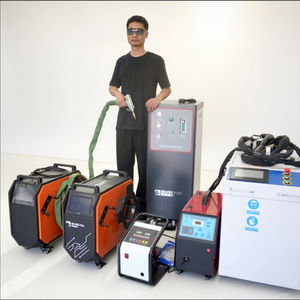
Our production spectrum includes handheld 4-in-1 fiber laser welders (1000W–3000W), integrated air-cooled laser welders, double-holder & single-holder arc welders, MIG/MAG synergic inverter welders, AC/DC pulse TIG welders, capacitor discharge stud welders, and automated CNC cutting/welding gantries spanning output ratings from 130A up to 1250A.
How does a 4-in-1 fiber laser welder compare to conventional TIG welding?
Handheld fiber laser welders operate up to 4 to 10 times faster than manual TIG welding while generating significantly lower heat input. This eliminates thermal distortion and discoloration on thin stainless steel or aluminum sheets. Furthermore, 4-in-1 units integrate cutting, surface rust cleaning, and weld-seam passivating into the same gun assembly.
What electrical power supply configurations are supported for export orders?
We supply custom-configured power systems tailored to your destination country. Options include 110V/220V single-phase for light industrial and portable units, or 380V/400V/415V/440V three-phase (50Hz or 60Hz) for heavy industrial machinery, equipped with international CE-compliant wiring standards.
What is the typical operational lifespan of fiber laser sources (Raycus/Max/IPG)?
Industrial-grade solid-state fiber laser sources are rated for a diode pumping lifespan of up to 100,000 operational hours under recommended ambient conditions and proper optics maintenance. They require no consumable flashlamps or laser gas refills.
Can automatic welding equipment be integrated into robotic production cells?
Yes. Our automatic laser and MIG welding power sources feature digital communication interfaces (Modbus, DeviceNet, Profinet, or analog 0-10V/4-20mA IO) designed for seamless integration with 6-axis industrial robots (KUKA, ABB, Fanuc, Yaskawa) and cobots.
What after-sales technical support and warranty policies are provided?
All export machinery is backed by a standard 12-to-24 month factory warranty covering main components (laser source, control board, inverter module). We provide 24/7 video technical support, remote PLC diagnostics, and fast-track courier delivery for replacement spare parts worldwide.
How are products packed to prevent damage during ocean container transport?
Equipment is packaged using heavy-duty export-grade plywood crates lined with moisture-vapor barrier foil bags, desiccant packs, and high-density anti-shock EVA foam shielding to withstand maritime humidity, ocean vibration, and rough handling.
Partner with China’s Leading Automatic Welder Exporters
Consult with our senior welding applications engineers today to receive detailed technical specifications, custom OEM configuration quotes, and competitive factory-direct B2B pricing for your project.