
Strategic Evaluation of Automated Robotic Welding Infrastructure
As global manufacturing shifts rapidly toward hyper-automated, flexible production frameworks, industrial procurement directors are re-evaluating the role of automated welding cells in their modern shop-floor ecosystem. China has emerged as the premier epicenter for intelligent welding cell design, driven by extensive R&D investments, advanced kinematic motion control algorithms, and dense supply-chain integration. Choosing the right China top welding cell manufacturer requires evaluating critical parameters beyond initial machinery expenditure—such as arc tracking responsiveness, joint repeatable accuracy, thermal stress mitigation, software interoperability, and long-term total cost of ownership (TCO).
Top-Tier Industrial Robotic & Automated Welding Workcells
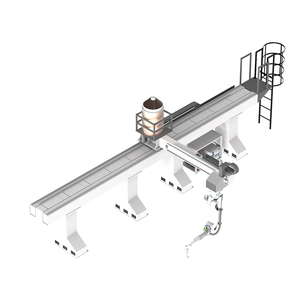
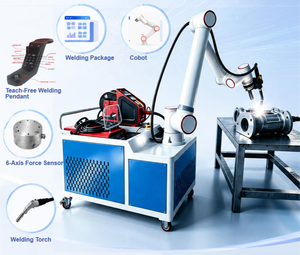
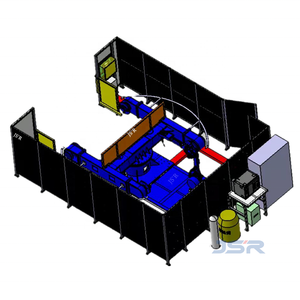
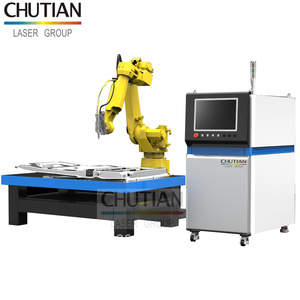
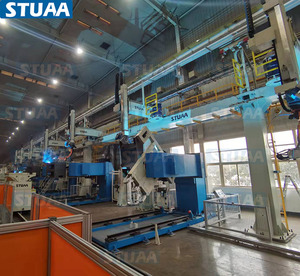
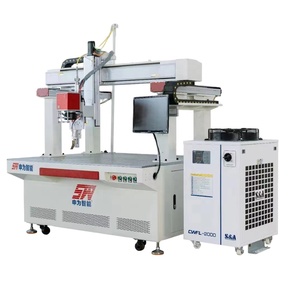
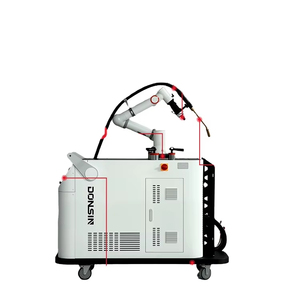
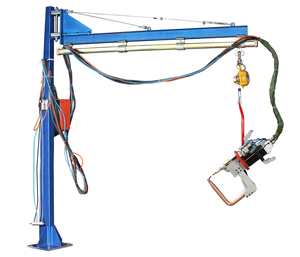
Below are 8 flagship automated welding cell configurations designed for heavy structural fabrication, high-volume automotive stamping, precision electronics, and custom machinery integration.
Global Welding Automation Trends & Technical Evolution
The global welding equipment market is undergoing a structural paradigm shift driven by labor shortages, stringent quality standards (such as AWS D1.1 and ISO 3834), and the rapid expansion of electric vehicles and renewable infrastructure. China top welding cell manufacturers are leading this evolution by integrating cybernetics, machine vision, laser optics, and adaptive power electronics into standardized workcells.
AI-Powered Adaptive Seam Tracking
Real-time optical laser seam trackers dynamically adjust torch position and feed parameters in micro-seconds, compensating for thermal plate distortion and fit-up tolerances.
High-Power Fiber Laser Hybrids
Combining gas metal arc welding (GMAW) with high-density fiber lasers achieves deep weld penetration (up to 12mm single pass) at travel speeds 3x faster than conventional arc processes.
Modular Kinematic Cell Design
Modern workcells utilize plug-and-play positioners, synchronized 7th-axis linear sliders, and standardized PLC communication interfaces (OPC-UA, PROFINET) for seamless MES integration.
Technical Trajectory of Welding Power Sources
Traditional transformer-rectifier power sources are increasingly replaced by digital inverter and direct-diode laser generators. High-frequency digital switching (up to 100 kHz) enables precise control over droplet transfer, drastically reducing spatter in MIG/MAG operations and eliminating post-weld grinding. For critical thin-wall stainless steel and aluminum fabrications, AC/DC TIG cells with automated pulse frequency modulation provide cosmetic and radiographic weld integrity without structural burn-through.
Strategic Procurement Trends for Industrial Buyers
When procurement teams evaluate China top welding cell manufacturers, decision metrics have evolved beyond upfront hardware costs. Leading enterprise buyers prioritize vendor capabilities based on custom engineering adaptability, grid-voltage tolerance, thermal management under continuous multi-shift operation, and local commissioning support.
| Evaluation Parameter | Legacy Machine Buying | Modern Automated Cell Procurement | Value Impact for Enterprise Buyers |
|---|---|---|---|
| Integration Scope | Standalone welder + manual fixture | Turnkey cell (Robot + Laser Tracker + Tooling + Safety) | 70% reduction in commissioning time on shop floor |
| Quality Monitoring | Post-weld visual/NDT inspection | In-line voltage, current & bead geometry logging | Zero-defect manufacturing with 100% part traceability |
| Duty Cycle Rating | 40% - 60% standard duty rating | 60% - 100% continuous duty with forced-air/water cooling | Eliminates thermal downtime in 24/7 production lines |
| Grid Voltage Flexibility | Fixed local single-voltage build | Multi-tap transformer (220V/380V/415V/440V, 50/60Hz) | Hassle-free deployment across overseas production sites |
In particular, structural steel fabricators, shipyard builders, and heavy machinery OEMs require customized multi-axis gantry solutions capable of spanning vast physical dimensions (e.g., 20,000mm span bridges) while holding micro-level positioning tolerances over long production runs.
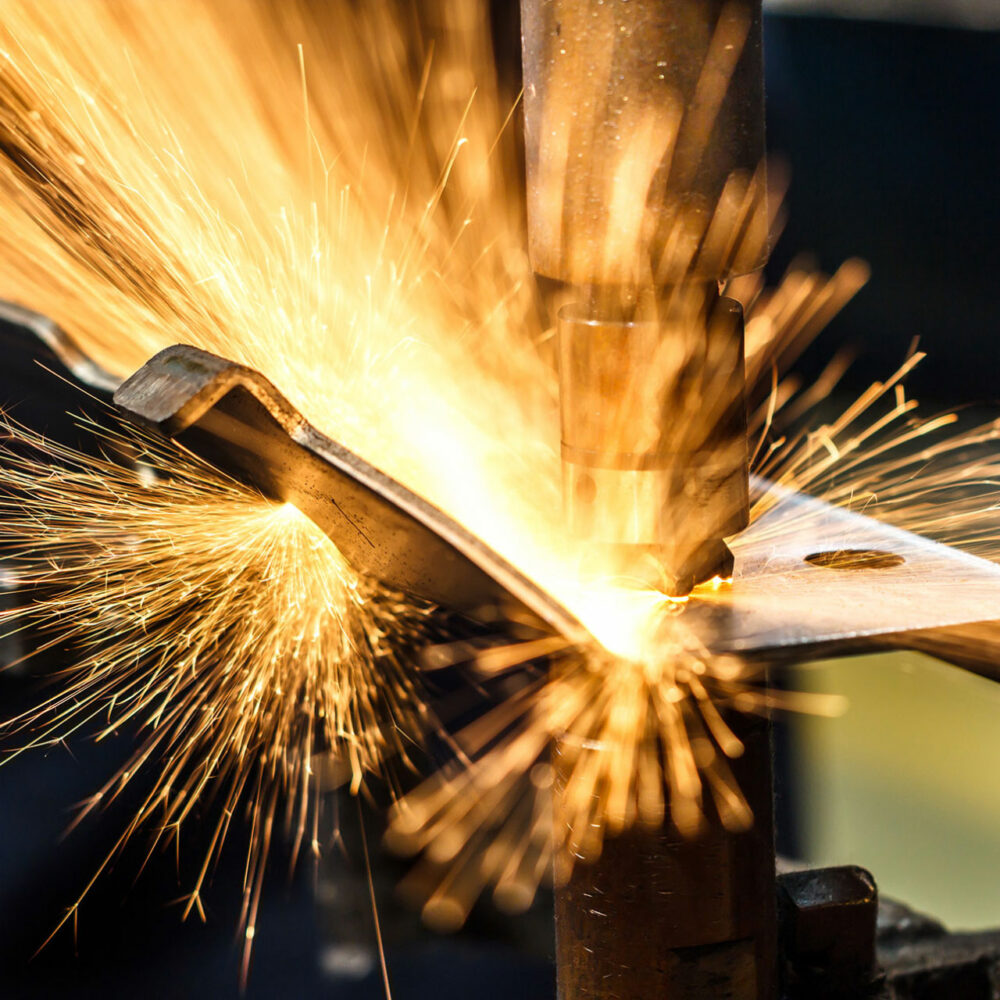
Six Decades of Engineering & Manufacturing Excellence
Grounded in over 60 years of deep metal fabrication and heavy electrical machinery experience, our manufacturing baseline combines time-tested engineering principles with advanced robotics integration. We don't just assemble off-the-shelf components; every welding core, transformer winding, and structural chassis is engineered in-house to withstand harsh industrial environments.
- 100% Full-Load Burn-In Testing: Every power source and robotic cell is subjected to continuous max-amperage load testing prior to crating.
- Class F/H Insulated Copper Windings: Superior thermal endurance ensuring consistent arc stability without voltage sag.
- Export-Ready Electrical Engineering: Configurable for 220V single-phase to 440V three-phase export grids with CE-compliant safety wiring.
- Application-Specific Tooling Customization: Custom jigs, pneumatic spot fixtures, and water-cooled torch packages engineered for exact part drawings.
Frequently Asked Procurement & Technical Questions
Which welding and cutting cell configurations do China top manufacturers supply?
Production programs cover a broad spectrum including heavy bridge gantry TIG/MIG cells, 6-axis cobot arc welders, high-precision fiber laser battery welding modules, suspension resistance spot welders, heavy-duty 10-axis excavator frame cells, and automated CNC plasma profiling systems ranging from 130A to 1250A output classes.
What is the practical difference between choosing a Robotic MIG Cell versus a Robotic TIG Cell?
MIG (GMAW/MAG) cells utilize continuous wire feed and provide high deposition rates, making them ideal for structural steel, heavy machinery chassis, and high-volume sheet metal assembly. TIG (GTAW) cells use a non-consumable tungsten electrode under argon shielding, delivering supreme radiographic quality, zero-spatter welds, and minimal heat-affected zones (HAZ)—crucial for stainless steel piping, aerospace, food-grade vessels, and thin-wall tubing.
How do automated welding cells maintain performance during continuous 24/7 multi-shift operations?
Heavy-duty robotic cells are engineered for 60% to 100% continuous duty cycles at maximum current output. They incorporate Class F or H insulated copper transformer windings, forced-air and liquid torch cooling, thermostatic overload protection cut-outs, and heavy-duty heat sinks to prevent thermal breakdown under multi-shift industrial load.
Can machines and cells be configured for export markets with different mains voltages?
Yes. Custom power distribution panels inside the cell can be configured for 220V single-phase, or 380V, 415V, and 440V three-phase power supplies operating at 50 Hz or 60 Hz. All export units feature standard CE-compliant control cabinets, international industrial plug interfaces, and multilingual HMI operating systems.
What seam tracking technologies are used in multi-axis robotic welding cells?
Cells utilize dual tracking technologies depending on workpiece geometry: Through-The-Arc Seam Tracking (TAST) for heavy plate fillet joints, and high-speed Optical 3D Laser Triangulation Sensors for thin sheet metal, complex curves, and reflective metals where physical probe access is restricted.
What after-sales, installation, and spare parts support is provided to overseas purchasers?
Every shipment is accompanied by comprehensive electrical schematics, mechanical drawings, spare-parts manuals, and commissioning parameter sheets. Engineering teams offer remote setup guidance, PLC parameter adjustment, operator training, and supply pre-packaged critical spares kits (contact tips, nozzles, drive rolls, lenses, seal rings) to ensure operational continuity.
Tell Us Your Weld Joint Challenge — We Will Engineer The Solution
Share your material specs, plate thickness, production volume, and factory layout with our senior robotics engineers. We will design a customized welding cell proposal optimized for your exact shop-floor goals.
Contact Us