
Featured Industrial Fiber Laser & Robotic Welding Solutions
Direct from China's leading manufacturing hub: High-precision handheld, air-cooled, and 4-in-1 multi-functional laser welding systems engineered for global continuous-duty operations.
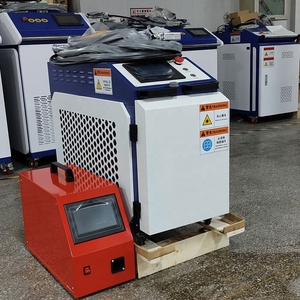
Laser Welders 4 Functions 1500W-3000W 4 in 1 Handheld Laser Cutting Cleaning Welding Machine
Power Range: 1500W - 3000W
Functions: Weld / Clean / Cut / Seam
Cooling System: Intelligent Water Dual-Loop
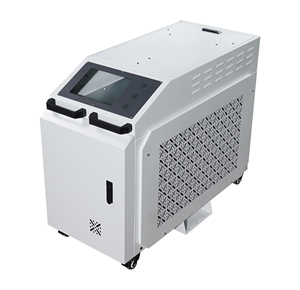
All-in-one Design Handheld Laser Welder Chiller SY-1500 For 1.5kW Handheld Laser Welding
Laser Source: 1.5kW Continuous Fiber
Architecture: Integrated Cabinet Chiller
Mobility: Heavy-Duty Caster Base
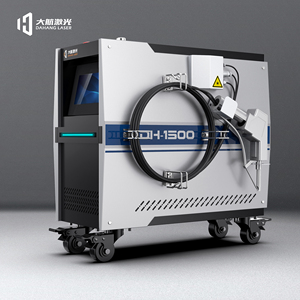
4 in 1 Air-cooled Laser Steel Aluminum Metal 1500W 2000W Fiber Laser Welding Welder
Cooling Tech: Zero-Fluid Air-Cooled
Power Output: 1500W / 2000W
Substrates: SS / Aluminum / Carbon Steel
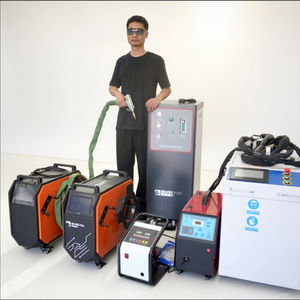
PANGOLIN Handheld Fiber Laser Welding Machine 1000W-3000W Air-Cooled Engine PMI
Guide System: PMI High-Precision Rail
Laser Engine: Air-Cooled Fiber Module
Duty Cycle: 100% Industrial Grade
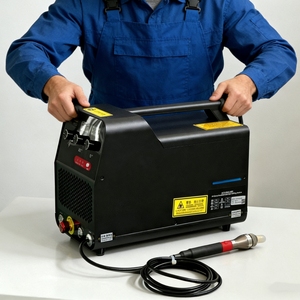
Portable Laser Welding Machine 600W Mini Handheld Spot Welder for Thin Sheet Letter Fabrication
Nominal Power: 600W Micro Spot
Form Factor: Ultra-Portable Mini Desktop
Target Use: Precision Sheet & Signage
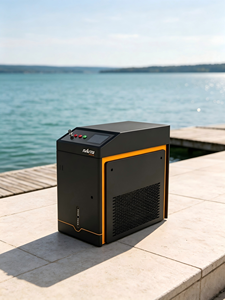
Wholesale Economical Price 1500W 2000W 3000W Fiber Laser Welding Machine for Alloys
Wire Feeder: Auto Dual-Drive System
Efficiency: 10x vs Traditional TIG
Weld Depth: Up to 8mm Stainless
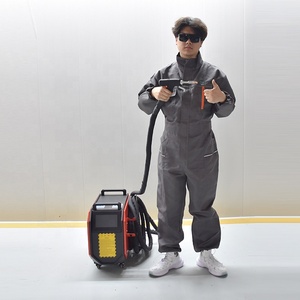
4in1 Laser Welding Machine Outdoor Small Portable Source Factory Direct System
Enclosure: IP54 Reinforced Chassis
Operation: Field-Service Outdoor Ready
Weight: Ultra-Lightweight Compact
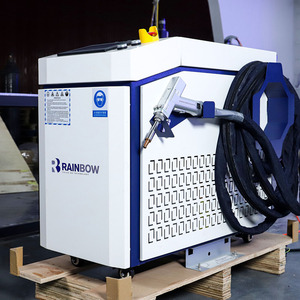
High-Efficiency 4 In 1 Laser Welding Machine 1500w Handheld Fiber Laser & Ergonomic Gun
Torch Design: Supersonic Wobble Nozzle
Compatibility: 380V / 220V Dual Tap
Maintenance: Modular Swap Optics
1. Architectural Evolution of China's Robotic & Laser Welding Export Ecosystem
The global metal fabrication landscape is undergoing a profound paradigm shift driven by automated robotics, high-brightness fiber laser sources, and intelligent sensing technologies. As a leading manufacturer and exporter rooted in over six decades of total manufacturing heritage, China's robotic welder exporters are establishing new benchmarks in structural integrity, operational thermal management, and power density efficiency. Modern automated welding systems have transitioned from rigid, single-purpose machinery to highly dynamic, multi-axis robotic cells capable of real-time laser seam tracking, adaptive beam oscillation, and autonomous weld parameter adjustment.
For international buyers across automotive tier-1 manufacturing, structural steel erection, shipbuilding, and aerospace enclosures, sourcing robotic welding technology from premier Chinese exporters provides an unparalleled balance of technological sophistication and high return on investment (ROI). With specialized R&D dedicated to transformer core stability, class F/H copper insulation, and high-frequency wave shaping, modern Chinese robotic welding systems deliver consistent penetration profiles while mitigating thermal distortion across exotic alloys, structural carbon steels, and non-ferrous metals such as aluminum and copper.
Technical Insight: Integrating high-power fiber laser heads onto 6-axis robotic arms reduces the Heat-Affected Zone (HAZ) by up to 85% compared to conventional submerged arc welding (SAW) or heavy MIG (GMAW) processes, completely eliminating post-weld grinding and straightening operations.
High Photon Density Sources
Utilizing single-mode and multi-mode fiber laser generators ranging from 1.0 kW to over 12 kW with an M² factor < 1.1, ensuring precise focus and minimal keyhole turbulence.
Continuous 100% Duty Cycles
Engineered with heavy-duty copper windings, forced air, or dual-loop water chillers rated for continuous multi-shift production line deployment without thermal tripping.
Adaptive Wobble Technology
Dual-axis galvanometer wobble optics widen the weld beam up to 5mm, easily bridging wide gap tolerances and inconsistent fit-ups on automated assembly lines.
2. Comprehensive Process Matrix: Selecting the Optimal Automated Welding Technology
To guide procurement directors, welding engineers, and plant managers in selecting the ideal machinery for their specific fabrication requirements, the following benchmark table compares standard ARC, MIG, TIG, Air-Cooled Laser, and Robotic Fiber Laser systems based on empirical shop-floor performance metrics:
| Welding Technology | Typical Material Thickness | Deposition Speed / Travel Rate | Heat-Affected Zone (HAZ) | Post-Weld Processing | Primary Industrial Sector |
|---|---|---|---|---|---|
| Robotic Fiber Laser | 0.5 mm – 10.0 mm | Very High (up to 120 mm/s) | Ultra-Narrow (< 0.5 mm) | None (Cosmetic Finish) | Automotive, Aerospace, EV Batteries |
| Handheld Air-Cooled Laser | 0.5 mm – 6.0 mm | High (up to 80 mm/s) | Minimal (< 1.0 mm) | Negligible | Sheet Metal, HVAC, Enclosures |
| Automated MIG (GMAW) | 1.5 mm – 25.0 mm | Moderate (15-35 mm/s) | Moderate to Wide | Spatter Removal & Grinding | Heavy Machinery, Structural Beams |
| Orbital TIG (GTAW) | 0.5 mm – 8.0 mm | Low (5-12 mm/s) | Moderate | Pickling / Passivation | Sanitary Piping, Pharma Vessels |
| Submerged ARC (SAW) | 6.0 mm – 60.0 mm+ | High Deposition Rate | Wide | Heavy Slag Descaling | Shipbuilding, Pressure Vessels |
3. Strategic Procurement Trends: Future-Proofing Automated Welding Infrastructure
Global manufacturing enterprises face shrinking pools of skilled manual welders, rising labor costs, and increasingly strict metallurgical compliance standards (such as AWS D1.1, ISO 3834, and EN 1090). Consequently, global procurement strategies are rapidly shifting toward autonomous, low-maintenance, and energy-efficient welding equipment exported from Chinese manufacturing centers. The key technological trends shaping procurement over the next decade include:
A. Rapid Transition from Fluid-Chilled to Zero-Fluid Air-Cooled Laser Systems
While traditional high-power lasers relied heavily on external water chillers—adding substantial footprint, energy overhead, and freeze-risk during international transport—innovative air-cooled engine modules (such as the PANGOLIN and SY-1500 series) utilize high-efficiency heat pipes and phase-change cooling fins. This breakthrough reduces machine weight by up to 45%, decreases total power consumption by 30%, and enables flawless operation in remote outdoor construction environments.
B. AI-Driven Vision Systems & Real-Time Seam Tracking
Modern robotic welding cells exported from China are increasingly integrated with 3D laser line profilers and neural-network vision software. These smart sensors scan joint geometries milliseconds ahead of the arc or laser focus, automatically adjusting torch orientation, wire feed velocity, and peak current in real time to compensate for thermal distortion or joint variance.
C. Multi-Function 4-in-1 Versatility (Weld, Cut, Clean, Seam)
Capital expenditure efficiency (CapEx) is maximized when a single power source serves multiple stages of the fabrication pipeline. Modern 4-in-1 laser platforms allow operators to instantly switch nozzles and software modes from deep-penetration welding to rust/paint oxide cleaning or high-speed sheet metal severance, drastically reducing tooling investment and floor space requirements.
Supply Chain Security: Exported machinery engineered for global markets now comes standard with multi-voltage input transformers (supporting 220V single-phase to 380V/415V/440V three-phase at 50/60 Hz) and CE-certified electromagnetic compatibility (EMC) filters to guarantee plug-and-play operation across any continent.
4. Enterprise Manufacturing Heritage & Quality Control Architecture
Sourcing directly from a premier Chinese robotic welder exporter guarantees adherence to strict manufacturing protocols developed over 60 years of heavy engineering experience. Quality control is embedded into every layer of our production lifecycle:
- 100% Full-Load Burn-In Testing: Every welding inverter, laser engine, and robotic controller undergoes continuous maximum-output testing under simulated harsh ambient temperatures before receiving export clearance.
- Precision Transformer Winding: Utilizing high-purity electrolytic copper coils with Class F and Class H thermal insulation, preventing dielectric breakdown even under severe voltage fluctuations common in mining or field sites.
- Component Traceability: Key active components—including laser diodes, IGBT modules, PMI linear guides, and Schneider electronics—are cataloged with individual serial numbers for life-cycle spare parts tracking.
- Sea-Worthy Export Packaging: Consignments are packed in vacuum-sealed anti-corrosion barrier foil, encased in shock-absorbing wooden crates engineered for multi-modal oceanic freighting.
5. Global Buyer FAQ & Technical Procurement Guide
Direct technical answers to the most common questions asked by international buyers, procurement officers, and engineering teams during the sourcing process:
Q1: What are the main operational advantages of a 4-in-1 laser welder over conventional MIG/TIG machines?
A 4-in-1 laser welder delivers up to 10x higher travel speeds, negligible heat distortion, and extreme deep penetration without requiring consumable electrodes or extensive joint chamfering. Additionally, it allows operators to clean oxide layers prior to welding and trim excess metal post-weld using a single handheld gun.
Q2: Can these robotic and laser welding machines operate on local industrial power grids worldwide?
Yes. All export units are custom-configured or equipped with wide-range power modules rated for 220V single-phase or 380V, 415V, and 440V three-phase power grids at both 50 Hz and 60 Hz, adhering fully to international electrical safety guidelines.
Q3: How does air-cooling compare to water-cooling in handheld laser welders?
Air-cooled systems eliminate the water pump, reservoir, and chiller maintenance completely, making the machine significantly lighter, more compact, and less vulnerable to freezing temperatures during field deployment. Water-cooled systems, however, are typically recommended for continuous 3000W+ ultra-heavy industrial plate operations.
Q4: What technical training and post-sales support do overseas buyers receive?
Every machine shipment includes comprehensive schematic diagrams, digital operating manuals, and pre-calibrated parameter guides for stainless steel, carbon steel, and aluminum alloys. Overseas buyers benefit from 24/7 remote engineering support, video commissioning assistance, and readily available spare parts kits.
Q5: What is the typical duty cycle rating for industrial continuous operation?
Our heavy-duty robotic power sources and continuous fiber laser generators are rated at 100% duty cycle at standard nominal power output, allowing 24/7 continuous operation in automated production lines without thermal throttling.
Q6: Can your welding systems be integrated with third-party robotic arms (e.g., ABB, FANUC, KUKA)?
Absolutely. Our robotic welding power sources and laser heads support standardized industrial communication protocols, including EtherCAT, Modbus, DeviceNet, and analog I/O interfaces, ensuring seamless plug-and-play integration with major industrial robot brands.
Empower Your Shop Floor with China's Premier Robotic & Laser Welders
Contact our senior application engineers today for custom parameter selection, factory-direct OEM pricing, and complete technical specifications for your fabrication line.