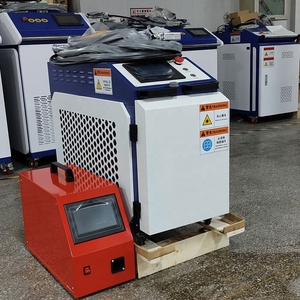
4-in-1 Handheld Laser Welding, Cutting & Torch Cleaning Machine
Output Power:1500W - 3000W
Functionality:Weld/Cut/Clean/Clear
Cooling System:Dual-Circuit Water

Engineered for extreme duty cycles, seamless robotic integration, and zero-downtime welding cell maintenance.
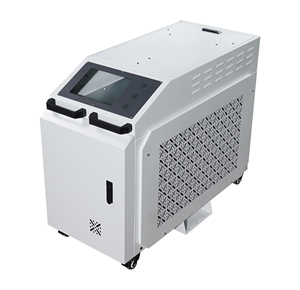
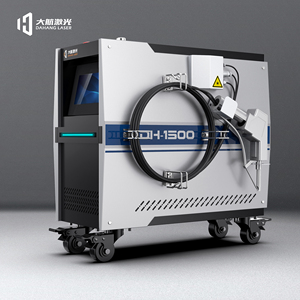
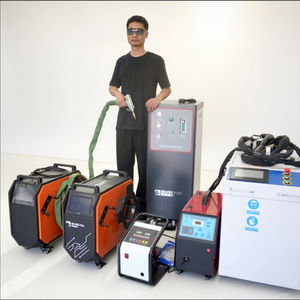
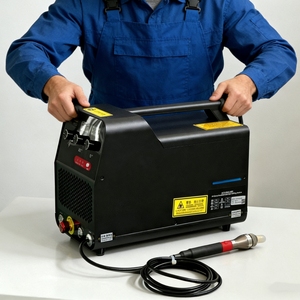
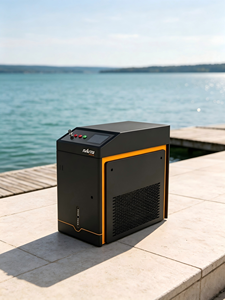
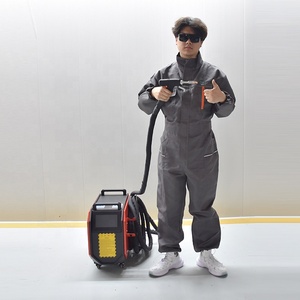
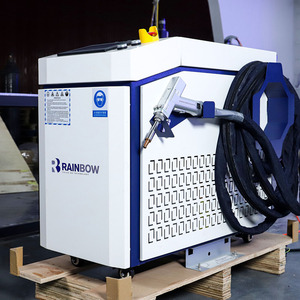
Why top global fabricators are transitioning from manual nozzle scraping to automated pneumatic torch cleaning stations and fiber laser surface ablation.
During heavy GMAW (MIG/MAG) and high-current automated welding operations, metallic spatter droplets adhere to the gas nozzle inner wall, contact tip, and gas diffuser. This spatter restricts shielding gas flow, creating turbulence that causes porosity, burn-backs, and catastrophic weld seam failures. A specialized China torch cleaner station mitigates this by executing automated reaming, anti-spatter fluid injection, and wire trimming in under 15 seconds.
Traditional torch cleaning stations rely on pneumatic hardened steel reamer blades custom-machined to match the torch geometry. However, modern high-precision industries are incorporating 4-in-1 fiber laser cleaning systems (1500W-3000W). Laser ablation vaporizes oxidation, oils, grease, and micro-spatter non-contactually without mechanical stress on torch alignment or TCP (Tool Center Point) geometry.
Maintaining exact Tool Center Point (TCP) is essential for robotic welding integrity. High-tier Chinese suppliers integrate high-precision pneumatic clamps into their torch cleaning stations. When the robot docks the welding gun, the clamping block locks the nozzle rigidly, ensuring the rotating reamer removes spatter without applying bending moments to the robotic wrist joint.
| Cleaning Technology | Cycle Time | Spatter Removal Efficiency | Impact on Torch TCP | Consumables Required | Primary Industrial Use Case |
|---|---|---|---|---|---|
| Pneumatic Torch Cleaning Station | 10 - 15 Seconds | 98% (Coarse Spatter) | Zero (Lock-Clamp Protected) | Anti-spatter Fluid, Reamer Blades | Heavy Automotive Chassis, Steel Fabrication |
| Handheld Fiber Laser Cleaning (1500W-3000W) | 5 - 20 Seconds | 99.9% (Oxides, Oil & Fine Spatter) | Non-Contact (Zero Stress) | Shielding Gas (Argon/N2) | High-Precision Aerospace, Stainless Vessels |
| Manual Nozzle Scraping | 2 - 5 Minutes | 60% (Scratches Nozzle) | High Risk of Misalignment | Manual Scraping Tools, Wire Brushes | Low-Volume Repair Workshops |
Insights derived from global procurement managers across automotive, shipbuilding, and structural engineering sectors.
Global buyers no longer order standalone torch reamers. Procurement specifications for 2026 onwards demand smart connectivity—including PROFINET, Ethernet/IP, and DeviceNet protocols. Modern torch cleaner stations communicate real-time diagnostic data to the cell PLC, signaling anti-spatter liquid levels, reamer motor torque anomalies, and blade wear warnings before weld quality declines.
As fiber laser costs stabilize, manufacturing hubs are rapidly adopting 4-in-1 laser welding machines that combine welding, cutting, seam cleaning, and torch nozzle maintenance in a single optical head. This multi-process flexibility eliminates the need for separate surface preparation stations, reducing factory footprint by up to 35%.
Environmental compliance regulations (CE, OSHA, ISO 14001) are pushing fabricators away from volatile chemical anti-spatter sprays. Procurement orders are shifting toward eco-friendly bio-based fluids or dry laser cleaning heads that vaporize contaminants without generating hazardous liquid runoff or VOC emissions.
Combining six decades of heavy welding equipment engineering experience with state-of-the-art automated testing protocols, our manufacturing operations deliver unmatched performance to international industrial buyers.
Every torch cleaning unit and laser welder undergoes comprehensive load testing, thermal behavior monitoring, and insulation resistance validation prior to export packaging.
Transformers and high-frequency pulse modules feature Class F/H insulation, enabling continuous multi-shift operation under severe ambient conditions (380V / 415V / 440V grid fluctuations).
Heavy-duty seaworthy crating with internal desiccant vapor barriers ensures electrical cabinets and optic laser heads arrive damage-free across all overseas transit routes.
Complete wiring schematics, recommended spare-parts inventory kits, and remote commissioning support delivered by experienced industrial welding engineers.
Comprehensive engineering responses covering torch cleaner installation, maintenance, voltage compatibility, and operational safety.
The industrial robot sends a signal to the station PLC upon completing a predetermined number of weld seams or time intervals. The robot maneuvers the welding torch into the station clamping unit. The station locks the gas nozzle, engages the rotating reamer blade to scrape internal spatter, injects a measured dose of anti-spatter liquid into the nozzle interior, and trims the wire electrode to a precise stick-out length before releasing the torch back to the welding cell.
Yes. Our fiber laser torch cleaning and welding systems (1500W to 3000W) feature adjustable pulse width, frequency, and wobble parameters. They operate efficiently across austenitic stainless steels, mild steel, carbon structural steel, aluminum alloys, brass, and galvanized sheets without burning through thin substrate walls.
We configure equipment tailored to destination plant standards: single-phase 220V/230V for portable laser units, or three-phase 380V, 415V, and 440V (50/60 Hz) for heavy-duty industrial stations. All internal wiring adheres to CE and IEC industrial standards with color-coded, labeled terminal strips.
Reamer blades are manufactured from high-hardness tool steel (HRC 60-62) or tungsten carbide tips. Under standard continuous production conditions, a single reamer blade performs 50,000 to 100,000 cleanings before requiring replacement. Injector nozzles use anti-clogging check valves rated for over 1,000,000 pneumatic cycles.
Air-cooled laser cleaners eliminate the external water chiller, reducing total machine weight by 40% and eliminating chiller fluid maintenance, freezing risks, and deionized water flushes. They are ideal for field service, structural site maintenance, and mobile contract fabrication where quick setup is critical.
Our torch cleaner stations feature an enclosed atomizer chamber equipped with splash guards and an automatic fluid recycling collector. The anti-spatter liquid is injected as a fine micro-mist directly into the gas cup, preventing overspray onto surrounding robotic sensors, optical cameras, or workpieces.
Yes. We supply customized reamer geometries engineered precisely to match nozzle inner diameters (12mm, 15mm, 18mm, etc.), contact tip depths, and gas diffuser profiles for all major global torch brands (including Binzel, Fronius, Tregaskiss, Lincoln, and Miller).
We recommend ordering a OEM Spare Package containing: 3x application-specific reamer blades, 2x pneumatic wire cutter blades, 1x anti-spatter solenoid valve kit, 1x proximity sensor set, and for laser systems, 10x protective focus lenses and 5x copper welding/cleaning nozzles.
Consult with our senior application engineers to select the exact torch cleaning station or fiber laser welder configured for your production volume, material specs, and automation budget.
Get Catalog