
Recommended Industrial Fiber Laser Cleaners & Multi-Function Systems
Explore our high-performance 1000W to 3000W fiber laser cleaning, welding, cutting, and weld-seam processing machinery engineered for rigorous continuous manufacturing environments.
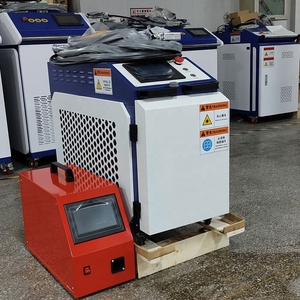
Laser Welders 4 Functions 1500W 2000W 3000W Handheld Laser Cutting Cleaning Welding Machine
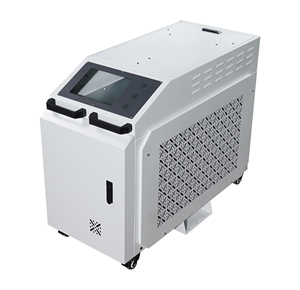
All-in-one Design Handheld Laser Welder Chiller SY-1500 For 1.5kW Handheld Laser Cleaning & Welding
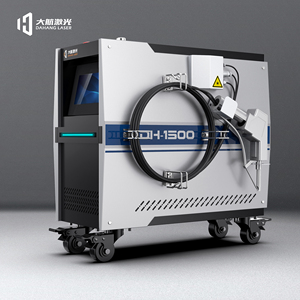
4 in 1 Air-cooled Laser Steel Aluminum Metal 1500W 2000W Fiber Laser Cleaning & Welding Machine
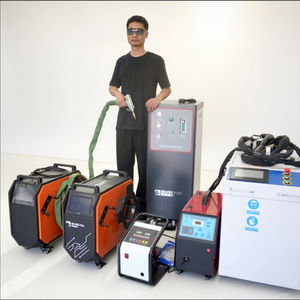
Professional High-Efficiency PANGOLIN Handheld Fiber Laser Cleaning Machine 1000W-3000W PMI Engine
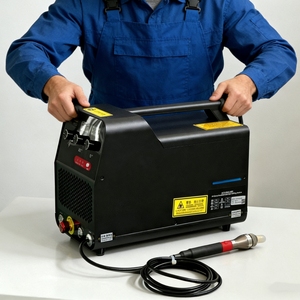
Portable Laser Cleaning & Welding Machine 600W Mini Handheld Spot Laser Cleaner for Thin Metal Sheets
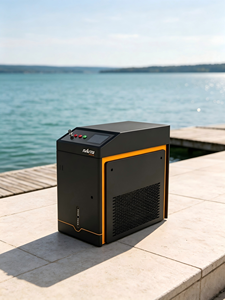
Wholesale Economical Price 1500W 2000W 3000W Laser Cleaner Machine For Stainless Steel & Aluminum
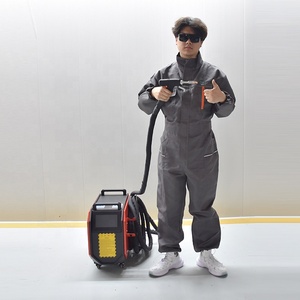
4in1 Laser Cleaning & Welding Machine Outdoor Small Portable Stainless Steel Iron Metal Source Factory
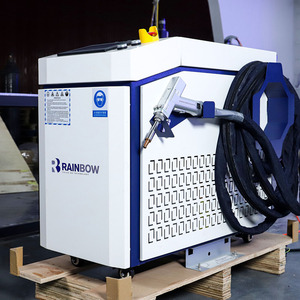
Factory Price 4 In 1 Fiber Laser Cleaning Machine 1500W Handheld Oxide Layer Rust Stripper Gun
The Science of Laser Ablation & Surface Restoration
An Engineering Deep-Dive into Non-Contact Photo-Thermal De-coating, Oxide Removal, and Micro-Structure Preservation
Understanding Photothermal vs. Photoablative Cleanliness Mechanics
Industrial laser surface cleaning operates on the fundamental physics of targeted laser ablation. When high-energy pulsed or continuous-wave (CW) fiber laser beams strike a contaminated surface, the surface contaminant layer (rust, paint, oxide scales, oil film, or vulcanized rubber) absorbs the focused optical energy. This micro-second thermal absorption causes instantaneous vaporization or rapid thermal expansion that breaks the thermal bond between the contaminant and the underlying metal substrate.
Because metallic substrates like carbon steel, stainless alloys, aluminum, and titanium exhibit substantially higher laser damage thresholds and reflectivity at specific fiber wavelengths (typically 1064nm), the underlying base metal remains structurally undamaged and thermally cool.
- Zero Mechanical Contact: Eliminates substrate erosion, structural warpage, and micro-scratching common in grit blasting.
- Selective Ablation Precision: Target coatings down to micron-level thickness without affecting the base alloy chemistry.
- Zero Chemical Waste: Eliminates toxic solvent disposal, hazardous acid baths, and secondary waste management costs.
- Substrate Surface Activation: Prepares metallic surfaces with optimal surface energy for subsequent adhesive bonding or coating adhesion.
Technology Benchmark: Fiber Laser Cleaning vs. Traditional Methods
Comparative Evaluation of Operational Cost, Eco-Compliance, Substrate Safety, and Production Throughput
| Evaluation Parameter | Fiber Laser Cleaning | Sand / Grit Blasting | Chemical Solvent Stripping | Dry Ice Blasting |
|---|---|---|---|---|
| Substrate Integrity | Zero Damage / Retains Micro-Geometry | Substrate Wear & Surface Roughing | Risk of Hydrogen Embrittlement | Minimal Substrate Wear |
| Consumable Costs | Electricity Only (~1.5–3.5 kWh) | High (Abrasive Media & Nozzles) | High (Chemical Reagents & Acids) | Very High (CO2 Pellets Storage) |
| Secondary Waste | Zero (Fume Extraction Captured) | Extremely High (Hazardous Dust) | Toxic Liquid Sludge & Effluent | Zero (CO2 Sublimates) |
| Environmental Compliance | 100% Eco-Friendly / Zero VOCs | Severe Airborne Particulate Risks | Stringent Hazmat Controls Needed | Requires Carbon Venting Safety |
| Operational Safety | Enclosed Safety Eyewear Required | Full Protective Air-Fed Suits | Chemical Burn & Vapor Respirators | Cryogenic Frostbite & Noise Hazards |
| Automation Compatibility | Seamless (PLC & Robotic Integration) | Difficult & High Equipment Wear | Batch Immersion Baths Only | Moderate Robotic Integration |
Global Procurement & Industry Development Trends (2025–2030)
Strategic Shifts Shaping Industrial Surface Treatment and Multi-Process Laser Machinery Sourcing
1. Rise of Multi-Function 4-in-1 Systems
Global procurement data reveals an accelerating shift from single-purpose machinery toward multi-functional 4-in-1 fiber laser platforms (Welding, Cleaning, Cutting, and Weld Seam Passivation). Manufacturers reduce equipment capital expenditure (CAPEX) by up to 60% while conserving valuable factory floor space.
2. Transition to Refrigerant Air-Cooling
While heavy-duty continuous production still relies on dual-circuit water chillers, portable field maintenance is rapidly adopting direct refrigerant air-cooled laser optics. This innovation eliminates water maintenance, glycol refills, and winter freezing risks in field environments.
3. Advanced Wobble Laser Beam Shaping
Modern laser cleaning guns utilize dual-axis galvanometer scanning motors that project customizable beam shapes (lines, circles, rectangles, spirals). Wobble technology prevents spot hot-spots, ensures uniform cleaning depth, and broadens sweep widths up to 150mm for rapid area coverage.
4. ESG & Zero Carbon Clean Manufacturing
With international carbon border adjustments (such as CBAM in Europe) and stringent OSHA/EPA workplace regulations, manufacturing plants are replacing chemical dipping and grit blasting with fiber laser cleaning to achieve ISO 14001 environmental compliance.
5. Integration with Industrial Robotics
Automotive OEMs and structural fabricators are mounting lightweight laser cleaning heads onto 6-axis articulated robots. Automated laser trajectory control ensures 100% repeatable surface decontamination prior to automated MIG or laser welding lines.
6. Direct-from-Factory Technical Sourcing
B2B buyers are prioritizing Chinese manufacturers offering complete OEM customization—such as custom fiber cable lengths (10m–20m), multi-language software interfaces, specialized focal optics, and factory-direct spare parts support.
Why Partner With Us As Your Preferred Laser Cleaner Supplier
Combining Decades of Heavy Engineering Expertise with Next-Generation Optoelectronic Manufacturing
Uncompromising Quality Control & Rigorous Load Testing
Our manufacturing philosophy is rooted in industrial reliability. Every laser cleaning and multi-function welding machine undergoes comprehensive factory burn-in testing prior to wooden crating and export shipping.
We source premium optical components, high-grade fiber laser sources (Raycus, Maxphotonics, IPG), and heavy-duty electrical components engineered to withstand unstable voltage environments and multi-shift industrial duty cycles.
- 100% Pre-Shipment Testing: Power stability logging, insulation resistance checks, and beam quality verification recorded against each machine serial number.
- Robust Electrical Architecture: Class F/H insulation, thermostatic overload cut-outs, and heavy-duty cooling circuits designed for continuous operation in temperatures up to 45°C.
- Global Export Compliance: Fully compliant with CE safety standards, FDA laser registration protocols, and international electrical wiring practices.
- Independent Spare Parts Assurance: Documented component schematics ensure your local maintenance technicians can easily source standard wear items (protective lenses, nozzles, focus rings).
Targeted Application Scenarios Across Global Industries
Our industrial fiber laser cleaning systems deliver proven performance across diverse manufacturing and maintenance sectors worldwide:
- Automotive & EV Manufacturing: Battery pack tray de-coating, e-motor hair-pin wire stripping, and sheet metal oil removal prior to spot welding.
- Shipbuilding & Marine Repair: Heavy mill scale stripping, hull corrosion removal, and non-destructive weld seam cleaning without grit contamination.
- Aerospace & Defense: Precision anodized layer stripping, composite mold cleaning, and turbine blade heat-tint removal.
- Injection Mold Maintenance: Non-abrasive rubber mold residue cleaning, plastic injection tool restoration, and micro-texture preservation.
- Structural Steel Fabrication: Oxide layer removal prior to high-strength structural welding to ensure zero porosity and pass radiographic inspection.
Frequently Asked Procurement Questions (FAQ)
Expert Engineering Answers to Help B2B Buyers Make Informed Technical Equipment Decisions
What is the difference between Pulsed Laser Cleaners and Continuous Wave (CW) Laser Cleaners?
Pulsed laser cleaners fire high-peak power energy bursts in nanoseconds, providing precise non-thermal cleaning ideal for delicate injection molds, historic artifacts, and thin substrates without heat distortion. CW laser cleaners deliver continuous laser power, making them significantly faster and more cost-effective for heavy industrial rust, thick paint stripping, and large structural steel area cleaning.
Can a 4-in-1 laser machine clean, weld, cut, and process welds effectively?
Yes. A 4-in-1 system utilizes a quick-change optical nozzle tip and pre-programmed Wobble controller software. By changing the nozzle tip and selecting the corresponding mode on the touchscreen, the operator can switch between handheld fiber laser welding, rust cleaning, thin metal cutting, and post-weld passivating cleaning within minutes.
Does laser cleaning damage the underlying metal substrate?
No. When operating within recommended laser fluence (energy density) parameters, the fiber laser wavelength (1064nm) is reflected by metal substrates once the top organic or oxide layer is vaporized. The process preserves the substrate's original micro-topography, dimensional tolerances, and hardness.
What consumable parts are required, and how often must they be replaced?
Fiber laser cleaning requires zero chemical reagents or abrasive media. The primary consumable is the protective quartz window lens inside the laser gun head, which protects the optics from spatter. Lenses typically last 100 to 500 operating hours depending on dust extraction efficiency and can be replaced in less than two minutes at low cost.
What laser power rating (1000W, 1500W, 2000W, 3000W) should I select?
For light oil, thin oxides, and precise mold maintenance, 1000W–1500W systems provide superb control. For medium rust, automotive paint stripping, and 4-in-1 welding applications, 1500W–2000W is the global industry standard. For heavy mill scale, multi-layer marine paint, and thick steel pre-weld preparation, 3000W delivers maximum surface coverage speed.
How do you configure machines for overseas electrical supplies (e.g., 220V 1-Phase vs 380V 3-Phase)?
We custom-build power distribution panels for your destination grid. 1000W–2000W air-cooled and water-cooled units are available in 220V ± 10% single-phase (50/60 Hz), while high-power 3000W industrial units are built for 380V–440V three-phase industrial mains.
Is operator training difficult for handheld laser cleaning and welding?
Not at all. Unlike traditional TIG/MIG welding or complex abrasive blasting setups, intuitive touchscreen software allows operators to master basic laser cleaning and welding within 2 to 4 hours of guided operation. Preset parameter libraries store optimal settings for carbon steel, stainless, and aluminum.
What safety measures are required to operate an industrial laser cleaner?
Our systems feature multi-level safety interlocks, including target contact sensors, dual activation triggers, and emergency stop circuits. Operators must wear OD6+ rated laser protective safety eyewear (included with shipment) and operate in a designated laser safety area with proper fume extraction.
How are machines packed and protected against maritime transit damage?
Export machinery is wrapped in heavy-gauge vacuum moisture barrier bags with industrial desiccants, encased in shock-absorbing foam, and secured inside heavy-duty, fumigation-free plywood crates engineered for fork-lift handling and international container shipping.
What after-sales technical support and warranty options do you provide?
Every machine comes standard with a comprehensive warranty on the laser source and core electronics. We provide lifetime remote technical support, detailed video operating manuals, circuit schematics, and rapid air-express dispatch for replacement optical components.
Request Technical Specifications & Direct Factory Pricing
Consult with our senior laser application engineers to determine the ideal laser power, optics, and machine configuration for your specific surface preparation or fabrication requirements.