
Featured Industrial Welders & Automated Systems
Engineered to meet stringent ISO, CE, and AWS standards. Our precision welding systems deliver maximum thermal efficiency, low maintenance overhead, and unmatched joint integrity across multi-metal fabrication environments.
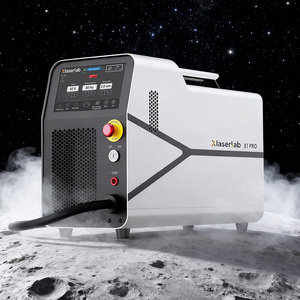
Industrial Fiber Laser Welding Machine-Multi Metal 0.5-3mm 2500W
Power Output: 2500W Fiber
Capacity: 0.5-3mm Sheet Metal
Functionality: High-Speed Weld/Cut
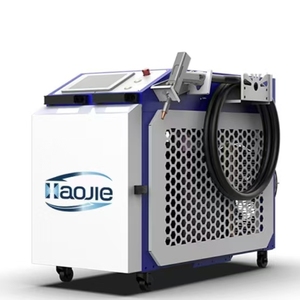
Factory Price Fiber Handheld Laser Welder 1500W-3000W 3-in-1
Power Options: 1500W / 2000W / 3000W
System Type: 3-in-1 Portable Unit
Applications: Weld / Clean / Cut
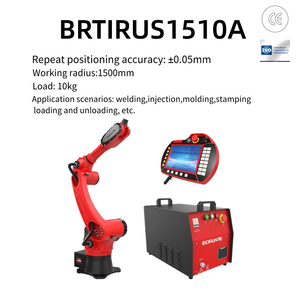
Industrial Welding Robot Arm Automatic MIG TIG CO2 Laser CNC
Automation: 6-Axis CNC Arm
Processes: MIG / TIG / CO2 / Laser
Material: SS / Aluminum Alloys
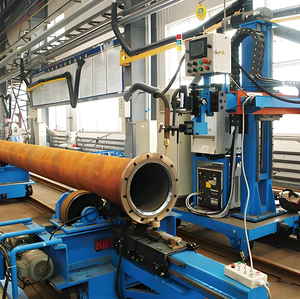
Integrated Robotic Welding Production Line & Automated System
Integration: Turnkey Assembly Line
Duty Cycle: 100% Continuous Duty
Control: PLC & Smart Sensing
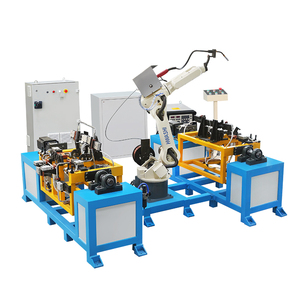
6-Axis Robotic Arm Welding Machine for Furniture & Industrial MIG
Degrees of Freedom: 6-Axis Articulated
Specialization: Tubular & Sheet Frames
Efficiency: 4x Manual Output
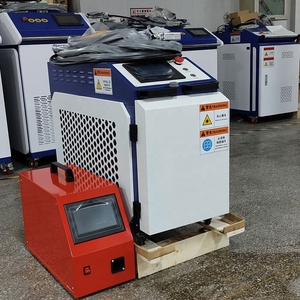
Multi-Functional 4-in-1 Handheld Laser Welder (1500W-3000W)
Capabilities: Weld/Cut/Clean/Prep
Laser Source: Continuous Wave Fiber
Cooling: Dual-Loop Industrial Chiller
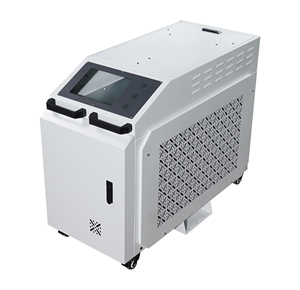
All-in-One Compact Handheld Laser Welder with Integrated Chiller SY-1500
Output Power: 1.5kW Constant Wave
Design: Cabinet-Integrated Chiller
Portability: Mobile Caster Wheel Frame
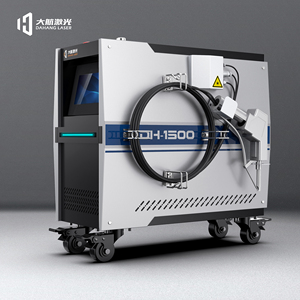
Air-Cooled 4-in-1 Fiber Laser Welder 1500W/2000W for Steel & Aluminum
Cooling Tech: Refrigerant Air Cooling
Weight Savings: 40% Lighter Enclosure
Substrates: SS, Carbon Steel, AL
Executive Industry Whitepaper: The Evolution of Industrial Metal Joining Technology
In modern heavy manufacturing, structural fabrication, automotive assembly, and precision sheet metal processing, metal joining efficiency directly dictates operational profit margins. As global manufacturing hubs demand higher throughput, lower thermal distortion, and minimal rework, purchasing decision-makers are re-evaluating legacy SMAW (Stick) and standard GMAW (MIG/MAG) setups in favor of high-density fiber laser systems and articulated 6-axis robotic automation.
Core Procurement Insight: Moving from conventional manual arc welding to handheld fiber laser joining yields an average 400% increase in linear joint velocity while reducing post-weld grinding labor by up to 85%. Industrial buyers seeking total cost of ownership (TCO) optimization are increasingly sourcing directly from audited Chinese original equipment manufacturers (OEMs).
1. Technological Advances in Handheld Fiber Laser Systems
Modern fiber laser welders have transformed metal fabrication across thicknesses ranging from 0.5mm to 4.0mm. Utilizing continuous-wave (CW) Ytterbium fiber lasers operating at ~1070nm wavelengths, energy is focused to spot diameters as small as 0.2mm. This extremely high energy density creates narrow heat-affected zones (HAZ), eliminating structural warping, grain boundary deterioration, and discolored surface oxidation commonly found in conventional TIG (GTAW) welding.
The latest market innovations feature wobble-head optics (galvanometer-driven oscillating beam patterns), allowing operators to bridge wider joint gaps up to 2.5mm without sacrificing penetration depth. Furthermore, 3-in-1 and 4-in-1 multi-functional optical heads integrate high-frequency surface cleaning and precision beam cutting within a single ergonomic torch assembly, enabling seamless transition between seam pre-cleaning, metal joining, and flash trimming.
High Energy Density
Concentrated laser radiation produces deep keyhole penetration with minimal lateral heat conduction, preserving parent metal mechanical properties.
Air-Cooled Architecture
Advanced phase-change heat exchanger modules eliminate heavy water chillers, reducing machine footprint by 40% for field installation.
Synergic Parameter Control
Pre-programmed materials databases automatically adjust pulse frequency, peak power, and wire feed rate based on substrate thickness.
2. Global Industrial Procurement & Future Market Trends (2026-2030)
As global supply chains demand rigorous adherence to carbon reduction targets and lean operational practices, the industrial welding sector is experiencing four structural shifts:
- Transition to Intelligent Robotic Cells: High-volume fabrication plants are rapidly replacing standalone manual welding stations with 6-axis articulated robotic arms. Integrated offline programming software enables zero-down-time job changeover for batch manufacturing.
- Adoption of Air-Cooled Handheld Lasers: Next-generation air-cooled laser welders (1500W-2000W) are replacing bulky water-chilled units in ambient environments (-10°C to +40°C), drastically reducing power consumption and maintenance overhead.
- Harmonized Multi-Process Equipment: Single-purpose machines are being phased out in favor of hybrid units capable of MIG/TIG/MMA stick welding or 4-in-1 laser processing to maximize floor space productivity.
- Demand for Heavy Industrial Duty Cycles: Offshore shipyards, structural steel fabricators, and pressure vessel plants require power sources rated at 60% to 100% continuous duty cycle under harsh thermal conditions.
3. Industrial Welding Process Selection Matrix
Selecting the optimal welding process requires balancing initial capital expenditure (CAPEX), substrate compatibility, required operator skill, and long-term operating cost per meter of joint length.
| Process / Technology | Material Thickness | Travel Speed | Heat-Affected Zone (HAZ) | Operator Skill Level | Primary Industrial Sector |
|---|---|---|---|---|---|
| Handheld Fiber Laser | 0.5mm – 4.0mm | Very High (up to 120 mm/s) | Extremely Narrow | Low (1-Day Training) | Sheet Metal, Cabinets, HVAC, Kitchenware |
| Robotic MIG/MAG Cell | 1.5mm – 12.0mm | High (Automated) | Moderate | Programmer / Technician | Automotive Chassis, Structural Framing |
| Inverter TIG (GTAW) | 0.3mm – 6.0mm | Low (20-30 mm/s) | Broad | High (Certified Welder) | Pressure Vessels, Aerospace, Sanitary Pipe |
| Heavy Arc Rectifier | 3.0mm – 40.0mm+ | Moderate | Very Broad | Medium to High | Shipbuilding, Bridges, Heavy Plant Repair |
| Capacitor Stud Welder | M3 – M16 Fasteners | Instantaneous (<10ms) | Localized Surface | Low | Enclosure Panels, Insulation Cladding |
4. Enterprise Manufacturing Standards & Quality Engineering
Leveraging six decades of combined engineering experience, top-tier Chinese industrial welding equipment exporters maintain full control over core sub-component manufacturing. Unlike standard trading intermediaries, accredited manufacturers implement rigorous quality management frameworks:
Every transformer core and inverter module utilizes Class F or Class H insulated copper windings, delivering superior insulation resistance under continuous high-temperature operation. Power electronics undergo strict thermal shock testing, electromagnetic compatibility (EMC) screening, and 100% full-load burn-in testing prior to final export packaging. Secure export packing includes moisture-barrier vacuum sealing and heavy-duty reinforced wooden crates to withstand multi-modal maritime transport.
Frequently Asked B2B Procurement Questions
Clear engineering answers regarding power configurations, global compliance, custom OEM manufacturing, and post-dispatch technical assistance.
Q: Which voltage input options are available for overseas industrial power grids?
Our industrial welding power supplies are engineered for global compatibility. Standard export units can be factory-configured for single-phase 220V ±15% or three-phase 380V / 415V / 440V at 50Hz or 60Hz. Multi-voltage selector transformers and customized industrial plug arrangements are available upon request.
Q: How does handheld fiber laser welding compare to TIG welding in operating costs?
While initial CAPEX for a fiber laser system is higher than a conventional TIG unit, total operational costs per meter are significantly lower. Fiber lasers consume up to 80% less electric power per joint length, eliminate expensive tungsten consumables, and increase throughput by 4x to 10x, yielding ROI within 6 to 12 months in production settings.
Q: Are your machines certified for industrial compliance in Europe and North America?
Yes. Equipment exported from our state-of-the-art facilities carries CE certification under Low Voltage Directive (LVD) and Electromagnetic Compatibility (EMC) regulations, compliant with EN 60974-1 standards. Systems also meet ISO 9001 quality management protocols and RoHS environmental standards.
Q: What duty cycle ratings do heavy industrial ARC and MIG machines maintain?
Heavy-duty industrial models are built with forced-air cooling, copper-wound transformers, and heavy-gauge heatsinks rated for 60% to 100% duty cycle at maximum output current (up to 1250A). Integrated thermostatic sensors automatically protect against thermal overload during continuous multi-shift operation.
Q: Can equipment be customized for OEM brand labeling or specific tooling integration?
Absolutly. We offer turnkey OEM/ODM services including custom chassis colors, private label branding, localized UI languages for touchscreen CNC controllers, custom cable lengths, water-cooled torch packages, and custom-built automated positioners.
Q: What after-sales technical support and spare parts availability are guaranteed?
Every shipment includes complete circuit schematics, exploded parts diagrams, and parameter selection manuals. Overseas clients receive direct access to our application engineers for video commissioning support, alongside a recommended 2-year maintenance spare parts kit shipped with initial orders.