
Featured Industrial Welding & Cutting Systems
Factory-direct supply of advanced 4-in-1 handheld fiber laser welders, heavy-duty inverter arc systems, and air-cooled plasma cutters engineered for continuous duty multi-shift manufacturing.
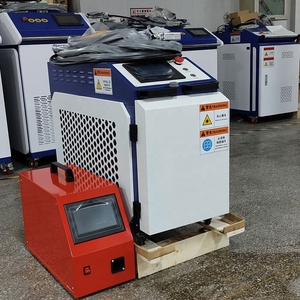
Laser Welders 4 Functions 1500W 2000W 3000W 4 in 1 Handheld Laser Cutting Cleaning Welding Machine
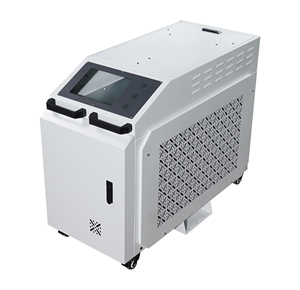
All-in-one Design Handheld Laser Welder Chiller SY-1500 For 1.5kW Handheld Laser Welding
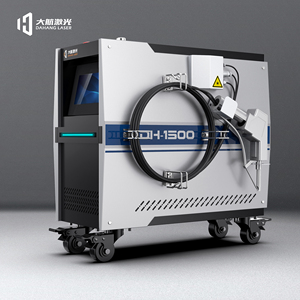
4 in 1 Air-Cooled Laser Steel Aluminum Metal 1500W 2000W Fiber Laser Welding Machines
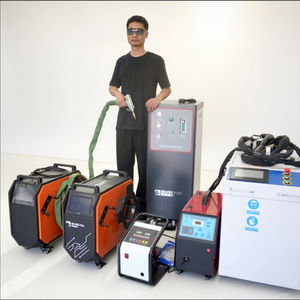
Professional High-Efficiency PANGOLIN Handheld Fiber Laser Welding Machine 1000W-3000W
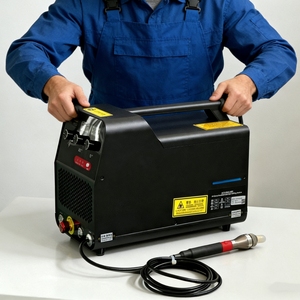
Portable Laser Welding Machine 600W Mini Handheld Spot Welder for Thin Sheet Advertising Letter
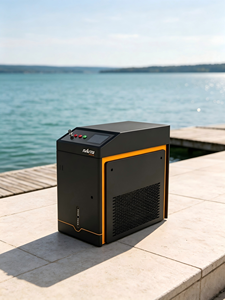
Wholesale Economical Price 1500W 2000W 3000W Laser Welding Machine for Stainless Steel

4in1 Laser Welding Machine Outdoor Small Portable Stainless Steel Iron Aluminum Metal
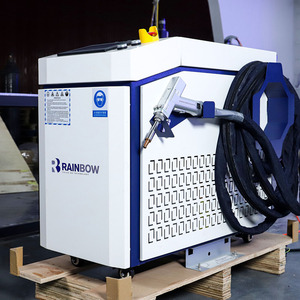
Cheapest 4 In 1 Laser Welding Machine 1500w Laser Welder Handheld Fiber Laser Wire Feeder
Six Decades of Engineering Rigor & Global Footprint
Quantifiable metrics behind China's premier industrial arc welder and metal processing equipment exporter.
Engineering Blueprint: Evaluating Arc Welding Technology & Chinese Supply Chain Leadership
In the modern industrial manufacturing ecosystem, electric arc welding remains the fundamental cornerstone of heavy fabrication, infrastructure development, shipbuilding, pressure vessel production, and automotive engineering. As global buyers navigate complex international supply chains, identifying a competent China best arc welder supplier & exporter requires a deep technical understanding of power electronics, duty cycle dynamics, energy efficiency, and post-weld metallurgy.
China's industrial machinery sector has undergone a profound technological transformation over the past decade. Transitioning from traditional, heavy step-controlled transformer rectifiers to high-frequency insulated-gate bipolar transistor (IGBT) and metal-oxide-semiconductor field-effect transistor (MOSFET) inverter architectures, Chinese welding equipment manufacturers now deliver world-class arc stability, reduced power consumption, and advanced digital pulse control. Furthermore, the rapid convergence of electric arc mechanisms with fiber laser technology has introduced hybrid 4-in-1 laser welding systems that fundamentally redefine deposition speed, heat-affected zone (HAZ) management, and multi-metal joinability.
Key Takeaway for B2B Procurement Procurement Directors: Modern procurement strategy must move beyond upfront capital cost. Evaluating total cost of ownership (TCO) demands assessing class-F/H thermal insulation durability, full-load harmonic distortion, grid input tolerance (380V/415V/440V three-phase fluctuations), and component modularity to ensure minimum shop-floor downtime over a 10-to-15-year operational lifecycle.
1. Technological Evolution of Electric Arc & Inverter Power Sources
The core physics of electric arc welding rely on establishing a sustained plasma discharge between a consumable electrode (or non-consumable tungsten needle) and the metallic workpiece. The operational reliability of this process is governed by how effectively the welding power source converts raw grid AC power into stable, controllable low-voltage, high-current output.
A. Traditional Transformer vs. High-Frequency Inverter Topology
Legacy welding rectifiers relied on massive iron cores operating at 50/60 Hz line frequencies. While exceptionally rugged, these machines suffered from poor power factor (often below 0.65), massive electrical idle losses, and heavy voltage drop under long cable runs. Modern inverter arc welders manufactured by leading Chinese exporters operate at switching frequencies ranging from 20 kHz to over 100 kHz.
By stepping up the working frequency, transformer core volume and weight are reduced by over 75%, while dynamic arc correction occurs in microseconds. This allows real-time modulation of arc force, hot start current, and anti-stick functionality, resulting in virtually spatter-free welds even on contaminated, rusted, or mill-scaled plates.

B. Microprocessor-Controlled Pulse Waveform Shaping
Advanced Chinese arc welding power sources integrate high-speed Digital Signal Processors (DSP). Rather than outputting a flat DC current, DSP-driven machines allow precise programming of pulse frequency, peak-to-background current ratios, and AC balance (when TIG welding reactive metals like aluminum). Pulse wave manipulation yields critical metallurgical benefits:
- Controlled Heat Input: Significantly reduces thermal distortion in thin-gauge sheet metals and high-strength alloy steels.
- Refined Grain Structure: High-frequency pulse agitation breaks up dendrite growth during puddle solidification, enhancing tensile strength and toughness in critical pressure vessel joints.
- All-Position Versatility: Rapid puddle freezing enables vertical-up and overhead welding without risk of weld sag or cold lapping.
Why Engineering Procurement Teams Trust Our Manufacturing Baseline
Built on six decades of practical shop-floor problem solving, rigorous full-load testing, and uncompromising transformer copper quality.
100% Full-Load Factory Testing
Every inverter unit, ARC rectifier, and laser power source undergoes 100% full-load thermal endurance run, insulation resistance check, and open-circuit voltage verification against recorded serial numbers before export crating.
Class F/H Copper Winding Superiority
Refusing cheap aluminum substitutes, heavy-duty transformers and chokes are wound with pure, high-purity copper coated with Class F (155°C) or Class H (180°C) thermal insulation, ensuring continuous multi-shift performance in tropical ambient conditions.
Global Electrical Grid Adaptability
Export configurations are specifically built to withstand harsh grid conditions, featuring wide input voltage tolerance for 220V single-phase up to 380V / 415V / 440V three-phase networks (50/60 Hz) across South America, Africa, Middle East, and Southeast Asia.
Dual-Operator Twin Circuit Innovations
Our proprietary Double Holder Arc Welding Machines house two completely isolated electrical output circuits within a single compact chassis. Two operators work concurrently without mutual arc interference, cutting capital footprint by 50%.
Complete Modular Spare Parts Support
To eliminate reliance on proprietary single-source components, all internal wiring, driver boards, gas solenoids, and IGBT modules follow standardized international physical dimensions for hassle-free field maintenance.
Custom OEM & Application Engineering
From customizing torch lead lengths, water-cooler tank integrations, and trolley geometries to engineering automated CNC cutting tables, our factory engineering team delivers tailored B2B solutions.
Industrial Welding & Metal Cutting Process Comparison
Engineering benchmark to match material thickness, travel speed, and skill level with the optimal machine category.
| Welding / Cutting Process | Typical Thickness Range | Travel / Deposition Speed | Heat-Affected Zone (HAZ) | Operator Skill Barrier | Primary Industrial Sector |
|---|---|---|---|---|---|
| Manual Metal Arc (SMAW / Stick) | 2.0 mm – 50.0+ mm | Moderate (3 – 8 mm/s) | Wide HAZ | Moderate | Structural Steel, On-Site Construction, Heavy Maintenance |
| MIG / MAG (GMAW Wire Feed) | 0.8 mm – 20.0 mm | High (10 – 25 mm/s) | Moderate HAZ | Low to Moderate | Automotive Chassis, Heavy Machinery Bodies, Sheet Fabrication |
| TIG (GTAW Tungsten Gas) | 0.3 mm – 8.0 mm | Precision Slow (2 – 5 mm/s) | Localized HAZ | High Skill Required | Pharmaceutical Piping, Food-Grade Stainless, Aerospace Alloys |
| Handheld Fiber Laser (4-in-1) | 0.5 mm – 6.0 mm | Ultra-High (30 – 120 mm/s) | Minimal / Negligible | Low (1-Day Training) | Precision Sheet Metal, Cabinets, Aluminum Enclosures |
| Capacitor Stud Welding | Fasteners M3 to M16 | Instantaneous (< 0.1 sec) | Superficial | Low | HVAC Ducting, Structural Insulation Cladding, Switchgear |
| Air Plasma Arc Cutting | 1.0 mm – 40.0 mm (Severance) | High Cutting Rate | Narrow Cut Kerf | Low to Moderate | Shipbuilding Plate Profiling, Scrap Processing, Metal Fabrication |
Future Trends in Arc Welding & Fiber Laser Procurement (2026–2030)
Analyzing technological shifts: How automation, green manufacturing compliance, and hybrid light-arc systems are reshaping industrial purchasing decisions.
1. The Shift Toward 4-in-1 Handheld Fiber Laser Hybridization
One of the most noticeable disruptions in metal fabrication across Europe, North America, and emerging markets is the rapid displacement of traditional light-gauge TIG welding by 4-in-1 handheld fiber laser systems. Combining laser welding, seam cleaning, rust/paint stripping, and precision cutting into a single portable gun torch has revolutionized shop-floor throughput.
Fiber laser spot sizes range between 0.2 mm and 0.5 mm, concentrating energy density to levels unachievable by traditional electric arcs. Consequently, joint travel speeds are 4x to 10x faster than GTAW, while post-weld wire brushing, slag chipping, and heat-tint acid pickling are completely eliminated.

2. Transition to Direct Air-Cooled Laser Generators
Early-generation 1.5kW and 2.0kW fiber laser welders required heavy, water-filled compressor chillers. This added significant physical bulk, high standby electrical current draw, and potential maintenance issues related to coolant lines in sub-zero export environments.
Next-generation models—such as our air-cooled PANGOLIN laser series—utilize advanced phase-change heat pipes and high-static-pressure cooling fins. Eliminating water circuits reduces machine weight by up to 40%, enables operation in ambient temperatures from -15°C to +45°C, and substantially cuts field maintenance costs for remote site installation teams.
3. Green Manufacturing & Carbon Border Adjustment Compliance (CBAM)
Global industrial buyers facing carbon accounting mandates and electricity tariff escalation prioritize energy-efficient power supplies. Modern IGBT inverter arc welders achieve electrical conversion efficiencies exceeding 88% to 92%, compared to legacy transformer rectifiers operating at 60% efficiency.
Energy Efficiency Formula for Factory Managers: Replacing fifty legacy 500A transformer arc welders with high-frequency IGBT inverter units can reduce annual industrial electricity consumption by over 140,000 kWh in multi-shift plants—delivering full payback on new machine procurement within 14 months of operation.
4. Cobot and CNC Interface Standardization
As skilled manual welders become harder to recruit worldwide, modern arc power sources and fiber laser guns must integrate effortlessly with industrial robotics and CNC gantries. Leading Chinese arc welder suppliers equip power sources with digital communication protocols (CANbus, Modbus, DeviceNet) and 0-10V analog speed controls as standard, allowing rapid plug-and-play installation with collaborative robot arms (Cobots).
Frequently Asked Sourcing & Engineering Questions
Direct, highly specific answers to the commercial and technical inquiries raised by international purchasing managers.
Duty cycle defines the percentage of a 10-minute operational block during which a welder can operate at maximum output without thermostatic trip-out (tested at 40°C ambient temperature under IEC 60974-1 standards). A 60% duty cycle rating at 400A means the machine can weld continuously at 400 Amps for 6 minutes out of 10. Cheap commercial welders often base claims on 20°C ambient conditions, causing premature thermal shutdown in actual summer factory environments. Our industrial range utilizes oversized heat sinks, Class H insulation, and dual high-volume axial fans to ensure true rated duty cycle performance under demanding shop floor conditions.
Overseas factory power networks vary widely—for instance, 380V in China and Europe, 415V in Australia and India, and 460V/480V in North America. Our industrial export machines incorporate wide-range primary voltage sensing circuitry (Auto-Link technology) and heavy-duty primary tap switches. This allows safe operation across ±15% line voltage fluctuations without blowing internal MOV varistors or tripping main breakers.
A Double Holder Arc Welder is recommended when factory space, incoming power cable routing, and capital expenditure need optimization. Housed inside one heavy-duty steel cabinet, it integrates two completely independent transformer-rectifier circuits. Two welders can operate simultaneously at 400A output each without arc cross-talk or voltage drop. This setup cuts primary wiring costs, reduces floor space footprint by 45%, and lowers equipment acquisition costs compared to purchasing two standalone machines.
Handheld fiber laser welders feature solid-state laser sources with zero consumable maintenance (rated up to 100,000 diode operating hours). However, the optical laser torch head requires consumable protective cover glasses (lenses), copper nozzle tips (for wire feeding/cleaning), and seal rings. We recommend including a standard "1-Year Wear-Parts Kit" with initial sea shipments, containing 20x protective windows, 10x copper nozzles, and spare focus ring seals to ensure zero operational downtime.
Yes. All export-bound machines undergo rigorous compliance certification under ISO9001 Quality Management standards and carry European CE certification (LVD EN 60974-1 electrical safety and EMC EN 60974-10 electromagnetic compatibility). Machines feature built-in Voltage Reduction Devices (VRD) to lower open-circuit voltage below 24V when idle, protecting operators from electric shock risks in humid structural environments or damp shipyards.
We provide a comprehensive 12-to-36-month warranty covering main transformers, IGBT modules, control circuit boards, and laser sources. Technical support includes HD video troubleshooting, detailed electrical schematics, and direct engineer-to-engineer remote diagnostics. Replacement modules are dispatched via priority air express (DHL/FedEx) within 48 hours to minimize maintenance delays.
Request Factory Direct Quotations & Technical Specifications
Whether you require bulk supply of heavy-duty SMAW rectifiers, MIG wire feeders, or advanced 4-in-1 handheld fiber laser systems, our application engineering team is ready to analyze your material joint requirements and output parameters.
Contact Us