
High-Performance Welding Equipment & Integrated Clamping Solutions
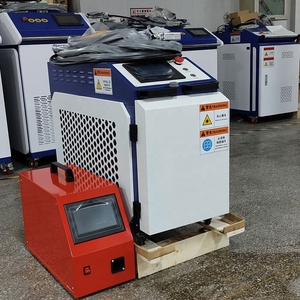
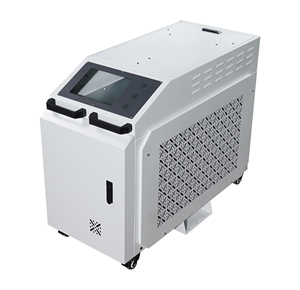
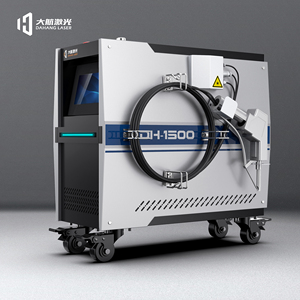
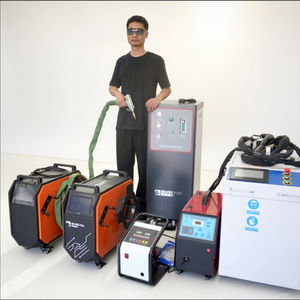
Explore our CE-certified line of handheld laser welders, air-cooled spot units, continuous MIG/TIG rectifiers, and industrial heavy-duty clamping setups designed for structural integrity.
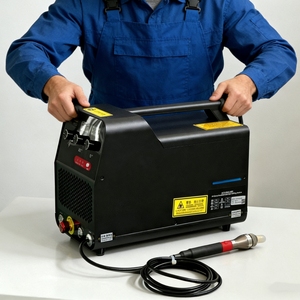
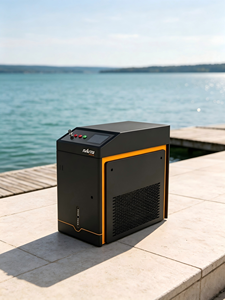
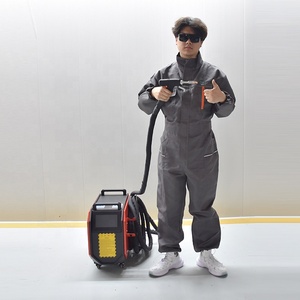
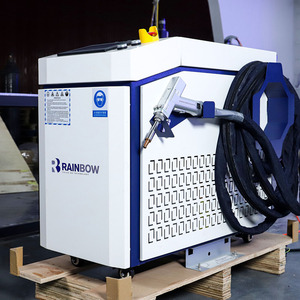
Why Engineering Directors & OEM Procurement Select Uttam Industries
Six decades of hands-on work with fabricators, shipyards, railway workshops, and automotive tier suppliers shape our manufacturing precision.
Strict CE & ISO Quality Gates
Every welding power source and clamping fixture undergoes Class F/H copper insulation checks, high-voltage breakdown tests, and 100% burn-in under maximum duty cycles prior to container loading.
Heavy-Duty Arc & Clamping Engineering
Our workholding equipment and welding rectifiers are engineered to resist fluctuating grid voltages (380V-440V ±15%), thermal expansion under continuous production, and aggressive shop-floor environments.
Information Gain & Application Support
We don't just sell equipment; our welding engineers provide joint configuration analysis, parameter calculation sheets, and customized clamping fixture design to maximize structural weld integrity.
Technical Whitepaper: CE Certified Welding Clamps & High-Efficiency Joining Systems
In modern structural steel fabrication, automotive assembly, and precision aerospace sheet metal working, the integrity of a weld bead is intrinsically tied to the mechanical stability and electrical grounding provided by the clamping system. A CE certified welding clamp is not merely a passive workholding tool; it is a critical component of the electrical circuit in Shielded Metal Arc Welding (SMAW), Gas Metal Arc Welding (GMAW/MIG), Gas Tungsten Arc Welding (GTAW/TIG), and high-power Fiber Laser Welding operations.
Uttam Industries, established in 1965, brings six decades of manufacturing heritage to the production of high-performance welding machines and auxiliary clamping systems. This whitepaper analyzes the engineering physics of weld clamping, compliance protocols under European Norms (EN standards), global procurement trends, and decision frameworks for industrial equipment sourcing.
1. The Physics of Clamping in High-Current & Laser Fusion Applications
During high-amperage welding (ranging from 130A to 1250A), localized thermal input induces significant temperature gradients across the base metal. Without engineered clamping pressure, linear expansion leads to angular distortion, buckling, and residual stress build-up. The technical function of a CE-compliant industrial welding clamp encompasses three key mechanisms:
- Mechanical Constraint & Yield Control: Maintaining workpiece alignment beyond the yield strength threshold of hot metal to prevent joint mismatch (hi-lo misalignment).
- Low-Resistance Electrical Grounding: Preventing electrical arc blow and voltage drops by ensuring heavy copper-alloy contact surfaces capable of carrying full rated current without thermal breakdown.
- Heat Sink Action: Dissipating excess heat away from the Heat-Affected Zone (HAZ) in thin-gauge alloys (such as 0.5mm stainless steel or aluminum), suppressing grain growth and distortion.
2. CE Certification & European Safety Directives for Welding Machinery
Exporting industrial machinery into the European Economic Area (EEA) and global markets demands strict adherence to safety directives. CE certification on our welding machines and pneumatic/hydraulic clamping equipment validates compliance with:
- Low Voltage Directive (LVD) 2014/35/EU: Ensuring insulation resistance, earth continuity, and safe open-circuit voltage (OCV) limits under EN 60974-1 standards.
- Electromagnetic Compatibility (EMC) Directive 2014/30/EU: Protecting industrial power grids against harmonic distortions generated by high-frequency laser equipment and inverter switching power supplies.
- Machinery Directive 2006/42/EC: Guaranteeing mechanical safety, emergency stop integration, and structural safety factors on heavy-duty pneumatic toggle clamps and positioning tables.
3. Comprehensive Process Engineering Matrix
Selecting the optimal joining process and matching clamping specification depends on material thickness, required cycle time, and joint metallurgy. The following matrix outlines operational parameters recommended by Uttam Industries application engineers:
| Welding Process | Typical Plate Thickness | Thermal Input & HAZ | Recommended Clamping Force | Key Industrial Applications |
|---|---|---|---|---|
| Fiber Laser (1kW - 3kW) | 0.3mm – 6.0mm | Extremely Low / Micro HAZ | Pneumatic High Precision (0.2 - 0.5 MPa) | Automotive enclosures, Medical devices, Battery packs |
| MIG/MAG (GMAW) | 0.8mm – 20.0mm | Moderate to High | Heavy-Duty Toggle / Hydraulic Jigs | Chassis fabrication, Structural tubing, Heavy machinery |
| TIG (GTAW AC/DC) | 0.5mm – 8.0mm | Controlled / Moderate | Copper-Faced Chill Clamps | Stainless pressure vessels, Food-grade piping, Aerospace |
| ARC / Rectifier (SMAW) | 3.0mm – 50.0mm+ | High Thermal Dispersion | Heavy Screw C-Clamps / Magnetic Ground Jaws | Shipbuilding, Bridge construction, On-site structural steel |
| Pneumatic Spot Welding | 0.5mm + 0.5mm – 3mm + 3mm | Localized / Instantaneous | Direct Electrode Cylinder Pressure (2.0 - 6.0 kN) | Sheet metal cabinets, Auto body panels, HVAC ducting |
4. Strategic Procurement Trends in Global Welding Equipment (2025–2030)
Global supply chain shifts, sustainability mandates, and the shortage of skilled manual welders are redefining industrial procurement strategies worldwide. Key trends observed by our export division include:
A. Transition to 4-in-1 Handheld Fiber Laser Systems: Fabricators are replacing conventional TIG setups with handheld fiber laser welders (1.5kW to 3kW). The ability to switch between welding, cutting, surface cleaning, and seam clearing reduces equipment capital expenditure by up to 40% while quadrupling travel speeds on stainless steel and aluminum.
B. Integration of Smart Sensors in Workholding: Automated production lines are increasingly specifying pneumatic clamping systems equipped with proximity sensors and pressure transducers. These smart clamps feed real-time positional data into robot controllers, preventing arc execution if workpiece fit-up exceeds tolerance limits.
C. Energy Efficiency & Low Idle Power: Modern inverter welders and fiber laser sources utilize digital control electronics that cut idle power consumption by 30% to 50% compared to legacy transformer-rectifier units, aiding enterprise decarbonization goals.
Factory Infrastructure & Quality Assurance Protocols
Inside our primary production facilities in Mandi Dabwali (Haryana) and Delhi sales engineering headquarters.
In-House Transformer Winding
Unlike assemblers who outsource core components, we wind our own heavy copper transformers using Class H double-enameled copper wire, guaranteeing maximum thermal rating and long duty cycles.
100% Load-Cell Testing
Every single machine is hooked to a resistive load bank and run at 100% rated output to measure thermal stabilization, voltage drop, and arc stability before receiving dispatch approval.
Export Logistics & Packing
Machines destined for Europe, South America, the Middle East, and Southeast Asia are packed in seaworthy, vacuum-sealed wooden cases with desiccant protection to prevent corrosion during ocean transit.
Frequently Asked Questions by International Buyers
Direct answers to compliance, voltage customization, spare parts availability, and factory order terms.
Ready to Upgrade Your Industrial Joining Capacity?
Contact our senior engineering team to request factory-direct quotations, technical datasheets, or custom clamping fixture drawings for your production floor.
Send an Inquiry