
Featured CE Certified Spot & Laser Welding Systems
Rigorous industrial duty cycle rating, copper-wound transformer cores, and precision pulse controls engineered for automotive, sheet metal, and heavy fabrication shops worldwide.
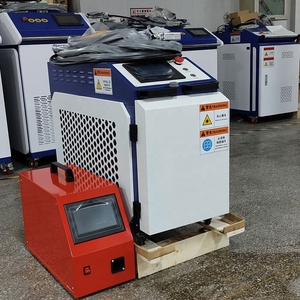
Laser Welders 4 Functions 1500W 2000W 3000W 4 in 1 Handheld Laser Cutting Cleaning Welding Machine Laser Welding Machine
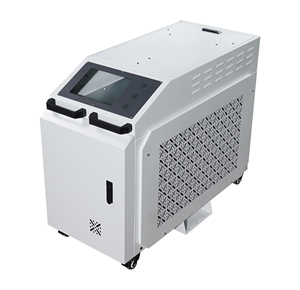
All-in-one Design Handheld Laser Welder Chiller SY-1500 For 1.5kW Handheld Laser Welding New
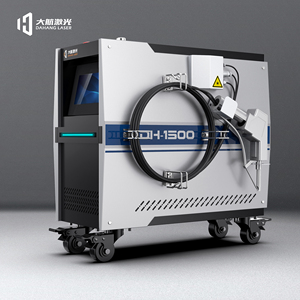
4 in 1 Air-cooled Laser Steel Aluminum Metal 1500W 2000W Fiber Laser Welding Welder Machines
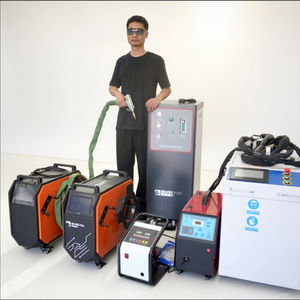
Professional High-Efficiency PANGOLIN Handheld Fiber Laser Welding Machine 1000W-3000W Air-Cooled Engine PMI Easy Operation
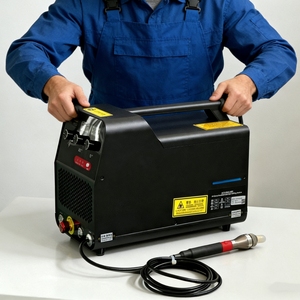
Portable Laser Welding Machine 600W Mini Handheld Spot Welder for Thin Sheet Advertising Letter DIY Production
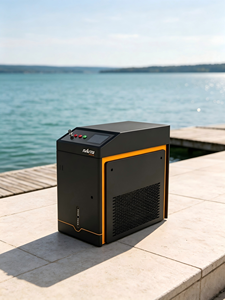
Wholesale Economical Price 1500W 2000W 3000W Laser Welding Machine For Stainless Steel Aluminum Metal
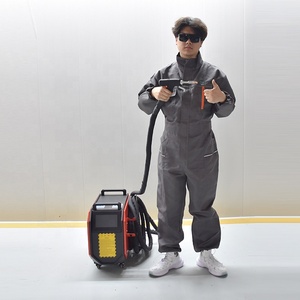
4in1 Laser Welding Machine Outdoor Small Portable Stainless Steel Iron Aluminum Metal Source Factory Laser Welding Machine
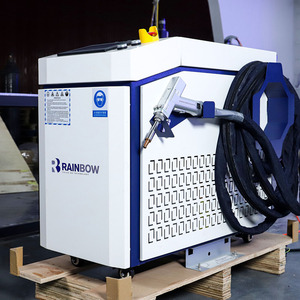
Cheapest 4 In 1 Laser Welding Machine 1500w Laser Welder Handheld Fiber Laser Iron Aluminum Welding Machine Welding Gun
CE Certified Spot Welder Factories: Quality Benchmarks & Engineering Rigor
Evaluating genuine resistance and laser spot welding manufacturers requires looking beyond superficial assembly lines. Real industrial reliability stems from transformer metallurgy, thermal dissipation engineering, and strict compliance with European CE standards (EN 60974-1).
Class F/H Insulated Pure Copper Windings
Unlike low-cost factories utilizing aluminum windings that degrade rapidly under thermal stress, Tier-1 spot welder factories construct transformers exclusively using high-purity, Class F or Class H insulated electrolytic copper. This ensures superior conductivity, minimal I²R resistance losses, and consistent open-circuit voltage even under continuous multi-shift production.
100% Pre-Dispatch Full-Load Stress Verification
Every spot welder and handheld fiber laser machine undergoes rigorous no-load and continuous full-load verification before seaworthy packaging. Current stability, thermostatic overload cut-outs, insulation breakdown limits, and primary-to-secondary dielectric strength are thoroughly documented against each unit's unique serial number.
Global Multi-Voltage Export Compatibility
Targeting international markets requires robust power supply adaptations. Certified factories engineer equipment supporting single-phase 220V/230V or three-phase 380V/415V/440V grids at 50/60 Hz. Built-in voltage compensation circuitry prevents arc instability or spot weld nugget cold joins caused by local grid fluctuations.
SEO Information Gain Insight: Genuine CE Certification (CE Marking according to Low Voltage Directive 2014/35/EU and Electromagnetic Compatibility Directive 2014/30/EU) requires spot welder factories to demonstrate verified duty cycle tests under 40°C ambient temperatures. Buyer beware: unverified spot welders often quote peak kVA ratings without continuous duty thermal backing, leading to coil burnout in heavy industrial environments.
Future Procurement Trends for Spot Welder & Fiber Laser Buyers
Industrial manufacturing is shifting towards hybrid joining techniques, energy-efficient inverter topologies, and multi-functional air-cooled fiber optics. Here is how leading global buyers are restructuring their equipment procurement specifications.
1. Transition from Traditional AC to MFDC Inverter Spot Welding
Medium Frequency Direct Current (MFDC) 1000Hz inverter technology is rapidly replacing legacy 50Hz AC spot welders. MFDC systems draw significantly less primary mains power, provide balanced 3-phase grid loads, and deliver precise millisecond current control. Procurement managers favor MFDC for reducing energy consumption by up to 35% while extending copper electrode life.
2. Rise of 4-in-1 Air-Cooled Handheld Laser Spot Welders
The consolidation of welding, cutting, seam cleaning, and spot tacking into a single air-cooled fiber laser unit represents a major shift. By eliminating bulky water chillers, air-cooled 1500W-3000W units lower operating overheads, reduce field repair downtime, and allow outdoor onsite steel fabrication without sacrificing thermal protection.
3. Automated Weld Quality Logging & Industry 4.0 Integration
Enterprise buyers increasingly specify spot welders equipped with digital current sensing, displacement monitoring, and real-time resistance feedback loops. Modern CE-certified factories are embedding IoT-enabled controllers that log weld parameters per spot nugget, ensuring automotive-grade quality assurance for safety-critical components.
Engineering Development Trends in Spot & Laser Joining Equipment
From micro-spot resistance welding for battery tab assembly to high-penetration fiber laser spot tacking for automotive chassis, key technical breakthroughs are reshaping machine manufacturing capabilities.
| Welding System Type | Core Metallurgy Target | Heat Affected Zone (HAZ) | Energy Efficiency | CE Safety Standard | Primary Industrial Sector |
|---|---|---|---|---|---|
| Pneumatic Spot Welder (AC) | Mild Steel, Low Carbon Steel (0.5–4mm) | Moderate to Wide | Standard (60-70%) | EN 60974-1 / EN 60204-1 | HVAC, Enclosures, Wire Mesh |
| MFDC Inverter Spot Welder | Aluminium Alloys, Galvanized Steel | Narrow & Controlled | High (85-92%) | EN 60974-1 / ISO 669 | Automotive Stamping, Aerospace |
| Handheld Fiber Laser Spot Welder | Stainless Steel, Aluminium, Brass | Ultra-Minimal | Ultra High (>95%) | EN 60825-1 (Laser Safety Class 4) | Precision Sheet Metal, Kitchenware |
| 4-in-1 Multifunction Laser System | Multi-Material Dissimilar Metals | Extremely Low | High (90%) | CE EMC / Low Voltage Directive | Maintenance, Field Repairs, Signage |
Optimized Electrode Alloy Metallurgy
Recent advancements in spot welding tip design incorporate Chromium Zirconium Copper (CuCrZr) and Beryllium Copper (CuBe) alloys. These materials exhibit superior thermal resistance under continuous pneumatic clamping pressures, preventing electrode mushrooming and reducing redressing frequency during mass production runs.
Integrated Smart Pneumatic Clamping
Proportional valve technology now permits dynamic squeeze force profiles. By ramping up electrode pressure prior to current discharge and holding post-weld forge pressure, modern spot welders completely eliminate internal void formation and expulsion spatter.
CE Certified Spot Welder Sourcing FAQ
Answers to essential technical, regulatory, and operational questions asked by global machinery buyers during supplier evaluation.
Request Custom Machine Specifications & Factory Quotes
Connect directly with our engineering team to review material thicknesses, sample weld requirements, CE compliance documentation, and export delivery timetables tailored to your facility.