A Heavy Duty ARC Welding Machine is built for demanding arc work: thicker sections, longer duty cycles, and repeated passes in workshops or on construction sites. It converts electrical power into a controlled arc, melting the electrode and parent metal to form a joint. In practice, the machine’s weight and maximum amperage tell only part of the story. Duty cycle, input power, arc stability, cooling, and the electrode range matter just as much.
The scale of the work is growing. The American Welding Society’s 2023 workforce research projected that the United States would need 330,000 welding professionals by 2028. That figure reflects demand across manufacturing, infrastructure, and repair—not a guarantee that every job needs a heavy-duty unit. For a buyer, that distinction matters. A powerful machine may handle thick plate, but poor setup can still produce spatter, uneven bead edges, or unnecessary heat distortion.
Welding metallurgist Dr. David J. Kotecki’s published work emphasizes that weldability depends on the relationship between the base metal, filler, and process. Put plainly: “Match the process to the joint.” This is a practical summary, not a direct quotation. A heavy-duty ARC welder makes sense when its output, duty cycle, and electrode compatibility fit the actual work. Check the nameplate. Consider the jobsite supply. And remember, bigger is not always better.
What Defines a Heavy-Duty Arc Welding Machine and Its Main Components
What Is a Heavy Duty ARC Welding Machine?
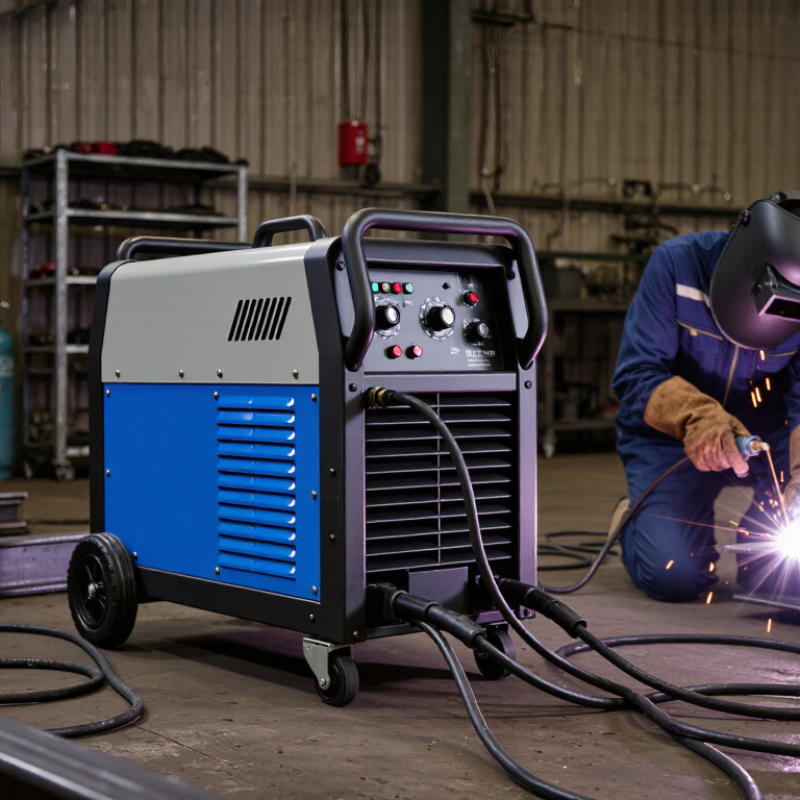
A heavy-duty arc welding machine is designed to deliver stable current through long shifts and demanding material thicknesses. Its defining features include output capacity, duty cycle, thermal control, and a frame suited to regular workshop movement. A high amperage rating alone proves little. The duty cycle indicates how long the machine can weld within a ten-minute period at a stated current. That distinction matters.
At its core, the power source converts incoming electricity into controlled welding current. Depending on its design, it may use a transformer, rectifier, or inverter. Current controls help the operator match the arc to the electrode and workpiece. The machine also relies on sturdy output terminals, welding leads, an electrode holder, and a work clamp. Internal fans and thermal protection help manage heat during extended use. Heat builds fast.
The enclosure should protect internal parts from ordinary workshop dust and impacts, while remaining accessible for inspection. Check cable condition and secure connections before welding; loose terminals can overheat. In practice, compare the rated duty cycle with the current you expect to use, not just the maximum output. Ratings may look better on paper than they feel in a hot, dusty shop. A rugged machine can still be awkward to adjust, an often-overlooked trade-off.
How IEC 60974-1 Rates Welding Output at a 40 °C Ambient
What Is a Heavy Duty ARC Welding Machine?
How IEC 60974-1 Rates Welding Output at a 40 °C Ambient
A heavy-duty ARC welding machine is judged by more than its maximum current. Its duty-cycle rating shows how long it can weld at a specified output before resting. IEC 60974-1, the international standard for arc-welding power sources, uses a ten-minute reference period and a 40 °C ambient temperature for rated performance. At 60% duty cycle, the machine can deliver its rated current for six minutes, followed by four minutes without welding.
For example, a power source rated at 300 A and 60% duty cycle is rated to sustain 300 A for six minutes under the standard’s test conditions. That figure is not a universal promise for every workshop. Higher ambient heat, restricted airflow, dust, or a long extension lead can affect real operating conditions. Check the machine’s rating plate and manual.
The label is useful, but incomplete. A 100% rating indicates continuous operation at the stated output under specified conditions; it does not mean unlimited output at every setting. IEC’s 40 °C basis gives buyers a consistent comparison point, yet actual site temperatures and cooling space still matter. On a hot shift, even a capable machine may need lower current or planned pauses.
What Is a Heavy Duty ARC Welding Machine? — How IEC 60974-1 Rates Welding Output at a 40 °C Ambient
| Example MMA Welding Current |
Conventional Load Voltage (U₂) |
Duty Cycle at 40 °C |
Welding Time per 10-Minute Cycle |
Cooling Time per 10-Minute Cycle |
Practical Interpretation |
| 300 A |
32 V |
35% |
3.5 minutes |
6.5 minutes |
High-current output for short welding periods, followed by the specified cooling period. |
| 250 A |
30 V |
60% |
6 minutes |
4 minutes |
Suitable for longer welding periods at a reduced current compared with the maximum-output example. |
| 200 A |
28 V |
100% |
10 minutes |
0 minutes |
Continuous rated output for the stated test conditions; observe the machine’s installation and operating instructions. |
|
Illustrative example only, not certified ratings for a specific machine. IEC 60974-1 uses a 10-minute duty-cycle basis and a 40 °C ambient reference for applicable ratings. For manual metal arc (MMA) welding, the conventional load voltage is calculated as U₂ = 20 + 0.04 I₂, where I₂ is welding current in amperes and U₂ is voltage in volts. Confirm actual output and duty-cycle ratings on the equipment rating plate or in its documentation.
|
How to Read Duty Cycle: 60% Means 6 Welding Minutes per 10-Minute Cycle
A heavy-duty ARC welding machine is built to handle demanding work, but its duty-cycle rating still sets a limit. A 60% duty cycle means six minutes of welding within a ten-minute period, followed by four minutes for cooling. This rating applies at the specified welding current. It does not mean the machine can weld continuously for six minutes at any setting.
Track actual arc time, not the time spent positioning a workpiece or changing electrodes. Heat builds quickly. If the machine reaches its thermal limit, its protection may pause output until it cools. Higher ambient temperatures, restricted airflow, and heavy use can affect performance, so shop conditions may differ from test conditions. Check the machine’s data plate or manual for the rated current and duty-cycle details. I would not rely on a timer alone; watch for warning indicators and allow cooling time when needed.
Tips: For a 60% rating, use a ten-minute timer as a practical guide: weld for up to six minutes, then pause for four. Keep vents clear, and reduce welding time if the machine runs hot.
What Is a Heavy Duty ARC Welding Machine?
How to read duty cycle: A 60% duty cycle means welding for 6 minutes and allowing 4 minutes to cool during a 10-minute period, at the specified rated output. Actual ratings depend on the machine’s stated welding current and test conditions.
How MMA Load Voltage Relates to Current: U₂ = 20 + 0.04 × I₂
What Is a Heavy Duty ARC Welding Machine?
For MMA welding, the relation U₂ = 20 + 0.04 × I₂ describes how load voltage changes with welding current. U₂ is the output voltage under load, measured in volts. I₂ is the welding current, measured in amperes. At 100 A, the equation gives 24 V; at 200 A, it gives 28 V. The voltage rises gradually as current increases.
This relationship helps explain how an MMA power source behaves while an electrode forms an arc. A heavy-duty machine must supply its rated current without overheating, but the equation alone does not define its capacity. Duty cycle, cooling, and stable output also matter. A 200 A setting is useful only if the machine can sustain it for the required welding period. Check the rating plate and operating instructions.
The formula is neat, perhaps too neat. Actual arc voltage can shift with arc length, electrode type, cable condition, and the operator’s hand. A long arc may raise voltage and make the weld less steady. A short arc can cause sticking. Not always. Treat the equation as a reference, then compare it with measured conditions and the machine’s specifications.
How to Match Electrode Size and Current: 3.2 mm Rods Often Use 90–130 A
What Is a Heavy Duty ARC Welding Machine?
How to Match Electrode Size and Current: 3.2 mm Rods Often Use 90–130 A
A heavy-duty ARC welding machine should hold a stable arc under sustained work, but “heavy duty” does not mean using maximum current. For a 3.2 mm (1/8-inch) stick electrode, 90–130 A is a common starting range. The AWS Welding Handbook explains that electrode type, polarity, and welding position all affect current selection. Check the electrode’s operating chart, too; its coating and classification can shift the recommended setting. The range is a guide, not a promise.
Start near 90 A on thin material or for vertical work, where a cooler puddle helps control sagging. Increase current gradually if the rod sticks or the arc keeps going out. On a flat, thicker joint, the upper part of the range may give a smoother bead. Watch the puddle, not just the dial. TWI’s MMA welding guidance likewise emphasizes matching current to electrode diameter and working conditions. A harsh, spattery arc can signal excessive current; a sluggish arc may indicate too little. Pause and inspect the bead. I’d still double-check the machine display against the electrode chart, since settings and results can vary.
Conclusion
A Heavy Duty ARC Welding Machine is designed to deliver stable welding power over demanding work periods. Its main components typically include a power source, current controls, electrode holder, welding leads, work clamp, and a cooling system. When comparing machines, check how their output is rated: under IEC 60974-1, welding performance is assessed at a 40 °C ambient temperature, helping indicate how the equipment performs in warm working conditions.
Duty cycle describes how long a machine can weld within a ten-minute period before needing to cool. A 60% duty cycle means six minutes of welding followed by four minutes of rest or cooling. For MMA welding, the conventional load-voltage relationship is U₂ = 20 + 0.04 × I₂, where I₂ is welding current in amperes. Electrode choice also affects the required current: a 3.2 mm rod often operates around 90–130 A, with the suitable setting depending on the electrode and job conditions.