
Uttam Industries — Welding & Metal Cutting Machine Manufacturer since 1965 Mandi Dabwali, Haryana & Delhi, India  |  Export enquiries welcome worldwide
Technical Articles & Insights

Welding & Metal Cutting Knowledge Hub

Explore technical guides, machine selection advice, and industrial fabrication insights backed by 60 years of engineering experience.

Engineering Guides · Case Studies · Technology
0%

Choosing among the top 10 Pneumatic Spot Welding Machine options requires more than comparing prices and advertised tonnage. Global buyers must examine welding current, pneumatic force, electrode alignment, duty cycle, controller accuracy, and replacement-part access. A machine that performs well on thin stainless steel may struggle with galvanized sheets or uneven assemblies. The details matter.

John C. Lippold, a respected welding engineer and author, offers a practical principle: “Consistent weld quality depends on controlling the process, not merely selecting powerful equipment.” That idea fits pneumatic spot welding closely. Stable air pressure, clean electrodes, correct squeeze time, and repeatable current settings create dependable nuggets. Small variations can leave visible burn marks, weak joints, or costly rework.

This guide compares ten machines for factories, contract manufacturers, repair workshops, and international production lines. It considers real operating conditions, including compressed-air quality, operator training, maintenance access, noise, and local electrical requirements. Service support also deserves attention. A low purchase price can become expensive when seals, transformers, or controllers are difficult to replace.

No machine is perfect.

Some models offer excellent force control but limited flexibility. Others provide strong output while demanding more careful maintenance. That trade-off is easy to overlook. The rankings therefore focus on practical value, weld consistency, safety features, documentation, and long-term usability. Buyers should still test representative materials before ordering. Product literature can be helpful, but it cannot fully predict performance on every assembly, thickness, or production schedule.
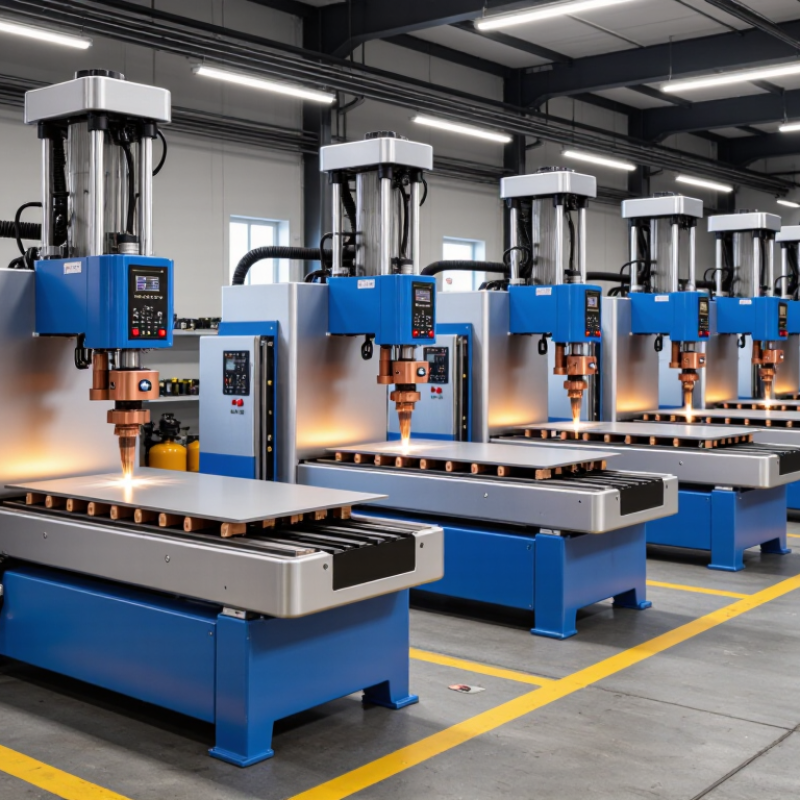
Top 10 Pneumatic Spot Welding Machines for Global Buyers

What Pneumatic Spot Welding Machines Are and How They Work

Pneumatic spot welding machines join overlapping metal sheets through pressure and electrical resistance. Their electrodes clamp the sheets, then deliver controlled current through the contact area. Electrical resistance creates heat, forming a small weld nugget between the sheets.

A typical cycle includes squeeze, weld, hold, and release stages. During squeeze, a pneumatic cylinder applies force through copper electrodes. The weld controller then manages current duration and intensity. Hold time allows the molten area to solidify under pressure. This process is quick, repeatable, and suitable for cabinets, vehicle parts, appliances, and metal frames.

In real production, air pressure must remain stable. Moisture in the air line can reduce cylinder consistency. A small gap matters. Electrode alignment also affects nugget size, surface marks, and weld strength. Buyers comparing the top 10 machines should check rated thickness, transformer capacity, cooling design, electrode access, and control accuracy. Ask for sample welds using your actual materials. Stainless steel, galvanized sheet, and mild steel react differently. A machine that performs well in a catalog test may struggle on a busy factory floor. I have found that operators often adjust current before checking electrode wear, which can hide the real problem. Routine inspection remains essential. Some specifications look impressive, but practical stability deserves more attention.

Key Criteria for Comparing the Top 10 Machines

Comparing the top 10 pneumatic spot welding machines starts with weld quality, not appearance. Check electrode force, welding current, squeeze time, and hold time. These settings shape nugget size and joint strength. A machine with 25 kN force may suit thicker steel, while lighter work needs finer control. Ask for sample weld data, not only catalog ratings. Real production results can differ.

Air performance deserves equal attention. Confirm the required pressure, flow rate, and filtration level. Dirty or unstable air can cause uneven electrode movement. Measure the throat depth against your largest workpiece. Also examine transformer capacity, duty cycle, cooling method, and electrode replacement time. A fast cycle is useful only when heat remains stable. Controls should record settings and fault codes clearly. Complex screens are not automatically better.

Global buyers should verify voltage options, safety documentation, spare-part access, and operator training. Reliable suppliers explain maintenance intervals and provide traceable test reports. Compare total operating cost, including electricity, compressed air, electrodes, and downtime. A lower purchase price may hide expensive service delays. Factory trials are valuable, although one successful sample proves little. Material coating, surface cleanliness, and fixture accuracy can change results. I would request repeated tests across several shifts before ranking any machine. That step is often skipped. It should not be.

Top 10 Pneumatic Spot Welding Machines for Global Buyers

Key Criteria for Comparing the Top 10 Machines

This comparison framework uses a 100-point evaluation model based on the factors that most directly affect weld quality, production capacity, operating cost, installation requirements, and long-term reliability. Welding current capacity, electrode force, duty cycle, throat depth, and cycle time receive the highest weighting because they strongly influence material compatibility and output performance.

Performance Profiles of the Top 10 Pneumatic Spot Welding Machines

Performance Profiles of the Top 10 Pneumatic Spot Welding Machines

The compact bench machine suits thin steel panels and small brackets. It delivers stable pressure, but its throat depth limits larger assemblies. The portable hanging unit improves access inside vehicle bodies. Operators should check cable balance and gun movement during long shifts. The dual-cylinder machine provides stronger electrode force for medium-gauge sheet. Its air demand rises quickly. The four-post machine offers excellent alignment for repeated cabinet panels. A rigid frame reduces electrode drift and produces consistent weld nuggets.

The vertical press machine handles stacked components with predictable loading. Its foot pedal improves speed, although careless timing may cause uneven contact. The long-arm machine reaches deep boxes and narrow channels. Excessive arm length can reduce mechanical stiffness. The water-cooled machine supports high production rates by controlling electrode temperature. Cooling flow must remain clean and measurable. The servo-assisted pneumatic machine combines air pressure with precise motion control. It costs more, but recorded force data helps technicians diagnose weak welds.

The transformer-integrated machine saves floor space and shortens cable losses. Heat buildup still needs monitoring around the power head. The multi-gun machine welds several points in one cycle, improving throughput on framed parts. It requires careful synchronization. The heavy-duty pedestal machine suits thick brackets and structural assemblies. Its larger footprint may challenge smaller workshops. In practical trials, weld appearance alone proved unreliable; peel tests and force checks revealed hidden inconsistencies. Even strong machines need clean electrodes, regulated air, and scheduled inspections. One overlooked setting can change the result.

Global Buyer Considerations: Standards, Power, and Supplier Support

When evaluating pneumatic spot welding machines, global buyers should check standards before comparing prices. Requirements differ by destination, factory type, and installation environment. Ask for electrical safety documents, test reports, and a clear declaration of conformity. Local inspection may still be required.

Power compatibility is often underestimated. Confirm voltage, phase, frequency, transformer capacity, and available circuit protection. A machine designed for 400 V may need adaptation in a 220 V workshop. Check the duty cycle, too. Repeated welding can heat cables, electrodes, and internal components. On a busy production line, stable pneumatic pressure matters as much as electrical output. Measure the air supply at the machine, not only at the compressor.

Small details matter.

Supplier support can determine real operating cost. Request installation instructions, wiring diagrams, maintenance schedules, and spare-electrode specifications. Ask how quickly technical questions receive answers. Remote video support is useful, but it cannot replace accessible replacement valves and control parts. In my experience, suppliers often describe response times optimistically. Buyers should test support before ordering by asking practical questions. For example, request a troubleshooting procedure for uneven weld nuggets or slow cylinder movement. Warranty terms should identify labor, shipping, and excluded wear parts. A polished specification sheet is helpful, but factory references and documented service records provide stronger evidence.

Applications, Maintenance, and Safe Operation Guidelines

Top 10 Pneumatic Spot Welding Machines for Global Buyers

Applications, Maintenance, and Safe Operation Guidelines

Pneumatic spot welding machines suit sheet metal, wire assemblies, appliance parts, and vehicle panels. They apply controlled pressure before and during electrical welding. In a busy fabrication cell, operators should match electrode shape, welding current, and material thickness. Copper alloys often need regular dressing. Thin galvanized sheets require careful heat control and suitable ventilation. A small setting error can create weak nuggets or excessive spatter.

Safe operation starts with a guarded welding area and a clearly marked emergency stop. Operators should wear eye protection, heat-resistant gloves, and fitted work clothing. Loose sleeves are dangerous near moving arms. Check grounding, air pressure, hoses, foot pedals, and two-hand controls before each shift. Keep hands away from the electrode gap. Follow local electrical, pressure-system, and workplace safety requirements. Never bypass an interlock, even during troubleshooting.

Maintenance should include daily cleaning of electrode tips and inspection of cables, fittings, and pneumatic seals. Water-cooled systems need clean coolant and a checked flow rate. Record electrode wear, pressure changes, and rejected welds. This record helps identify problems before production losses grow. A common mistake is adjusting current when poor alignment causes the defect. Stop the machine, isolate energy sources, and allow hot components to cool before servicing. Even experienced teams sometimes skip these checks under delivery pressure. That habit needs correction.

FAQS

What should be compared first when choosing a pneumatic spot welding machine?

Compare weld quality before appearance. Check electrode force, welding current, squeeze time, and hold time. Ask for repeated sample weld data. Catalog ratings can mislead.

How does electrode force affect welding results?

Higher force can suit thicker steel and structural parts. Lower force may work better for thin panels. Force must match material thickness. One setting cannot fit everything.

What air-system details require inspection?

Confirm pressure, flow rate, and filtration requirements. Dirty air can cause uneven electrode movement. Measure air stability during production. It is often overlooked.

Why does throat depth matter?

Throat depth determines the largest reachable workpiece. A compact bench machine may fit small brackets only. Long-arm designs reach deeper channels. Excessive length can reduce stiffness.

Which machine types suit different production tasks?

A four-post machine supports repeated cabinet panels. A portable hanging unit improves access inside vehicle bodies. A water-cooled machine supports higher production rates. A heavy-duty pedestal machine handles thick assemblies.

What cooling and duty-cycle features should buyers examine?

Check transformer capacity, duty cycle, and cooling method. Water cooling can control electrode temperature. Cooling flow must stay clean and measurable. Fast cycles are not always better.

How should controls and maintenance be evaluated?

Controls should record settings and fault codes clearly. Complex screens are not automatically better. Check electrode replacement time and inspection intervals. Simple records may prevent costly confusion.

How can buyers test a machine fairly?

Run repeated tests across several shifts. Use peel tests and force checks, not appearance alone. Control surface cleanliness, coating, and fixture accuracy. One successful sample proves little.

What total costs should be considered?

Include electricity, compressed air, electrodes, maintenance, and downtime. A lower purchase price may hide service delays. Spare-part access and operator training also matter. The cheapest option can become expensive.

Conclusion

This guide explains what a Pneumatic Spot Welding Machine is and how it uses compressed air to control electrode movement, clamping force, and welding pressure for consistent resistance welding. It introduces the main criteria for comparing the top ten machines, including welding capacity, electrode force, cycle speed, control accuracy, energy efficiency, construction quality, and ease of maintenance. Each performance profile highlights how different machine configurations may suit varied production volumes, material thicknesses, and workspace requirements.

For global buyers, the article also addresses electrical compatibility, applicable safety standards, compressed-air requirements, installation conditions, documentation, and supplier support. It reviews common applications in sheet-metal fabrication, automotive components, appliances, and general manufacturing, while offering practical guidance on electrode care, inspection schedules, ventilation, operator training, and safe operation. By balancing technical performance, total operating cost, reliability, and after-sales service, buyers can select equipment that supports stable production and long-term value.

Evelyn

Evelyn

Evelyn is a dedicated marketing professional with a strong understanding of the company’s products, customers, and industry trends. Through her years of experience in market research, content strategy, and customer communication, she has developed the ability to translate complex product features......