
Welding & Metal Cutting Knowledge Hub
Explore technical guides, machine selection advice, and industrial fabrication insights backed by 60 years of engineering experience.
China Top 10 Single Holder Welding Machine Manufacturers
Table of Contents
- Defining Single-Holder Welding Machines Under IEC 60974-1
- Ranking China’s Top 10 by 2024 Sales, Exports, and Certifications
- Manufacturer Profiles: Founded Year, Capacity, Markets, and Core Products
- Technical Comparison: Output Current, Duty Cycle, and IP Protection
- Quality Benchmarks: ISO 9001, CE Compliance, and IEC 60974-1 Testing
- FAQS
- Conclusion
- Related Posts
China’s Single Holder Welding Machine market has changed quickly. Manufacturers now compete through arc stability, operator comfort, control accuracy, and after-sales support. A strong machine is not defined by appearance alone. Its performance appears in the weld bead, duty cycle, electrode handling, and service response.
Dr. John C. Lippold, a recognized welding metallurgy expert, has often stressed the importance of process control: “Welding is a process, not a product.” That principle guides this review of China’s top ten manufacturers. Each company should be assessed through practical evidence, including factory experience, production capacity, quality systems, export records, and technical documentation. Buyers should also examine real operating details. Can the holder remain stable during continuous work? Does the cable resist heat and repeated bending? Are replacement parts available in the buyer’s region?
Small details matter.
This ranking is not an absolute verdict. Supplier strengths vary by application, material, voltage requirement, and order size. Some manufacturers offer impressive prices but limited technical guidance. Others provide stronger engineering support with higher initial costs. That difference deserves attention. Product photographs and online claims cannot replace sample testing, inspection reports, and direct communication with engineers.
The following guide introduces ten notable Chinese manufacturers and explains where each Single Holder Welding Machine supplier may fit. It considers both measurable strengths and practical limitations. Readers should verify current certifications, specifications, warranties, and delivery terms before making a purchasing decision. Mistakes can happen, even in a careful comparison. The goal is a clearer, more reliable starting point for professional buyers.
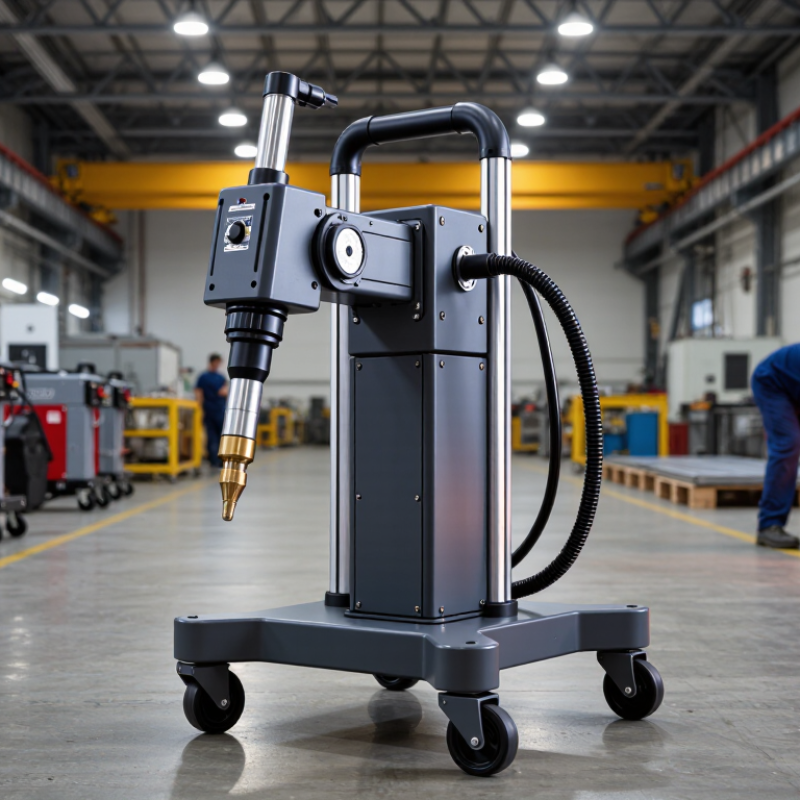
Defining Single-Holder Welding Machines Under IEC 60974-1
A single-holder welding machine is a practical configuration, not a separate equipment class defined by IEC 60974-1. It normally provides one welding circuit and one electrode-holder connection. This design suits repair shops, maintenance teams, and smaller fabrication areas. Fewer connections can simplify daily inspection.
IEC 60974-1 focuses on arc-welding power sources. It addresses electrical safety, output performance, thermal behavior, and operating conditions. When comparing China’s leading manufacturers, buyers should check rated welding current, duty cycle, no-load voltage, and input tolerance. A machine marked 200 A may not deliver 200 A continuously. The duty-cycle percentage matters.
Look closely at the nameplate. It should show input supply details, output ranges, protection information, and relevant ratings. Cable size, holder insulation, grounding, and connector quality also affect practical safety. A well-designed single-holder unit should maintain a stable arc without excessive heat at the terminals. It should also protect itself during overloads.
Field experience reveals a common weakness. Some product descriptions use “single-holder” as a sales phrase without explaining the tested operating conditions. That can mislead purchasers. Ask for test reports, inspection records, and clear duty-cycle data. Independent verification is stronger than a polished catalogue. Even experienced buyers can overlook ventilation, ambient temperature, or long cable runs. These details may reduce real welding output.
Ranking China’s Top 10 by 2024 Sales, Exports, and Certifications
China’s top 10 single-holder welding machine manufacturers should be ranked by 2024 sales, exports, and certifications, not publicity alone. Public customs data under HS 8515 shows China remained a leading exporter of electric welding equipment in 2024. However, customs figures cover several machine types, not only single-holder models. That limitation matters.
A credible ranking should combine audited revenue, shipment value, and export destinations. It should also verify ISO 9001 quality systems, product testing, and market approvals such as CE, UKCA, or CSA. Manufacturers with stable overseas sales deserve more weight than firms reporting only domestic orders. Certification counts can mislead, too. One certificate may cover a product family rather than every model. The ISO Survey and UN Comtrade datasets provide useful checks, while company filings and customs records add practical evidence. Still, private-company data is often incomplete. The ranking may therefore contain reasonable estimates, not perfect facts.
Tips: Ask for 2024 sales evidence, export invoices, and certificate scopes. Check whether the certificate names the actual factory. Test a sample for arc stability, handle temperature, cable durability, and duty-cycle performance. A machine that looks strong on paper may struggle after six hours of workshop use. Buyers should also compare warranty response times and spare-part availability. These details often separate reliable suppliers from fast-growing but less proven manufacturers.
Manufacturer Profiles: Founded Year, Capacity, Markets, and Core Products
China’s top 10 single-holder welding machine manufacturers differ mainly in scale, specialization, and export reach. Profile 1, founded in 1998, reports annual capacity above 5,000 units and focuses on shipyard fixtures. Profile 2 began in 2003, producing about 3,000 machines yearly for structural steel plants. Profile 3, established in 2006, serves automotive suppliers with compact single-torch systems. Profile 4 dates to 2010 and targets Southeast Asia with portable units. Profile 5, founded in 1995, combines welding positioners, controllers, and custom automation. Profile 6 began in 2012, with smaller output but strong engineering support for pressure-vessel workshops.
The remaining four profiles show broader specialization. Profile 7, founded in 2001, supplies heavy-duty systems to domestic infrastructure contractors. Profile 8, established in 2008, exports standard machines across Europe, the Middle East, and Latin America. Profile 9, founded in 2015, develops digitally monitored equipment for medium-sized factories. Profile 10, operating since 1992, offers the widest product range, including holders, manipulators, and automated welding cells. The International Federation of Robotics reported 276,288 industrial robots installed in China during 2023, representing 51% of global installations. That figure supports strong automation demand, but it does not prove welding-machine quality. Capacity data also needs caution. Many figures are self-reported and may exclude subcontracted production. Buyers should verify factory audits, duty-cycle tests, certification records, spare-parts stock, and actual export references before ranking suppliers.
Technical Comparison: Output Current, Duty Cycle, and IP Protection
China’s top ten single-holder welding machine manufacturers should be compared through measurable specifications, not catalogue claims. Output current shows usable welding range. Compact inverter units commonly deliver 200–250 A, while industrial models reach 315–400 A. However, maximum amperage alone can mislead. A 250 A machine may struggle with thick steel if its voltage control is unstable. IEC 60974-1 requires declared output data under defined test conditions, giving buyers a more reliable comparison point.
Duty cycle is equally important. At a 40% duty cycle, a machine rated at 250 A can weld for four minutes during a ten-minute period. The remaining six minutes allow cooling. Some industrial models reach 60% or 100% at lower currents. Field users should check the rated ambient temperature, because many specifications use 40°C. A 2023 technical review from the International Institute of Welding noted that thermal management strongly affects inverter reliability, especially in dusty workshops. This detail is easy to overlook.
IP protection adds another practical layer. Under IEC 60529, IP21 protects against dripping water, while IP23 offers protection from sprayed water up to specified angles. IP ratings do not guarantee resistance to metal dust, oil, or impact. That is the weak point in many comparisons. Manufacturers should publish test conditions, cable lengths, cooling methods, and derating curves. Buyers should also verify performance through independent laboratory reports, not only factory brochures. Some advertised figures still feel optimistic.
China Top 10 Single Holder Welding Machine Manufacturers — Technical Comparison
Anonymized reference profiles compare rated output current, duty cycle, and ingress protection commonly specified for single-holder inverter welding machines. IP21S and IP23 are shown using the IP-code numeric index.
Higher output current supports thicker electrodes and materials, while duty cycle indicates the percentage of a 10-minute period that the machine can weld at its rated current. IP23 provides greater protection against water spray than IP21S.
Quality Benchmarks: ISO 9001, CE Compliance, and IEC 60974-1 Testing
When comparing China’s top 10 single-holder welding machine manufacturers, quality evidence matters more than catalog claims. A compact machine may look reliable, yet internal protection, insulation, and cooling design decide its working life.
ISO 9001 shows that the manufacturer controls production through documented procedures, inspections, and corrective actions. It does not automatically prove excellent welding performance. Auditors should check calibration records, incoming material checks, and traceability for key electrical parts. Missing records can reveal weak process control.
IEC 60974-1 testing examines welding power sources under defined electrical and thermal conditions. Test reports should cover output stability, temperature rise, insulation strength, leakage current, and protective functions. Inspectors can compare the report with the machine’s rated current and duty cycle. Numbers must match.
CE compliance also requires careful review. It normally involves risk assessment, applicable European requirements, technical documentation, and a Declaration of Conformity. A CE mark alone is not independent quality certification. Look for evidence.
During factory evaluations, request a live welding demonstration after continuous operation. Check arc consistency, fan noise, cable temperature, and enclosure heating. A warm cable may be normal; excessive heat is not. Small details matter.
A common mistake is trusting certificates without checking their scope, date, and issuing body. Standards support reliability, but they cannot replace hands-on inspection. Even strong manufacturers may show occasional documentation gaps, so buyers should question them rather than ignore them.
China Top 10 Single Holder Welding Machine Manufacturers - Quality Benchmarks: ISO 9001, CE Compliance, and IEC 60974-1 Testing
Anonymous, standards-based benchmark matrix for evaluating single-holder welding machine suppliers without displaying company or brand information.
| No. | Quality Dimension | Benchmark Requirement | Relevant Standard or Reference | Objective Evidence to Request | Recommended Evaluation Weight |
|---|---|---|---|---|---|
| 1 | Quality Management System | A documented quality management system covering design, purchasing, production, inspection, nonconformity control, and corrective action. | ISO 9001:2015 | Valid certificate, certification scope, issuing certification body, validity dates, and evidence that the scope includes welding equipment or electrical manufacturing. | 15% |
| 2 | CE Conformity Documentation | The product must meet applicable European Union requirements before CE marking is affixed. | Applicable EU legislation, including the Low Voltage Directive and EMC requirements where applicable | EU Declaration of Conformity, technical documentation, risk assessment, user manual, product label, and applicable test reports. | 12% |
| 3 | Welding Power Source Safety | Electrical construction and safety performance should comply with requirements for arc-welding power sources. | IEC 60974-1 | Independent or in-house test report identifying the model, test conditions, measured results, equipment used, and applicable IEC 60974-1 clauses. | 15% |
| 4 | Rated Output Current | The declared welding-current range must match the technical specification and remain stable under the declared operating conditions. | IEC 60974-1 rating and test principles | Calibration records, load-bank test results, output-current measurements, and comparison between nameplate data and actual performance. | 10% |
| 5 | Duty-Cycle Verification | The declared duty cycle must be tested using the specified reference period and rated operating conditions. | IEC 60974-1 | Thermal test records showing test current, duty-cycle percentage, ambient temperature, test duration, and thermal cut-out behavior. | 10% |
| 6 | Insulation and Dielectric Strength | The machine should pass applicable insulation resistance, protective bonding, and dielectric-strength tests. | IEC 60974-1 and applicable electrical-safety requirements | Routine test records, type-test reports, calibrated test-equipment certificates, and acceptance criteria used by the manufacturer. | 10% |
| 7 | Thermal Protection and Reliability | Over-temperature protection should interrupt or limit operation safely and allow controlled recovery after cooling. | IEC 60974-1; manufacturer design verification | Temperature-rise records, protection activation tests, fan-operation checks, fault logs, and endurance-test reports. | 8% |
| 8 | Output Characteristics and Arc Stability | The power source should provide consistent output characteristics suitable for its declared welding process and electrode range. | IEC 60974-1; declared process specifications | Volt-ampere characteristic curves, welding-current repeatability data, sample weld evaluation, and operator control-function verification. | 8% |
| 9 | Production Traceability | Each unit should be traceable through a serial number or batch record linked to incoming materials, assembly, inspection, and final testing. | ISO 9001:2015 quality-control principles | Sample production traveler, final inspection checklist, serial-number policy, component records, and nonconformance reports. | 6% |
| 10 | Documentation and Corrective Action | Technical manuals, wiring information, inspection instructions, spare-parts information, and corrective-action procedures should be controlled and current. | ISO 9001:2015; applicable product-safety documentation requirements | Controlled manual revision, product change records, complaint statistics, corrective-action reports, and documented response times. | 6% |
| Total Evaluation Weight | 100% | ||||
FAQS
It usually has one welding circuit and one electrode-holder connection. This is a practical setup. It is not a separate IEC equipment class.
Repair shops, maintenance teams, and small fabrication areas often use it. Fewer connections can simplify daily inspections.
It covers arc-welding power sources, electrical safety, output performance, thermal behavior, and operating conditions. Testing matters.
No. The duty cycle shows how long the machine can deliver its rated current. A 200-ampere unit may require cooling breaks.
Check input supply, output range, protection information, rated current, and duty cycle. Match these numbers with test reports.
Cable size, holder insulation, grounding, and connector quality all matter. Long cables may reduce real output.
Request factory audits, inspection records, test reports, certification documents, and spare-parts information. Visit the production area if possible.
No. It indicates documented quality procedures and corrective actions. It does not automatically prove stable welding output.
Look for output stability, temperature rise, insulation strength, leakage current, and protective-function results. The figures should match the machine rating.
No. Review the risk assessment, technical file, Declaration of Conformity, scope, date, and issuing body. Certificates can look reassuring. They still need checking.
Conclusion
This article presents a practical overview of China’s leading Single Holder Welding Machine manufacturers, using clear criteria based on 2024 sales performance, export activity, production capacity, and product certifications. It first defines the equipment under IEC 60974-1, explaining its typical structure, operating purpose, and safety requirements. The ranking then compares manufacturers by founding history, manufacturing scale, target markets, and core welding product categories, without relying on brand promotion.
A technical comparison examines output current, duty cycle, protection ratings, operating stability, and suitability for different fabrication environments. The article also highlights essential quality benchmarks, including ISO 9001 management systems, CE compliance, and IEC 60974-1 testing. By combining commercial, technical, and quality factors, this guide helps buyers evaluate supplier reliability, machine performance, certification readiness, and long-term value when selecting a Single Holder Welding Machine for professional or industrial applications.

Blog Tags: