
Uttam Industries — Welding & Metal Cutting Machine Manufacturer since 1965 Mandi Dabwali, Haryana & Delhi, India  |  Export enquiries welcome worldwide
Technical Articles & Insights

Welding & Metal Cutting Knowledge Hub

Explore technical guides, machine selection advice, and industrial fabrication insights backed by 60 years of engineering experience.

Engineering Guides · Case Studies · Technology
0%

Choosing a Laser Welding Machine is not simply a matter of comparing power ratings. It affects weld consistency, production speed, operator safety, and long-term operating costs. Grand View Research estimates that the global laser welding machine market will continue expanding through 2030, driven by electric vehicles, aerospace production, medical devices, and precision manufacturing. The report also highlights automation and fiber-laser adoption as major growth factors.

Market forecasts vary because researchers define the sector differently. That detail matters. A compact 1,000-watt fiber system may suit thin stainless-steel housings, while a high-power platform may be necessary for structural automotive parts. MarketsandMarkets also identifies automotive electrification and battery manufacturing as important demand drivers. Still, a larger laser is not automatically the better choice.

Dr. John C. Lippold, a respected welding researcher and professor, offers a practical reminder: “Welding is a process, not simply an equipment purchase.” His point deserves attention. A machine should match the material, joint design, tolerances, production volume, and available technical support. A bright showroom demonstration can hide porosity, distortion, or unstable penetration.

This guide presents ten practical tips for selecting a Laser Welding Machine. It considers laser source, power, beam quality, automation, cooling, software, maintenance, training, and return on investment. Some recommendations may need adjustment. Real production conditions are rarely perfect. The strongest decision usually comes from documented trial welds, measured results, and honest conversations with experienced integrators.
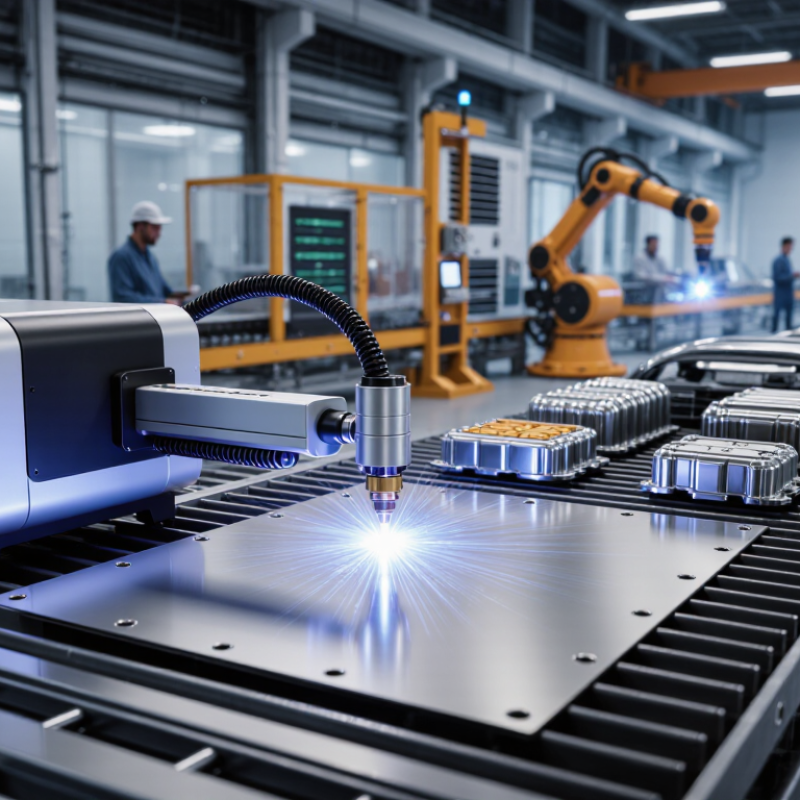
10 Tips for Choosing a Laser Welding Machine?

Define the Welding Tasks and Materials You Need to Handle

Before comparing laser welding machines, define the work clearly. List the joint type, material, thickness, tolerances, and expected production volume. A 1 mm stainless-steel cover needs different control from a 6 mm aluminum frame. Copper, reflective alloys, painted surfaces, and coated sheets also change the process requirements. Record the smallest gap, worst surface condition, and acceptable heat-affected zone. Do not rely on a perfect sample.

The International Federation of Robotics reported 541,302 industrial robot installations worldwide in 2023. This growth makes repeatability, cycle time, and machine integration practical selection criteria, not marketing extras. Consider whether the machine must connect with fixtures, sensors, or robotic handling. The U.S. Department of Energy’s Industrial Decarbonization Roadmap states that industry consumes about 30% of U.S. energy use. Energy efficiency therefore deserves attention during trials. Compare power consumption, shielding-gas use, and rework rates, not only laser wattage. Higher power is not automatically better.

Test the actual materials and joint designs before purchasing. Use production-like coupons, then inspect penetration, porosity, distortion, and tensile strength. ISO 15614-11 provides guidance for qualifying laser welding procedures, but it cannot replace responsible engineering judgment. A clean bead may still hide incomplete fusion. I would not trust one successful coupon. Examine several samples across thickness and fit-up variations. The final machine should match the task you can document, measure, and repeat safely.

Sources: International Federation of Robotics, World Robotics 2024; U.S. Department of Energy, Industrial Decarbonization Roadmap, 2022; ISO 15614-11.

Compare Laser Types, Power Levels, and Welding Performance

10 Tips for Choosing a Laser Welding Machine

Compare laser types before comparing prices. Fiber lasers suit steel, stainless steel, and aluminum production. CO2 lasers remain useful for some thicker, nonmetallic applications. Green or blue wavelengths can improve copper absorption, but they may increase purchase and maintenance costs. Check beam quality, spot size, pulse control, and cooling design. Small spots create narrow heat-affected zones. That matters around thin edges. Test samples, not brochures. A clean surface can still produce weak penetration.

Power must match thickness, joint design, and travel speed. Do not select the highest wattage automatically. Excess power may enlarge distortion and raise operating costs. MarketsandMarkets’ 2024 Laser Welding Market report forecasts growth from about USD 2.9 billion in 2024 to USD 5.2 billion by 2029. This expansion reflects demand for faster, automated joining. Still, productivity depends on more than power. Examine penetration depth, weld speed, repeatability, porosity control, and tolerance for part gaps.

Ask for metallurgical test results. Request cross-sections, tensile data, and cycle-time records. The American Welding Society recommends procedure qualification and controlled variables for consistent weld quality. Compare continuous-wave and pulsed operation carefully. Pulsed systems can limit heat input on delicate parts. Continuous-wave systems often support faster production. I still distrust impressive sample welds without destructive testing. A beautiful surface can hide incomplete fusion. Review operator training, service response, safety interlocks, and software diagnostics. Leave budget for fixtures and extraction equipment. That is often overlooked.

10 Tips for Choosing a Laser Welding Machine: Compare Laser Types, Power Levels, and Welding Performance

Typical industrial laser power ranges vary by application and machine configuration. Fiber lasers generally provide high electrical efficiency and excellent beam quality, CO₂ lasers offer strong performance on thicker materials, Nd:YAG lasers are widely used for precision welding, and diode lasers are suitable for surface heating and lower-to-medium power applications. Use material type, thickness, joint design, production speed, and required weld quality when selecting equipment.

Check Machine Accuracy, Automation, and Control Features

Choosing a laser welding machine starts with measurable accuracy, not attractive specifications. Ask for repeatability data under real welding conditions. Check beam positioning, seam tracking, fixture stability, and thermal drift. ISO 9283 provides useful methods for evaluating robot positioning performance. A machine that looks precise on paper may behave differently after eight hours of heat.

Run sample welds using your actual material and joint design. Measure bead width, penetration, distortion, and tensile strength. Request inspection records, calibration intervals, and uncertainty values. Avoid accepting “high accuracy” without a defined tolerance. Small errors become visible around corners and thin sheets. They also increase rework.

Automation should reduce variation, not remove human judgment.

The International Federation of Robotics reported 541,302 industrial robots installed worldwide in 2023. This growth shows strong demand for automated production. Still, a complex system can create expensive downtime. Check automatic loading, vision alignment, recipe storage, alarm history, and recovery procedures.

Controls should allow password levels, traceable parameter changes, and live monitoring of power, speed, and shielding gas.

Deloitte’s 2024 Smart Manufacturing and Operations Survey found that 86% of manufacturing leaders view smart manufacturing as important for competitiveness. That statistic is persuasive, but not complete. A simpler machine may perform better when operators need fast adjustments. Test usability with the people who will run it daily. Some assumptions will fail. That is useful information.

Evaluate Safety Systems, Maintenance, and Operator Requirements

Tip 1: Inspect the safety architecture, not just the laser output. Choose interlocked doors, emergency stops, protective enclosures, beam-shutter controls, and visible status indicators. ISO 11553-1 addresses laser-processing machine safety, while IEC 60825-1 classifies laser hazards. Ask for test records, not marketing promises.

Tip 2: Treat extraction as essential equipment. Welding fumes can collect around the operator’s breathing zone, especially during repeated stainless-steel work. The U.S. Bureau of Labor Statistics reported 2.6 million nonfatal workplace injuries and illnesses in private industry during 2023. This figure is not laser-specific, but it shows why exposure controls deserve attention. Check airflow alarms, filter loading, duct condition, and replacement costs. A quiet extractor is not automatically a safe one.

Tip 3: Measure the maintenance burden before purchase. Review cleaning intervals, lens inspection procedures, cooling-system checks, calibration needs, and service access. Operators should understand alarms, setup limits, protective equipment, and emergency isolation. Short training is risky. OSHA’s Hazard Communication requirements also make clear that workers need understandable information about workplace hazards. I would request a maintenance demonstration using real production conditions. A spotless showroom can hide awkward access panels. Consider operator turnover, too. If a new worker cannot perform the safety check confidently, the machine is not fully production-ready.

Assess Total Cost, Supplier Support, and Future Expansion Needs

Choosing a laser welding machine requires more than comparing purchase prices. The lowest quote may hide expensive lenses, cooling parts, software updates, and installation work. Request a five-year cost estimate from the supplier. Include electricity, routine cleaning, spare optics, training, and expected downtime. Ask for written service rates, not vague promises.

Run sample welds using your actual materials and joint designs. Inspect penetration, heat distortion, cycle time, and surface finish with a qualified technician. Record the settings and results. A machine that performs well on a showroom sample may struggle with thin stainless steel or reflective alloys. We learned this the hard way during a production trial. The weld looked clean, but setup changes took too long.

Supplier support often determines whether equipment remains productive. Check response times, remote diagnostic methods, technician availability, and spare-part delivery locations. Ask to speak with current users in similar industries. Their maintenance records may reveal more than polished demonstrations. Training should cover safety, parameter control, fault checks, and practical cleaning routines. Do not accept “easy to operate” as enough evidence.

Consider future expansion before selecting the power range and control system. Will you add automation, vision inspection, new fixtures, or another workstation? Confirm interface compatibility and available floor space. Modular equipment can cost more initially, but it may reduce replacement costs later. Still, expansion plans can change. Avoid paying for capacity that your production schedule may never use.

FAQS

What information should I define before choosing a laser welding machine?

Record joint type, material, thickness, gap, tolerance, and production volume. Include the worst surface condition. Do not test only perfect samples.

Does higher laser power always produce better welds?

No. Higher power may increase distortion, energy use, and operating cost. Match power to thickness, material reflectivity, and required penetration.

Which materials need special attention during testing?

Test stainless steel, aluminum, copper, reflective alloys, painted surfaces, and coated sheets separately. Their heat behavior can differ sharply.

How should I test a machine before purchasing it?

Use production-like coupons with real joint designs. Check penetration, porosity, distortion, strength, surface finish, and cycle time. One good coupon is not enough.

What safety features should a laser welding machine include?

Look for interlocked doors, protective enclosures, emergency stops, beam shutters, and visible status lights. Request recent test records. Marketing claims are not proof.

Why is fume extraction important during welding?

Extraction should protect the operator’s breathing zone. Check airflow alarms, filter loading, duct condition, and replacement costs. A quiet extractor may still perform poorly.

What maintenance tasks should I review before buying?

Review lens cleaning, optical inspections, cooling checks, calibration, and service access. Ask for a live maintenance demonstration. Showroom cleanliness can mislead.

How can I estimate the machine’s real cost?

Request a five-year estimate covering electricity, optics, cooling parts, cleaning, training, installation, and downtime. The lowest purchase price may not stay lowest.

What should I ask about operator training?

Training should cover setup limits, alarms, safety checks, parameter control, fault handling, and cleaning. Short training feels convenient. It may be risky.

How do I judge future expansion needs?

Check compatibility with fixtures, sensors, vision systems, robotics, and additional workstations. Leave practical floor space. Avoid paying for capacity you may never use.

Conclusion

Choosing the right Laser Welding Machine begins with a clear understanding of your welding tasks, materials, joint designs, production volume, and required finish quality. Compare suitable laser types, power levels, beam characteristics, and welding performance to ensure the machine can handle both current and expected applications. Accuracy, stability, and repeatability are equally important, especially for detailed or high-volume work. Consider automation options, control interfaces, programming functions, and compatibility with existing production systems to improve efficiency and reduce operator errors.

Safety and practical operation should also guide your decision. Review protective enclosures, monitoring systems, emergency controls, maintenance access, and the level of training required for operators. Beyond the purchase price, calculate energy use, consumables, servicing, installation, and downtime to understand the total cost of ownership. Finally, assess the supplier’s technical support, training, spare-parts availability, warranty coverage, and ability to support future upgrades or production expansion. A well-planned evaluation helps you select a reliable machine that delivers long-term value and consistent welding results.

Ethan

Ethan

Ethan is a professional marketing specialist dedicated to helping businesses understand products, industries, and customer needs through clear, practical, and insight-driven communication. With extensive knowledge of the company’s product portfolio, he regularly contributes expert articles to the......