
Welding & Metal Cutting Knowledge Hub
Explore technical guides, machine selection advice, and industrial fabrication insights backed by 60 years of engineering experience.
Choosing the best CNC Cutting Machine is not simply a price comparison. It is a production decision.
A machine may look impressive under showroom lights, yet struggle with your daily workload. Check material thickness, sheet size, tolerances, cutting speed, and expected utilization. A compact workshop may need a flexible fiber laser. A heavy fabrication plant may require higher power, stronger extraction, and automated loading.
Industry data shows why this decision deserves careful attention. The International Federation of Robotics reported 541,302 industrial robots were installed worldwide in 2023. This reflects a broader manufacturing shift toward repeatable, connected production. Meanwhile, Grand View Research has projected continued growth in the global CNC machine market through 2030. The figures are useful, but they do not replace a factory trial.
John Saunders, founder of NYC CNC, often emphasizes a practical principle: “The best machine is the one that makes you money.” That sentence deserves attention.
Look beyond the purchase price. Calculate consumable costs, operator training, maintenance response, software compatibility, energy use, and downtime. Ask suppliers to cut your actual material, not a perfect sample. Watch the edge quality closely. Feel the heat around the work area. Listen for vibration.
No machine is perfect.
A careful buyer should also admit uncertainty. Forecasts can change. Production volumes may fall. A faster machine can become expensive if programming remains slow. This guide explains how to compare machine types, verify supplier claims, and match technical capability with realistic business needs. The right CNC Cutting Machine should improve measurable output, not merely decorate the workshop.
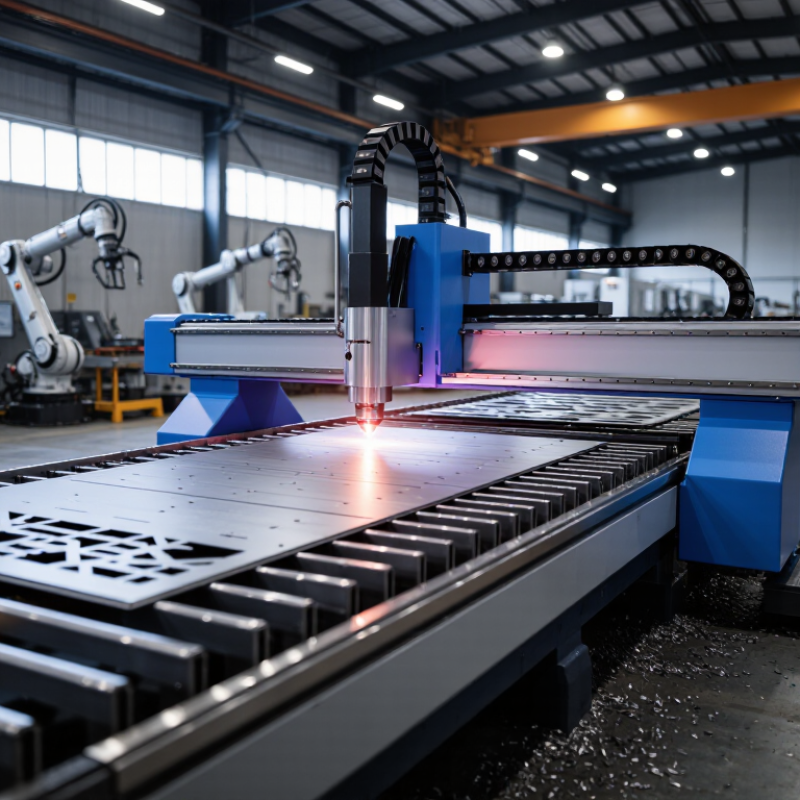
Define Material, Thickness, and Production Volume Requirements
Choosing a CNC cutting machine starts with the material, not the advertised speed. Mild steel, stainless steel, aluminum, wood, and acrylic respond differently to heat and cutting force. List every material your workshop will process, including occasional jobs. A machine that cuts steel well may leave rough edges on aluminum. Material behavior matters.
Thickness sets the real performance boundary. Measure your thickest regular sheet and separate it from rare, oversized jobs. Cutting near maximum capacity can reduce edge quality, increase wear, and slow production. For thin sheets, check heat control and motion accuracy. For thick plates, examine power, rigidity, and piercing time. Sheet dimensions also matter. A 1,500-by-3,000-millimeter bed may reduce repositioning and alignment errors. Production volume changes the decision again. Estimate daily cutting hours, batch sizes, setup time, and acceptable downtime. A small workshop may value flexibility more than maximum speed. A busy fabrication line needs stable cycles and accessible maintenance. The cheapest specification can become expensive when operators wait.
Tips: Request sample cuts using your actual material and thickness. Inspect kerf width, edge squareness, burrs, and dimensional accuracy. Record cutting time, setup time, and cleanup effort. Check file compatibility and ventilation requirements. Leave capacity headroom, but do not oversize blindly. Revisit your estimate after two weeks of production data; early assumptions are often optimistic.
How to Choose the Best CNC Cutting Machine for Your Business?
Define your material, thickness, and production volume requirements before comparing machine types, cutting capacity, accuracy, and operating costs.
| Business Requirement | Typical Materials | Recommended Thickness | Production Volume | Suitable CNC Machine | Typical Accuracy | Key Selection Considerations |
|---|---|---|---|---|---|---|
| Thin Sheet Metal Fabrication | Carbon steel, stainless steel, aluminum, brass | 0.5–6 mm | Medium to high; repeated parts and batch production | Fiber laser cutting machine | Approximately ±0.05–0.10 mm, depending on machine and process conditions | Choose based on laser power, sheet size, autofocus capability, nesting software, and loading automation. |
| Medium and Thick Metal Cutting | Carbon steel, stainless steel, aluminum | 6–25 mm | Low to medium; custom fabrication and job-shop work | Fiber laser or CNC plasma cutting machine | Laser: approximately ±0.05–0.15 mm; plasma: approximately ±0.15–0.50 mm | Compare maximum piercing thickness, operating cost, edge quality, consumable life, and required tolerance. |
| Very Thick Steel Plate | Carbon steel, stainless steel, alloy steel | 25–150 mm or more | Low to medium; structural parts and heavy fabrication | CNC plasma or abrasive waterjet | Plasma: approximately ±0.30–0.80 mm; waterjet: approximately ±0.10–0.25 mm | Plasma generally offers higher cutting speed on steel; waterjet avoids heat-affected zones and supports a wider range of materials. |
| Heat-Sensitive or Reflective Materials | Glass, stone, composites, titanium, copper, aluminum | 1–100 mm, depending on material | Low to medium; precision parts and specialized orders | CNC abrasive waterjet cutting machine | Approximately ±0.10–0.25 mm | Select waterjet cutting when thermal distortion, discoloration, or changes to material properties must be avoided. |
| Wood, MDF, Plywood, and Plastics | Solid wood, MDF, plywood, acrylic, PVC, foam board | 3–50 mm | Medium to high; furniture, signage, and panel processing | CNC router | Approximately ±0.05–0.20 mm | Check spindle power, working area, vacuum table strength, dust collection, tooling options, and automatic tool-change capability. |
| Small Custom Parts | Thin metals, plastics, wood, laminates | 0.5–10 mm | Low; prototypes and short production runs | Compact CNC laser, router, or desktop plasma machine | Approximately ±0.10–0.30 mm | Prioritize machine flexibility, simple setup, low power consumption, software compatibility, and affordable maintenance. |
| High-Volume Standardized Parts | Carbon steel, stainless steel, aluminum, non-ferrous sheet | 1–12 mm | High; multiple shifts and continuous batch production | Automated fiber laser cutting line | Approximately ±0.05–0.10 mm | Focus on cutting speed, automatic sheet storage, shuttle tables, nesting efficiency, uptime, service access, and total cost per part. |
| Large Format Panel Cutting | Sheet metal, insulation panels, wood panels, composites | 3–30 mm | Medium; large components and oversized panels | Large-bed laser, plasma, router, or waterjet | Approximately ±0.10–0.50 mm | Match the working envelope to the largest standard sheet to reduce repositioning, alignment errors, and material waste. |
Note: Accuracy, cutting thickness, and production capacity are typical industry ranges rather than guaranteed results. Actual performance depends on machine configuration, material grade, consumables, programming, maintenance, and operator skill.
FAQS
Laser cutting works well for mild steel, stainless steel, aluminum, and thin sheets. It creates narrow cuts and clean edges. Finishing work is often limited.
Plasma cutting suits thicker steel and fast production. Its edges may require grinding. The heat-affected area can also be wider.
Waterjet cutting handles stone, glass, composites, and heat-sensitive metals. Its cold process reduces warping and discoloration. That can protect delicate surfaces.
A CNC router suits wood, plastic, foam, and some soft metals. It removes material mechanically. Dust control becomes important.
Test real samples before purchasing. Use your thickest regular material, not a rare project. Compare at least three sample parts. One test plate is not enough evidence.
Include electricity, consumables, extraction, maintenance, and finishing costs. A low purchase price can hide production delays. The cheapest machine may become expensive.
A 3-axis machine suits flat plates, pockets, drilled holes, and simple brackets. It moves along X, Y, and Z. Programming and maintenance are usually simpler.
Four-axis machining helps when parts need repeated side access. Five-axis equipment reaches angled surfaces, deep cavities, and complex curves. More capability is not always better. Training and programming costs may exceed the savings. I underestimated setup planning once.
Conclusion
Choosing the right CNC Cutting Machine begins with clearly defining your production requirements. Identify the materials you plan to process, their maximum thickness, required cutting dimensions, and expected production volume. Then match the cutting method to the application: laser is suitable for precise work on many metals and thin materials, plasma supports fast cutting of thicker metal, waterjet handles heat-sensitive or diverse materials, and routers are effective for wood, plastics, composites, and similar materials.
Machine configuration should also reflect part complexity. A 3-axis system is suitable for standard flat components, while 4- and 5-axis machines provide greater flexibility for angled surfaces, curved profiles, and complex geometries. Do not accept accuracy claims such as ±0.05 mm without verification; request test results based on recognized ISO 230-2 measurement procedures. Finally, evaluate total cost rather than purchase price alone, including electricity, tooling, maintenance, operator requirements, downtime, and throughput. A machine with balanced performance and operating costs will provide better long-term value.