
Welding & Metal Cutting Knowledge Hub
Explore technical guides, machine selection advice, and industrial fabrication insights backed by 60 years of engineering experience.
7 Best Industrial Plasma Cutting Machines for 2026
Table of Contents
Industrial plasma cutting has changed considerably by 2026. Today’s machines can pierce thick plate, follow tight curves, and leave cleaner edges than many shops expect. Yet the right choice still depends on the work in front of you. A busy fabrication floor needs different strengths than a small repair shop. An Industrial Plasma Cutting Machine should match your material thickness, duty cycle, power supply, and available floor space. The details matter. A torch that feels light during a quick demo may become tiring over a full shift.
Plasma specialist Jim Colt is a useful reference point for practical cutting knowledge. This guide uses the following editorial rule, not a verbatim quotation from Colt: “Choose a machine for the cuts you repeat, not the features you admire.” That distinction can save money. It can also prevent a familiar mistake: buying extra amperage while overlooking consumables, service access, or air quality. Some comparisons make those trade-offs look simpler than they are.
The seven machines below are assessed for cutting capacity, cut quality, ease of use, durability, and ownership costs. Where specifications look similar, real shop conditions can expose meaningful differences. A machine rated for thick plate may cut slowly at that limit. Consumable life also changes with settings and operator habits. No ranking can fit every shop. Treat it as a starting point, then check each model against your own materials, workload, and maintenance resources. That extra check is worth the time.
What Defines an Industrial Plasma Cutting Machine?
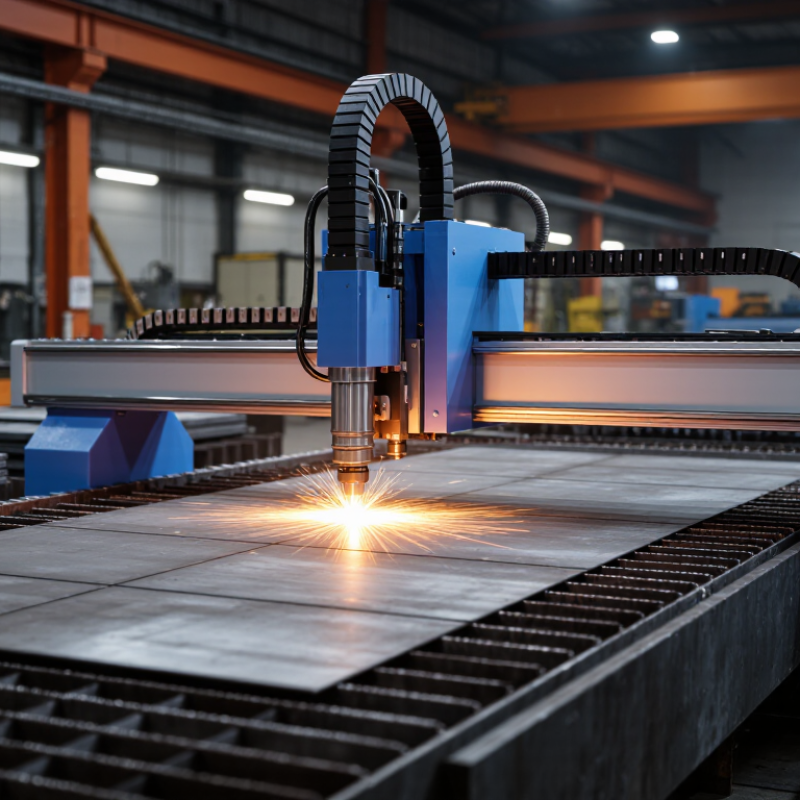
An industrial plasma cutting machine is defined by its ability to cut reliably through demanding production shifts, not by a large cabinet or a high peak-amperage figure. It uses an electrical arc and ionized gas to melt metal, then drives the molten material from the cut. TWI technical guidance places plasma temperatures at roughly 20,000°C. That concentrated heat makes clean, fast cutting possible, but it also makes torch control and consumable condition critical.
Look for rated pierce and production-cut thickness, duty cycle, cut quality, and compatibility with automated tables. A maximum thickness figure alone can mislead; it may describe edge-start cutting, not piercing a plate. ISO 9013:2017 classifies thermal-cut quality using factors such as dimensional tolerances and surface characteristics. In practice, a truly industrial system also needs stable gas delivery, torch-height control, accessible maintenance points, and effective fume extraction. These details are easy to overlook. They affect uptime.
Tips: Ask suppliers for a sample cut on your actual material and thickness. Inspect the edge, bevel, and dross, then check whether the stated production speed matches your shop’s needs. A specification sheet cannot show every real-world limitation.
7 Best Industrial Plasma Cutting Machines for 2026 — What Defines an Industrial Plasma Cutting Machine?
Typical plasma output classes and approximate maximum mild-steel severance thickness
Industrial plasma cutters are distinguished by high output current, sustained-duty capability, and the ability to cut thicker conductive metals. The values shown are representative approximations, not universal machine ratings. Actual capacity depends on the specific system, material, cutting speed, and whether the target is a clean production cut or a severance cut.
Key Factors for Evaluating Plasma Cutters in 2026
A plasma cutter should be judged by the work it can repeat, not its maximum advertised thickness. Match rated capacity to the metal you cut most often, then check the manufacturer’s cut charts for thickness, travel speed, and amperage. Test a real sample: a clean edge and narrow kerf matter more than a fast first pass. Watch the torch start and stop. Small inconsistencies can become costly on a long production run.
Energy use and operator availability also deserve attention. The U.S. Department of Energy’s 2022 Industrial Decarbonization Roadmap reports that industry accounts for about 30% of U.S. energy-related emissions. That figure covers industry broadly, not plasma machines alone, but it makes input power and idle consumption worth comparing. The American Welding Society has projected a need for 360,000 welding professionals by 2027. A cutter with clear controls and accessible consumables may reduce training friction, though it cannot replace skilled judgment.
Inspect duty-cycle ratings at the amperage your shop will actually use. Check whether ventilation can capture fumes near the cutting table, and confirm that filters and consumables are easy to maintain. Ask for a timed test on your own material and record cut speed, edge angle, and dross. One limitation: a showroom test rarely reflects a full shift. Real production may expose weaknesses that a short demonstration misses.
Seven Leading Industrial Plasma Cutting Machines for 2026
Seven leading industrial plasma cutting machines for 2026 are best compared by the work they handle, not by a single ranking. A high-definition CNC table suits detailed plate work, while a conventional CNC system can be practical for routine cuts. Portable units help with on-site repairs. Bevel-cutting tables prepare edges for welding, and robotic systems handle repeatable three-dimensional paths. Multi-torch tables raise output on suitable jobs. Fine-feature systems target small parts and narrow kerfs. Each setup has trade-offs.
Tips: Match the machine to your usual material thickness, cut length, and daily workload. Check duty cycle, torch consumable costs, extraction needs, and operator training. Ask for a test cut using your own metal. Small holes can reveal quality problems fast.
The strongest choice depends on fit, service access, and the parts you actually make. Inspect cut edges for dross, squareness, and heat distortion; examine a sample under consistent conditions. Confirm that the control software works with your existing drawings and workflow. A more powerful unit is not automatically better. Some shops may value uptime over speed, though that balance is easy to misjudge during a showroom demonstration. Keep maintenance records and review them after installation.
How the Top Machines Compare in Performance and Cost
Industrial plasma cutters differ most in duty cycle, cut quality, and how well they handle repeated work. Compact 45–65-amp units can suit light fabrication, but their slower cutting and thinner capacity may limit production. They often cost less upfront. Still, the cheapest machine can become expensive if it struggles through a full shift.
Mid-range 80–105-amp systems typically offer a practical balance for workshops cutting brackets, frames, and plate. Compare their rated cut thickness with the thickness you need to cut cleanly, not merely sever. A CNC-ready table adds repeatability, but also brings costs for software, extraction, torch-height control, and setup. Details matter.
Higher-output systems, often 125 amps or more, can cut thicker material faster, yet demand greater electrical capacity and consumables spending. Fine-feature systems may produce cleaner edges on thinner sheet, reducing grinding time. A lower operating cost is not guaranteed. I would check sample cuts, consumable life, and service response before comparing quotes; specifications alone can mislead. Budget for installation, training, and downtime, too. One overlooked filter or worn electrode can spoil an otherwise good cut.
Industrial Applications and Machine Selection Criteria
Industrial plasma cutting machines support work ranging from structural steel fabrication to repair shops and heavy-equipment maintenance. A table cutting 6 mm sheet all day has different needs from a system handling occasional 25 mm plate. Match the machine to common material thickness, not just its maximum rated capacity. That rating may describe separation cutting, rather than a clean production edge.
For repeatable parts, examine cut quality, torch-height control, and CNC compatibility alongside amperage. Inspect sample cuts for dross, bevel, and heat distortion. A narrow kerf helps when nesting parts closely, but poor consumable alignment can quickly erase that advantage.
Check the duty cycle against real shift patterns, and confirm that the power supply can support the unit without disruptive voltage drops. Fume extraction and table design matter, too; smoke needs a clear path away from the cutting zone.
Consumables affect uptime. Ask how quickly electrodes and nozzles can be changed, and whether local technicians can service the system. Quiet detail. Review the controller interface with the people who will use it; a capable machine can still slow production if settings are confusing. Compare documented cut charts with a trial using your own metal and drawings. The trial may expose a mismatch that a specification sheet misses. Selection is rarely tidy: floor space, operator skill, and changing job sizes can pull in different directions.
FAQS
It cuts reliably through demanding production shifts using an electrical arc and ionized gas. Plasma can reach roughly 20,000°C. Torch control matters.
The rating may describe cutting from a plate edge, not piercing through it. Check rated pierce thickness and production-cut thickness separately.
Compare duty cycle, cut quality, rated thickness, and compatibility with automated tables. Also check gas delivery and torch-height control. Details matter.
Units around 45–65 amps may suit light fabrication. They can struggle with faster, repeated cutting or thicker material. The lower price may not tell the whole story.
Systems around 80–105 amps can offer a practical balance for cutting brackets, frames, and plate. Match their clean-cut capacity to your actual work.
It can make cuts more repeatable, but adds costs for software, extraction, torch-height control, and setup. Not always a simple upgrade.
Ask for a sample cut on your material and thickness. Inspect the edge, bevel, and dross, then compare the production speed with your needs.
Higher-output systems may need more electrical capacity and consumables. Include installation, training, maintenance, and downtime. A worn electrode can spoil a good cut.
No. Check consumable life and service response, too. I would still trust a sample cut more than a polished specification sheet.
Conclusion
This guide examines what distinguishes an Industrial Plasma Cutting Machine, including its cutting capacity, power requirements, precision, duty cycle, controls, and compatibility with different materials and workflows. It outlines the key factors buyers should consider in 2026, such as cut quality, operating efficiency, ease of maintenance, safety features, and the overall cost of ownership.
The article also reviews seven leading machine types and compares their performance and costs to help readers understand the trade-offs between capability, productivity, and investment. Finally, it explores how industrial applications influence machine selection, from production volume and material thickness to shop layout and operator needs. By matching these requirements with the right features, businesses can choose equipment that supports reliable, efficient cutting and long-term operational goals.

Blog Tags: