
Welding & Metal Cutting Knowledge Hub
Explore technical guides, machine selection advice, and industrial fabrication insights backed by 60 years of engineering experience.
Choosing an ARC Welding Machine for international purchasing is not just a matter of comparing output amperage. Buyers must match the machine to real work: steel thickness, available power, duty cycle, transport needs, and local service support. A compact inverter may suit repair crews moving between sites. A heavier transformer unit may make more sense in a workshop with steady production demands. Small details matter.
The market is growing. Grand View Research estimated the global welding equipment market at approximately USD 15.6 billion in 2023 and projected a 5.3% compound annual growth rate from 2024 to 2030. This broad category includes several welding technologies, so the figure should not be read as ARC-machine sales alone. Still, it signals sustained demand across construction, manufacturing, and infrastructure. The report is useful context, not a buying guarantee.
Technical standards also deserve attention. IEC 60974-1 sets requirements for arc-welding power sources, including safety and performance characteristics. Buyers should check a machine’s stated compliance, input voltage, rated duty cycle, and available documentation rather than relying on a headline specification. Ask how the rating was tested. Ask who can repair it.
This guide compares seven ARC welding machines for global buyers, focusing on practical performance, portability, controls, and support. There is no perfect shortlist. Product availability and service quality can vary by region, and published specifications do not always reflect demanding shop conditions. That deserves a second look.
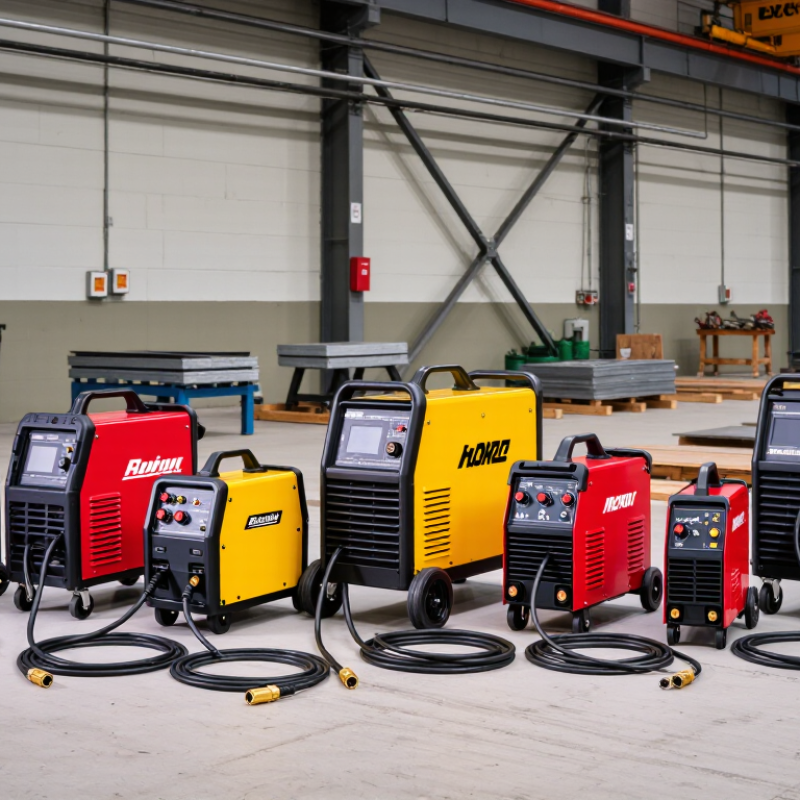
Compare 7 ARC Welding Machines by Output, Duty Cycle, and Process
Choosing an ARC welding machine is less about chasing the highest amperage and more about matching output, duty cycle, and process to the work.
A compact, low-output unit suits light repairs and thin stock, while a mid-range model offers more room for general fabrication. Higher-output machines can handle thicker electrodes, but they may need a suitable power supply. Check the input requirements before comparing advertised maximum current.
Duty cycle changes how long a machine can weld before cooling.
A higher rating can matter during repeated passes on a gate or frame; occasional repairs may not need it. Compare ratings at the same amperage, since percentages can be misleading without that context.
The seven options should also be judged by process:
some are stick-only, while others support additional processes. More features are not automatically better. They can add setup steps you may never use.
For global buyers, inspect the nameplate, voltage range, plug arrangement, and available electrode sizes.
A dual-voltage machine may offer flexibility, but only when the local supply matches its specifications. Look for clear manuals and accessible service support, too. Small details matter.
A machine that feels light in a listing can still be awkward to carry up stairs. I would not choose from a spec table alone; real duty-cycle performance can vary with heat, cables, and operator technique.
FAQS
Match output, duty cycle, and process to your actual work. A compact machine suits thin stock and light repairs. A mid-range unit gives more flexibility for general fabrication. Maximum amperage alone can mislead.
Duty cycle shows how long a machine can weld before cooling. A higher rating helps during repeated passes on gates or frames. Occasional repairs may need less capacity. Compare ratings at the same amperage. Percentages can otherwise mislead.
Not necessarily. Higher output may support thicker electrodes and heavier work. However, the machine may require a stronger electrical supply. Check input requirements before trusting the advertised maximum current.
Read the nameplate for voltage, phase, frequency, and required current. A 120 V outlet cannot reliably power a unit designed only for 230 V. A 230 V single-phase machine is not automatically suitable for 400 V three-phase power. An adapter does not change voltage.
Check input voltage, output range, duty cycle, phase, frequency, and operating limits. Also inspect supported electrode sizes. Small details matter. The label should match the manual and the offered machine.
Dual-voltage capability can help when work locations vary. It only helps if the local supply matches the stated specifications. Confirm the circuit can support the machine under load. Flexibility is not automatic.
IEC 60974-1 provides safety and performance requirements for welding power sources. A listing claiming compliance is not enough by itself. Request a current test report or declaration. Check that its model details match the machine offered. Paperwork can still be incomplete.
No. Compliance does not prove the machine fits every job or installation. Heat, long cables, voltage drop, and operator technique affect performance. A unit may pass a short demonstration yet struggle during repeated welds. Real workloads deserve testing.
Conclusion
Choosing the right ARC Welding Machine requires more than comparing maximum amperage. This guide evaluates seven machines by output range, duty cycle, welding process, portability, and practical usability. It explains how to read IEC 60974-1 requirements for equipment safety and performance, helping buyers assess protection, stability, and operating reliability before purchase. Duty cycle ratings are also clarified: a 60% rating over a 10-minute period means the machine can weld continuously for 6 minutes, followed by 4 minutes of cooling.
Input voltage is another essential consideration for global buyers. Machines should be matched with regional 120 V, 230 V, or 400 V supply systems, while suitable protection and connection practices must be followed. Finally, the guide explains how to select compatible electrodes through AWS A5.1 classifications and recommended amperage ranges. By comparing these technical factors, users can choose an ARC Welding Machine that fits their welding process, workspace, power supply, and expected workload.