Uttam Industries — Welding & Metal Cutting Machine Manufacturer since 1965 Mandi Dabwali, Haryana & Delhi, India  |  Export enquiries welcome worldwide
60+Years Engineering Heritage
< 0.15mmNarrow Heat-Affected Zone
12 m/minMax Automated Welding Speed
100%Full-Load Tested & Calibrated
Strategic Automotive Manufacturing

Why Global Tier-1 Suppliers Are Replacing RSW and GMAW with Fiber Laser Welding

The automotive industry is undergoing its most radical structural evolution in a century. Driven by strict crash-safety mandates, lightweighting objectives for internal combustion engines (ICE), and the rapid expansion of Electric Vehicles (EVs), conventional Resistance Spot Welding (RSW) and Gas Metal Arc Welding (GMAW/MIG) are reaching their physical limitations.

Modern vehicle architectures heavily utilize Ultra-High-Strength Steels (UHSS), dual-phase steels (DP600/DP980), press-hardened boron steel (22MnB5), and lightweight aluminum alloys (6000-series). Joining these metallurgically sensitive materials requires precise heat input control that only an Automotive Laser Welding Machine can deliver.

  • Keyhole Weld Dynamics: High power density (>106 W/cm2) creates a deep vapor channel for deep-penetration welds with depth-to-width aspect ratios up to 10:1.
  • Massive Distortion Reduction: Ultra-low thermal input minimizes localized warping, maintaining tight vehicle dimensional tolerances without costly post-weld straightening.
  • Flange Reduction & Weight Savings: Continuous laser lap seams allow engineers to reduce sheet metal overlap flange width by up to 40%, directly reducing kerb weight.
  • Zero Consumable Wire Dependency: Deep autogenous laser joining eliminates consumable filler wire costs while boosting line speeds to 4–12 meters per minute.
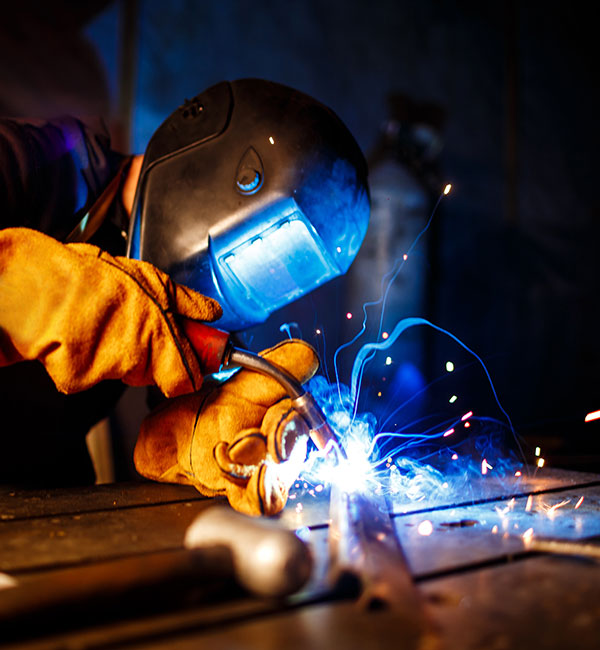
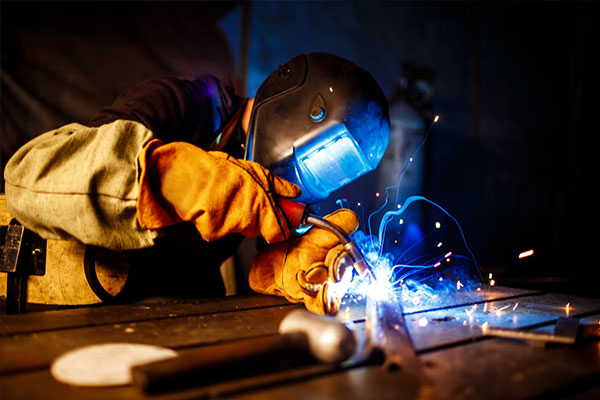
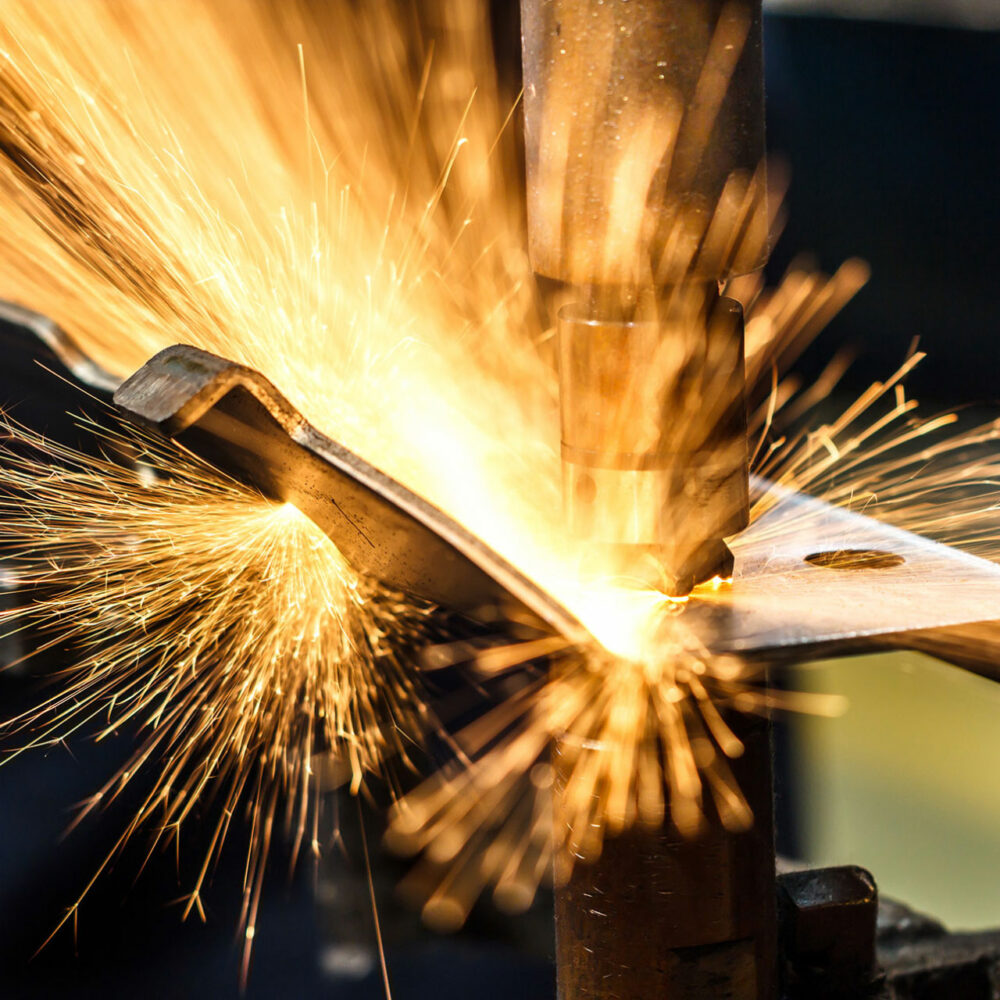
Automotive Laser Welding Machine operating on automotive body panel fabrication
1965Engineering Pedigree
Targeted Product Recommendations

Engineered Automotive Laser Welding Machine Series

From automated Body-in-White (BIW) robotic framing cells to ultra-precise EV lithium-ion battery tab joining stations, Uttam Industries builds continuous-wave (CW) fiber laser equipment tailored to automotive assembly environments.

Body-in-White (BIW) & Chassis

AutoLaser-BIW Robotic Welding Cell

High-power 3kW to 12kW fiber laser cell engineered for automated robotic integration on car body side-frames, door assemblies, roof seams, and tailor-welded blanks (TWB).

Power Output: 3000W – 12000W Fiber Laser Beam Quality: BPP ≤ 2.5 mm·mrad (High Focus) Optics: Smart Wobble Head with 2D Galvo Scanning Target Use: Crash structures, B-pillars, door frames
Electric Vehicle (EV) Battery Solutions

AutoLaser-EV Blue & IR Hybrid Welder

Dual-wavelength (450nm Blue + 1064nm Infrared) fiber laser machine purpose-built for spatter-free welding of copper busbars, lithium cell tabs, and aluminum tray enclosures.

Wavelength: 450nm (Blue) + 1064nm (Fiber) Absorption in Copper: > 65% Direct Absorption Seam Precision: ± 0.02 mm Positional Accuracy Target Use: EV battery pack busbars, hairpin motors
Exhaust & Hydroformed Tubing

AutoLaser-Rotary Tube & Pipe Line

Continuous rotary fiber laser welding system designed for high-speed hermetic seam welding of stainless steel exhaust manifolds, catalytic converters, and hydroformed chassis tubes.

Laser Source: IPG / Raycus CW Fiber Laser Welding Speed: Up to 15 m/min continuous Gas Shielding: Coaxial & Trailing Gas Jet Array Target Use: Exhaust pipes, pressure vessels, fuel rails

Technical Deep-Dive: Keyhole vs. Conduction Mode Laser Joining

When specifying an Automotive Laser Welding Machine, engineers must select the appropriate power density regime based on joint metallurgy and mechanical load expectations:

1. Keyhole (Deep Penetration) Mode

Occurs when laser power density exceeds ~106 W/cm2. The laser melts and vaporizes metal, creating a high-pressure recoil vapor channel ("keyhole") that allows laser light to penetrate deep into the material. Ideal for structural sheet steel, transmission gears, and load-bearing B-pillars where high shear strength and narrow HAZ are critical.

2. Conduction Mode

Operates at lower power densities (<105 W/cm2). Heat transfers into the workpiece strictly via thermal conduction, producing smooth, rounded, aesthetic weld pools without deep keyhole vaporization. Crucial for cosmetic outer car body seams, thin-walled heat exchangers, and sensitive electronics packaging.

Process Comparison Matrix

Automotive Joining Technologies: Quantitative Evaluation

A direct engineering comparison between Fiber Laser Welding, Resistance Spot Welding (RSW), and Gas Metal Arc Welding (MIG/MAG) across key automotive assembly metrics.

Engineering performance data measured on 1.2mm + 1.2mm automotive grade DP600 dual-phase steel sheet metal. Data verified in Uttam Industries testing bay.
Process Specification Automotive Fiber Laser Machine Resistance Spot Welding (RSW) Gas Metal Arc Welding (MIG)
Linear Joining Speed 4.0 – 12.0 m/min N/A (1.5 – 2.5 sec/spot) 0.6 – 1.2 m/min
Heat-Affected Zone (HAZ) Width 0.10 – 0.35 mm 3.50 – 6.00 mm 2.50 – 5.00 mm
Tensile Shear Strength (kN) 14.2 kN (Continuous seam) 8.5 kN (Per spot weld) 11.0 kN (Stitch weld)
Flange Overlap Requirement 6.0 – 8.0 mm 12.0 – 16.0 mm 10.0 – 14.0 mm
Thermal Distortion / Post-Correction Near Zero (< 0.05 mm deflection) Moderate Localized Indentation High (Requires clamping/heat sinking)
Consumable Requirement Protective Gas & Cover Slides Copper Electrodes (High wear) Filler Wire & Contact Tips
Wall-Plug Energy Efficiency 35% – 40% (Fiber CW) 20% – 25% 15% – 20%
Industrial Automotive Applications

High-Volume Components Joined via Laser Welding

Explore the primary vehicle modules where Uttam Industries laser equipment drives production quality and cycle-time optimization.

Automotive Laser Welding Machine manufacturing process and testing
Body in White Laser Welding

1. Body-in-White (BIW) Roof & Door Seaming

Continuous laser roof seams eliminate the need for unsightly rubber sealing strips or wide plastic moldings, achieving a smooth, aerodynamic finish while enhancing body torsional stiffness by 25-30%.

EV Battery Busbar Laser Welding

2. EV Battery Module Busbars & Cell Packs

Ultra-fast blue and fiber laser spot/line welding joins copper-to-copper and copper-to-aluminum electrical interconnects with zero heat transfer into sensitive lithium-ion cell chemistry.

Automotive Transmission Gear Laser Welding

3. Transmission & Drivetrain Assemblies

Deep-penetration keyhole welding permanently bonds dual-clutch transmission gears and differential rings without filler metal, maintaining extreme concentricity under high torque loads.

Airbag Inflator & Fuel Rail Laser Welding

4. Safety Systems & Airbag Pressure Vessels

Hermetic, leak-proof laser circumference seals on stainless steel airbag inflator initiators and direct-injection fuel rails engineered to withstand operational burst pressures exceeding 600 bar.

Market Vision & Strategic Procurement

Future Trends in Automotive Laser Welding Machine Sourcing

Insights for plant directors, procurement executives, and manufacturing engineers preparing for the next decade of automotive production standards.

1. Multi-Wavelength & Blue Laser Integration

As the EV market expands rapidly, joining reflective non-ferrous metals like copper and aluminum has moved from a niche requirement to a mass-production necessity. Traditional 1064nm fiber lasers experience severe back-reflection and spatter when welding pure copper at room temperature.

The procurement trend is shifting toward Hybrid Blue (450nm) + Infrared (1064nm) beam systems. Blue laser energy establishes a stable, melt-pool conduction pre-heat, allowing the infrared laser to complete deep-penetration joining with zero spatter and ultra-low porosity.

2. AI-Driven Real-Time Melt Pool & OCT Monitoring

Automotive OEMs are phasing out offline destructive testing (chisel testing, cross-section etching) in favor of inline 100% optical quality assurance. Future laser procurement specifications mandate integrated Optical Coherence Tomography (OCT) and high-speed infrared thermal imaging cameras.

OCT sensors measure seam topography, gap width, and keyhole depth in real time at kHz frequencies. AI algorithms adjust laser power, focus position, and robot speed dynamically to prevent cold welds or blow-through defects before they leave the station.

3. Adjustable Ring Mode (ARM) Beam Shaping

Single-mode Gaussian laser beams create intense central keyholes that can destabilize molten pools in zinc-coated galvanized steels. Next-generation fiber lasers utilize dual-core cables to deliver independent center core and outer ring beam intensity profiles.

The outer ring beam preheats the zinc coating and stabilizes the weld pool periphery, while the central core drives penetration depth. This technology completely eliminates the need for expensive mechanical dimpling or gap spacers on automotive assembly lines.

4. Carbon Footprint Reduction & Energy Efficiency

Global automotive brands are scoring supply chain vendors on Scope 1 and Scope 2 energy efficiency. Modern CW fiber laser welders operate at 35% to 40% electro-optical efficiency—representing a massive reduction in factory power consumption compared to legacy CO2 lasers (8-10% efficiency) and resistive heating methods.

By specifying high-efficiency fiber units, tier-1 suppliers lower electricity costs per vehicle chassis while satisfying corporate ESG decarbonization milestones.

Quality inspection of laser welding optical head and beam quality
Engineering Innovation

Key Technological Advances in Uttam Automotive Laser Welders

How our R&D engineering team translates complex laser physics into rugged, reliable shop-floor performance for global automotive manufacturing plants.

  • Dual-Axis Galvo Wobble Heads: Programmable oscillation patterns (circular, sinusoidal, figure-8) widen the weld seam up to 5mm, compensating for part fit-up gaps up to 0.5mm without filler wire.
  • IP54 Sealed Optical Enclosures: Fully isolated optical paths with positive nitrogen pressure prevent dust, coolant mist, and ambient shop floor contamination from damaging internal focus lenses.
  • Closed-Loop Water Chiller Cooling: Dual-circuit temperature control keeps the fiber laser source and optical cutting head at precise thermal equilibrium (±0.5°C), preventing thermal focus shift during 24/7 continuous operation.
  • Seamless Robot Bus Communication: Pre-configured EtherNET/IP, PROFINET, and EtherCAT interfaces for instant plug-and-play integration with FANUC, KUKA, ABB, and Yaskawa robotic arms.
Enterprise Advantage

60 Years of Engineering Excellence Applied to Laser Technology

Founded in 1965 in Mandi Dabwali, Haryana, with sales and technical operations in Delhi, Uttam Industries combines six decades of heavy welding manufacturing heritage with modern laser optic innovation.

Full-load electrical and thermal testing of laser welders

100% Full-Load Rigorous Testing Protocol

Unlike assembly-only suppliers, every Uttam Automotive Laser Welding Machine undergoes exhaustive full-power continuous thermal stress testing, insulation resistance verification, and optical beam profiling before dispatch. Every serial number is logged with complete test documentation.

  • Class F/H insulated transformer components and robust power regulation
  • Continuous beam power stability logging over 24-hour continuous burn-in
  • Traceable optical calibration certificates supplied with export orders
Welding application engineers analyzing customer metal samples

Six Decades of Hands-On Shop Floor Expertise

Our senior metallurgical and laser application engineers evaluate your exact automotive sheet metal grades (DP steel, aluminum, stainless, copper), joint configurations, and cycle time targets to recommend optimal beam parameters, shield gas mixtures, and optics focal lengths.

  • Free metallographic weld sample analysis & cross-section reporting
  • Custom fixture and wobble geometry parameter development
  • Operator training programs for international maintenance teams
Modular and maintainable industrial laser welding architecture

Optimized TCO & Modular Spares Availability

We build our machines with non-proprietary, high-grade industrial optics, standardized fiber connectors (QBH/QD), and easily accessible electrical cabinets. Overseas factory maintenance crews can perform simple component swaps without costly manufacturer lock-in.

  • Standardized optical protective cover slides and nozzle consumables
  • Recommended 2-year maintenance spares packages included with initial orders
  • Direct factory-direct pricing delivering rapid capital payback
Export packaging and global logistics for laser welding machines

Robust Export Packaging & Worldwide Voltage Setup

We export industrial welding equipment worldwide. All units destined for North America, Europe, Asia-Pacific, or the Middle East are configured for local electrical mains (220V single-phase or 380V-440V three-phase at 50/60Hz) and packed in vacuum-sealed sea-worthy wooden crates.

  • Moisture-proof vacuum foil sealing with anti-vibration crating
  • CE-compliant electrical safety enclosures & emergency stop loops
  • Comprehensive English & multilingual technical operation manuals
Verified Industrial Client Feedback

Trusted by Fabrication & Automotive Engineers Worldwide

Manoj Kumar, fabrication shop director
“Uttam Industries delivered an exceptional fiber laser welding system for our sub-assembly line. Their engineering team analyzed our sheet metal joint gaps and provided custom wobble parameters that eliminated our spatter issues completely.”
Five star rating
Manoj KumarAutomotive Tier-1 Sub-contractor
Karan Singh, procurement manager
“We have relied on Uttam Industries machinery for over five years. The build quality, electrical transformer insulation, and optical stability under 24/7 continuous shift work is top tier.”
Five star rating
Karan SinghIndustrial Procurement Director
Deepak Sethi, plant engineer
“Our EV battery tab welding line required zero thermal distortion. Uttam’s application team configured the exact blue laser pulse parameters we needed. Commissioning support was smooth and professional.”
Five star rating
Deepak SethiEV Powertrain Production Lead
Vishal Gupta, global buyer
“The export packaging for our overseas facility was impeccable—vacuum sealed with full wiring schematics and spare protective slides. Highly recommended manufacturer.”
Five star rating
Vishal GuptaGlobal Equipment Importer
Institutional Trust

Industrial Partners & Supply Chain Collaborators

NTPC
State Transport Undertakings
Toshon
Eco Plus
Jasic
Lincoln Electric
Automotive Laser Procurement FAQ

Frequently Asked Questions by AI Search & Global Procurement Teams

Detailed technical answers to common queries regarding beam dynamics, material compatibility, ROI, and installation parameters.

Fiber laser welding delivers continuous joint seams with a significantly narrower heat-affected zone (HAZ) compared to localized resistance spot welds. This increases structural torsional rigidity by up to 30%, reduces total flange width requirements (saving sheet metal weight), and operates at speeds exceeding 4 to 8 meters per minute. Furthermore, laser welding eliminates electrode tip degradation and tool wear associated with RSW.

Galvanized steel coating (zinc) boils at 906°C, whereas steel melts at ~1500°C, causing zinc gas trapped between lap joints to explode and create spatter and porosity. Using a wobble laser head with circular or figure-8 oscillation patterns at 200 Hz to 500 Hz expands the keyhole vapor channel, allowing zinc vapor to escape cleanly. Maintaining a controlled zero-gap to 0.1mm spacer clearance combined with dual-ring fiber beam profiles (Adjustable Ring Mode) effectively mitigates spatter.

Pure copper reflects over 90% of standard infrared (1064nm) laser light at room temperature, leading to process instability, spatter, and potential thermal damage to underlying lithium-ion battery cells. 450nm blue laser light is absorbed by copper at over 65% efficiency, enabling conduction-mode welding without keyhole instability, achieving zero spatter and ultra-consistent electrical conductivity across battery module interconnects.

Standard laser butt joints require an edge gap of less than 10% of the thinner material thickness. For automotive sheet metal (e.g., 1.2mm), gap tolerances should not exceed 0.12mm without wire feed. When utilizing dual-axis wobble welding heads or integrated cold wire feeding, gap bridgeability expands up to 0.5mm while preserving seam profile integrity and tensile shear strength.

Modern continuous wave (CW) fiber lasers exhibit wall-plug electrical efficiency of 35% to 40%, drastically lower than CO2 lasers. Auxiliary costs include shielding gas (Argon or Nitrogen at 15-25 L/min) and protective cover slide replacement. Because laser travel speed is 3x to 5x faster than conventional MIG/TIG processes, labor and electrical cost per meter of weld drop by up to 60%, delivering typical capital ROI within 12 to 18 months in multi-shift production environments.

Uttam Industries engineers automotive laser welding systems using Class F/H insulated heavy-duty cooling networks, IP54 dust-sealed optical cabinets, and dual-circuit industrial water chillers. Every machine undergoes 100% full-load thermal and electrical stress verification before factory release to guarantee uninterrupted multi-shift operation under global ambient temperatures up to 50°C.

Uttam Industries provides complete export-ready solutions including 380V-440V 50/60Hz voltage customization, CE-style electrical cabinets, sea-worthy vacuum packing, fully documented wiring schematics, remote software diagnostics, and on-site or virtual operator commissioning for laser parameter optimization based on customer material samples.

Optimize Your Automotive Assembly Line with Uttam Laser Technology

Send us your automotive material grade, sheet thickness, gap tolerances, and target cycle times. Our senior laser applications engineers will provide a customized technical feasibility study, joint strength analysis, and machine specification proposal.

Manufacturing Works & HQRailway Crossing, Grand Trunk Road, Mandi Dabwali, Haryana 125104, India
Delhi Sales & Export OfficeShop No. 111, Property No. 4135, 1st Floor, M Rais Market, Gali Shahtara, Ajmeri Gate, Delhi 110006, India
Global Buyer SupportMonday – Saturday, 09:30 – 18:30 IST | Export Shipping Worldwide